Institute of Novel and Emerging Infectious Diseases, Friedrich-Loeffler-Institut, Greifswald-Insel Riems, Germany.
Department of Experimental Animal Facilities and Biorisk Management, Friedrich-Loeffler- Institut, Greifswald-Insel Riems, Germany.
Sci Rep. 2022 Sep 5;12(1):15069. doi: 10.1038/s41598-022-19222-4.
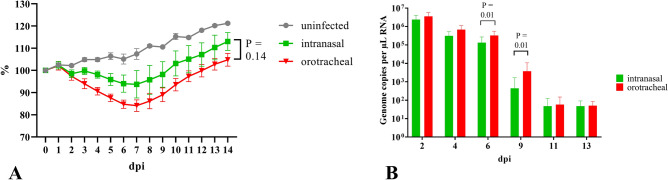
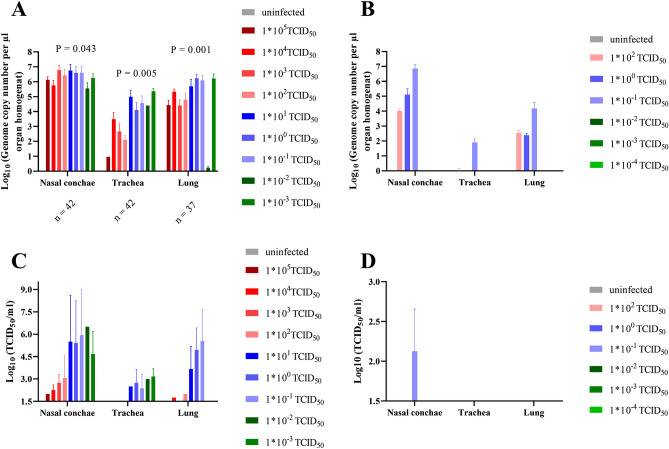
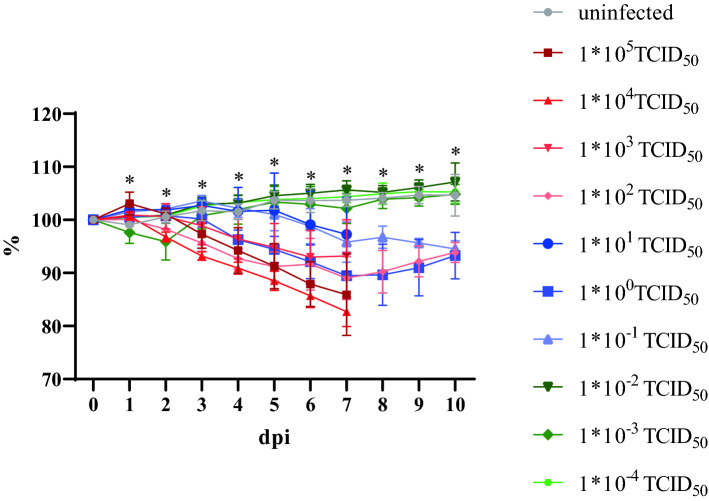
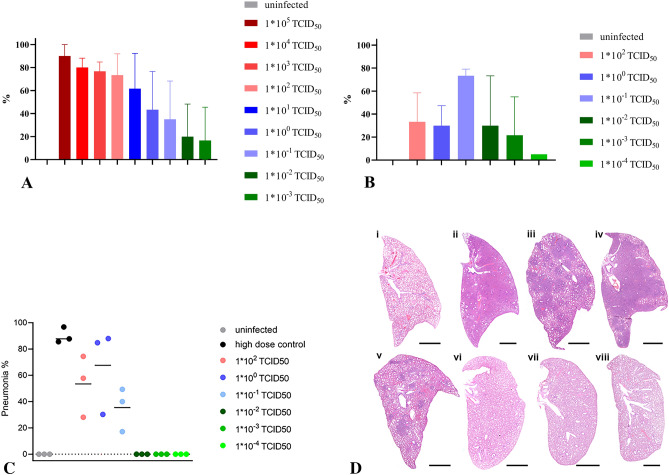
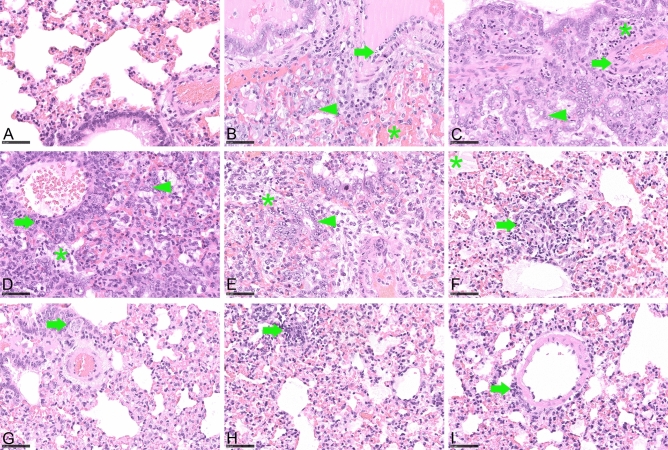
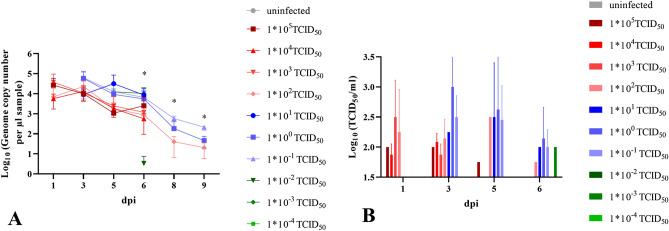
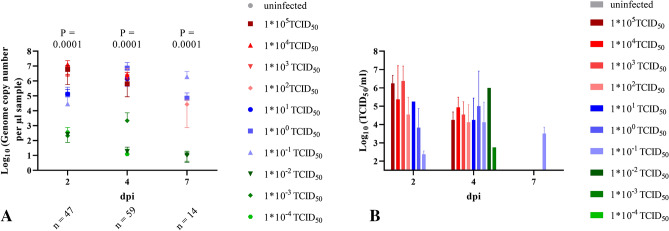
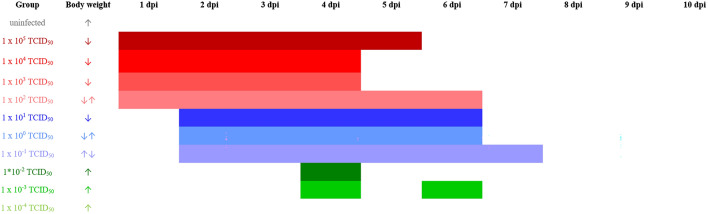
Golden Syrian hamsters (Mesocricetus auratus) are used as a research model for severe acute respiratory syndrome coronavirus type 2 (SARS-CoV-2). Millions of Golden Syrian hamsters are also kept as pets in close contact to humans. To determine the minimum infective dose (MID) for assessing the zoonotic transmission risk, and to define the optimal infection dose for experimental studies, we orotracheally inoculated hamsters with SARS-CoV-2 doses from 1 * 10 to 1 * 10 tissue culture infectious dose 50 (TCID). Body weight and virus shedding were monitored daily. 1 * 10 TCID was defined as the MID, and this was still sufficient to induce virus shedding at levels up to 10 TCID/ml, equaling the estimated MID for humans. Virological and histological data revealed 1 * 10 TCID as the optimal dose for experimental infections. This compelling high susceptibility leading to productive infections in Golden Syrian hamsters must be considered as a potential source of SARS-CoV-2 infection for humans that come into close contact with pet hamsters.
金黄地鼠(Mesocricetus auratus)被用作严重急性呼吸综合征冠状病毒 2 型(SARS-CoV-2)的研究模型。数以百万计的金黄地鼠也作为宠物与人类密切接触。为了确定最小感染剂量(MID)以评估人畜共患病传播风险,并确定实验研究的最佳感染剂量,我们通过口咽接种途径用 SARS-CoV-2 剂量为 1×10 到 1×10 组织培养感染剂量 50(TCID)对金黄地鼠进行了接种。每日监测体重和病毒脱落情况。1×10 TCID 被定义为 MID,并且这仍然足以诱导高达 10 TCID/ml 的病毒脱落,相当于人类估计的 MID。病毒学和组织学数据显示 1×10 TCID 是实验感染的最佳剂量。金黄地鼠具有很强的易感性,可导致生产性感染,这必须被认为是与人密切接触宠物仓鼠的 SARS-CoV-2 感染的潜在来源。