Core Centre for Molecular Morphology, Section for Stereology and Microscopy, Department of Clinical Medicine, Aarhus University, Aarhus, Denmark.
Center of Functionally Integrative Neuroscience, Department of Clinical Medicine, Aarhus University, Aarhus, Denmark.
Transl Psychiatry. 2022 Sep 5;12(1):363. doi: 10.1038/s41398-022-02128-0.
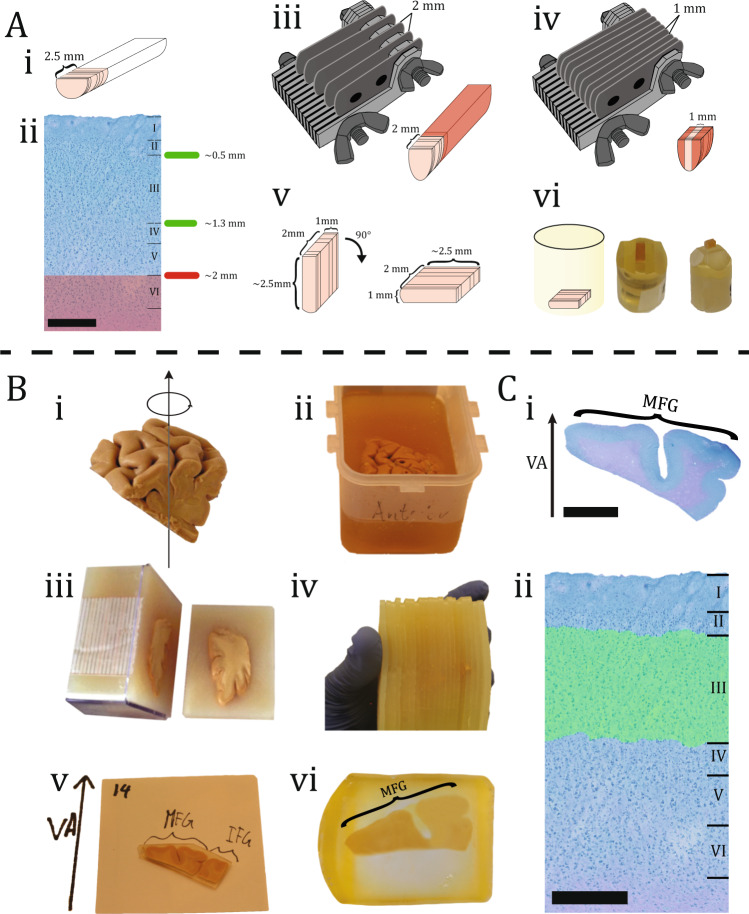
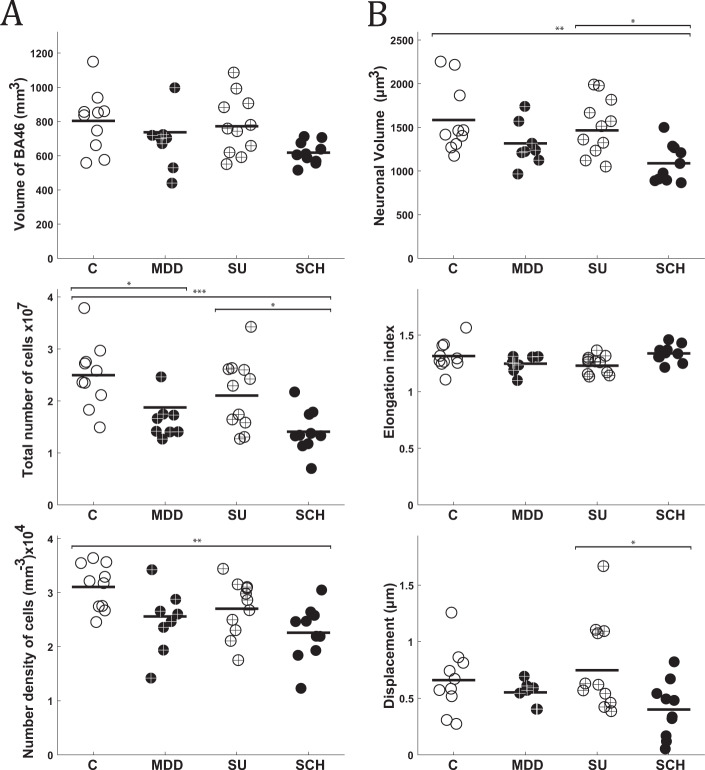
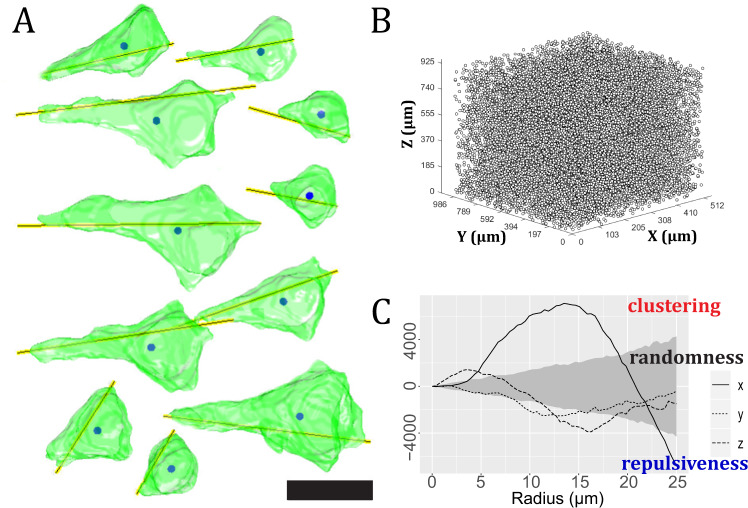
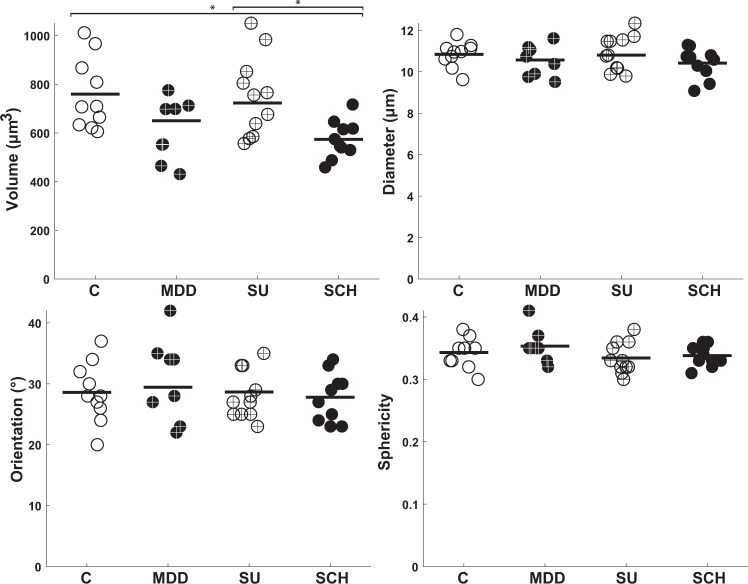
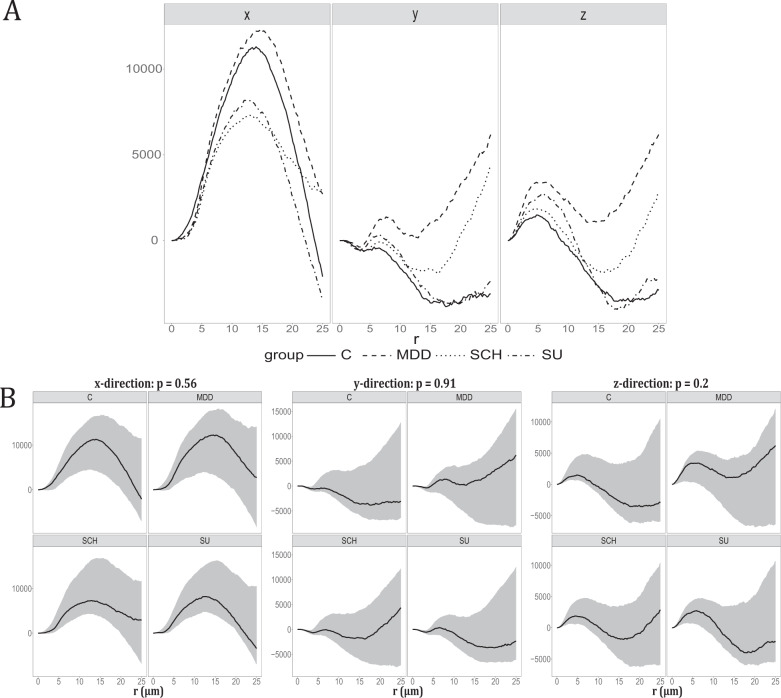
Brodmann Area 46 (BA46) has long been regarded as a hotspot of disease pathology in individuals with schizophrenia (SCH) and major depressive disorder (MDD). Pyramidal neurons in layer III of the Brodmann Area 46 (BA46) project to other cortical regions and play a fundamental role in corticocortical and thalamocortical circuits. The AutoCUTS-LM pipeline was used to study the 3-dimensional structural morphology and spatial organization of pyramidal cells. Using quantitative light microscopy, we used stereology to calculate the entire volume of layer III in BA46 and the total number and density of pyramidal cells. Volume tensors estimated by the planar rotator quantified the volume, shape, and nucleus displacement of pyramidal cells. All of these assessments were carried out in four groups of subjects: controls (C, n = 10), SCH (n = 10), MDD (n = 8), and suicide subjects with a history of depression (SU, n = 11). SCH subjects had a significantly lower somal volume, total number, and density of pyramidal neurons when compared to C and tended to show a volume reduction in layer III of BA46. When comparing MDD subjects with C, the measured parameters were inclined to follow SCH, although there was only a significant reduction in pyramidal total cell number. While no morphometric differences were observed between SU and MDD, SU had a significantly higher total number of pyramidal cells and nucleus displacement than SCH. Finally, no differences in the spatial organization of pyramidal cells were found among groups. These results suggest that despite significant morphological alterations in layer III of BA46, which may impair prefrontal connections in people with SCH and MDD, the spatial organization of pyramidal cells remains the same across the four groups and suggests no defects in neuronal migration. The increased understanding of pyramidal cell biology may provide the cellular basis for symptoms and neuroimaging observations in SCH and MDD patients.
Brodmann 区域 46(BA46)长期以来一直被认为是精神分裂症(SCH)和重度抑郁症(MDD)患者疾病病理的热点区域。Brodmann 区域 46(BA46)第三层的锥体神经元投射到其他皮质区域,在皮质-皮质和丘脑-皮质回路中起着至关重要的作用。AutoCUTS-LM 流水线用于研究锥体细胞的三维结构形态和空间组织。使用定量光显微镜,我们使用立体学方法计算 BA46 第三层的整个体积以及锥体细胞的总数和密度。平面旋转器估计的体积张量量化了锥体细胞的体积、形状和核位移。所有这些评估都是在四个实验组中进行的:对照组(C,n=10)、SCH(n=10)、MDD(n=8)和有抑郁病史的自杀者(SU,n=11)。与 C 相比,SCH 患者的体细胞核体积、总数和密度明显降低,并且 BA46 第三层的体积有减小的趋势。与 C 相比,MDD 患者的测量参数倾向于遵循 SCH,尽管只有锥体细胞总数明显减少。尽管 SU 和 MDD 之间没有观察到形态差异,但 SU 的锥体细胞总数和核位移明显高于 SCH。最后,各组之间没有发现锥体细胞空间组织的差异。这些结果表明,尽管 BA46 第三层存在明显的形态改变,这可能会损害 SCH 和 MDD 患者的前额叶连接,但锥体细胞的空间组织在四个组中是相同的,这表明神经元迁移没有缺陷。对锥体细胞生物学的深入了解可能为 SCH 和 MDD 患者的症状和神经影像学观察提供细胞基础。