Institute of Biology and Biomedicine, Department of Neurotechnology, N. I. Lobachevsky State University, Nizhny Novgorod, Russia.
Institute of Information Technology, Mathematics and Mechanics, Department of Applied Mathematics, N. I. Lobachevsky State University, Nizhny Novgorod, Russia.
Transl Psychiatry. 2022 Sep 6;12(1):364. doi: 10.1038/s41398-022-02123-5.
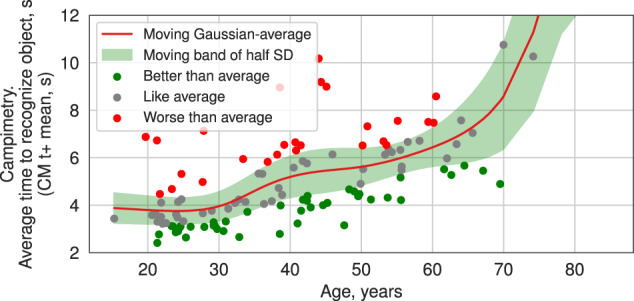
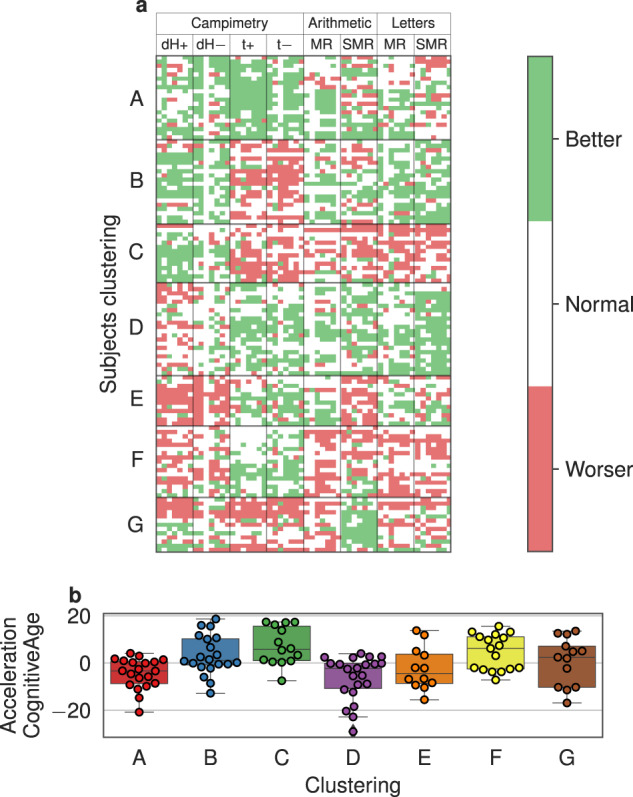
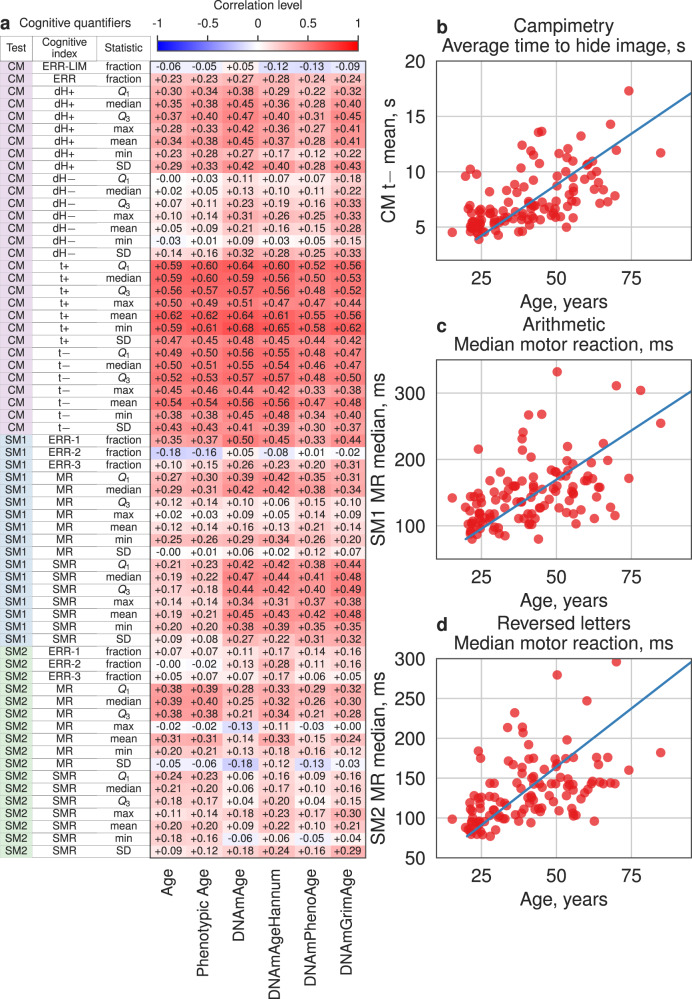
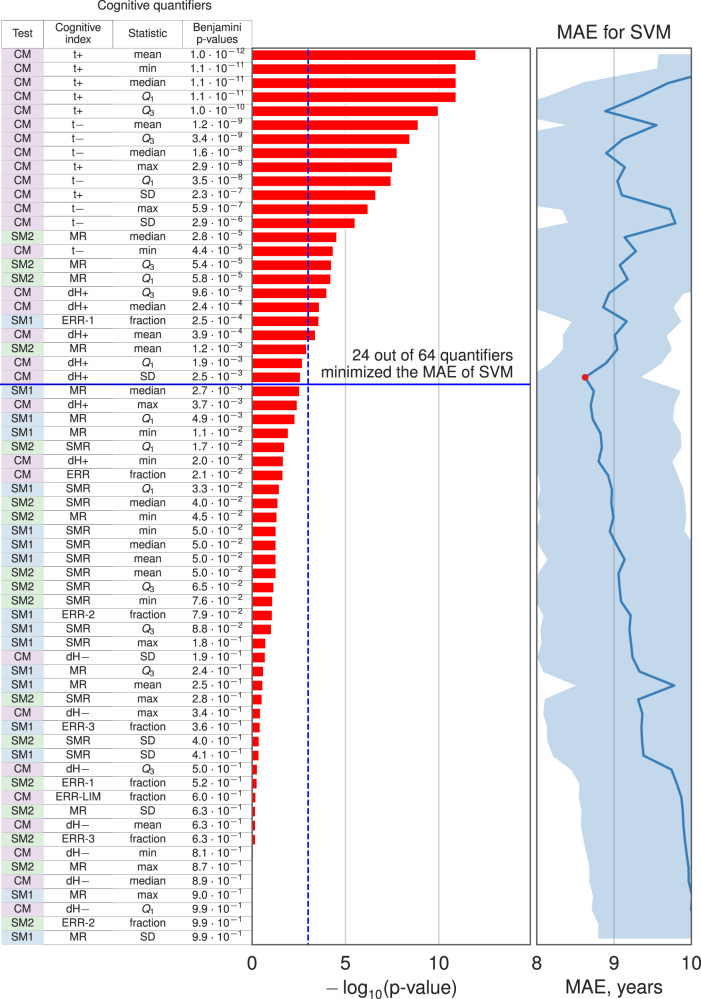
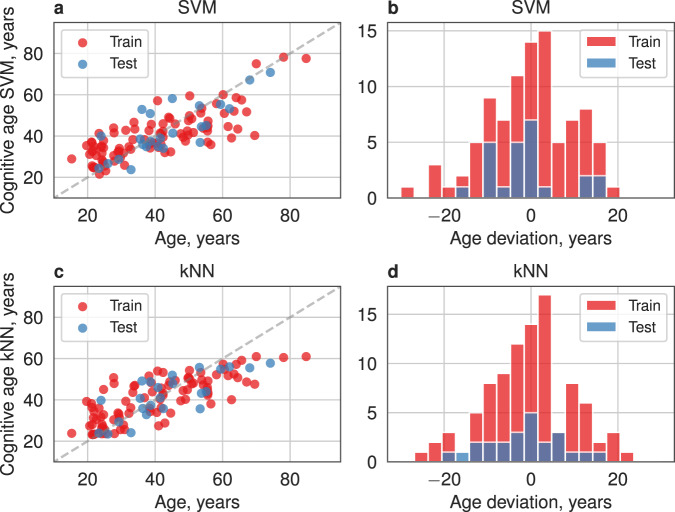
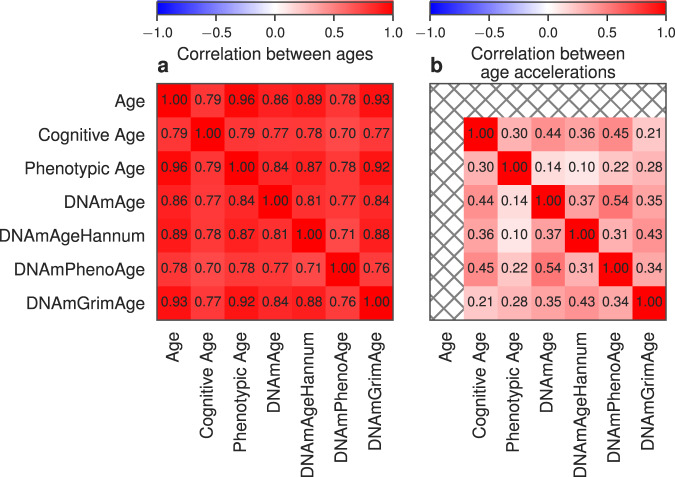
Cognitive abilities decline with age, constituting a major manifestation of aging. The quantitative biomarkers of this process, as well as the correspondence to different biological clocks, remain largely an open problem. In this paper we employ the following cognitive tests: 1. differentiation of shades (campimetry); 2. evaluation of the arithmetic correctness and 3. detection of reversed letters and identify the most significant age-related cognitive indices. Based on their subsets we construct a machine learning-based Cognitive Clock that predicts chronological age with a mean absolute error of 8.62 years. Remarkably, epigenetic and phenotypic ages are predicted by Cognitive Clock with an even better accuracy. We also demonstrate the presence of correlations between cognitive, phenotypic and epigenetic age accelerations that suggests a deep connection between cognitive performance and aging status of an individual.
认知能力随年龄增长而下降,这是衰老的主要表现之一。这一过程的定量生物标志物以及与不同生物钟的对应关系在很大程度上仍是一个未解决的问题。在本文中,我们使用了以下认知测试:1. 色调区分(视力测定);2. 评估算术的正确性;3. 检测反转的字母。并确定了与年龄相关的最重要的认知指标。基于它们的子集,我们构建了一个基于机器学习的认知时钟,可以以 8.62 年的平均绝对误差预测实际年龄。值得注意的是,认知时钟甚至可以更准确地预测表观遗传年龄和表型年龄。我们还证明了认知、表型和表观遗传年龄加速之间存在相关性,这表明认知表现与个体的衰老状态之间存在着深层次的联系。