Brain Institute, Federal University of Rio Grande do Norte, Natal, Brazil.
Department of Psychology, University of Toronto Mississauga, Mississauga, Canada.
PLoS One. 2022 Sep 7;17(9):e0273864. doi: 10.1371/journal.pone.0273864. eCollection 2022.
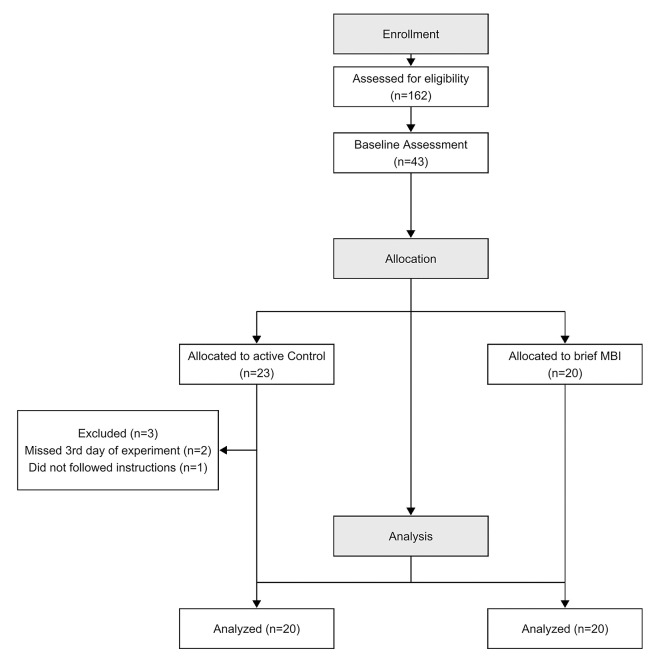
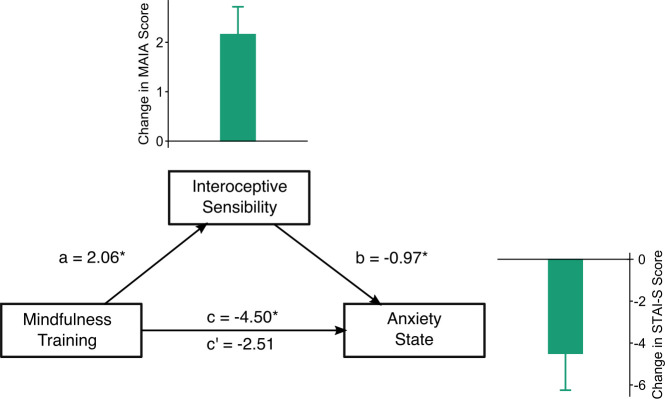
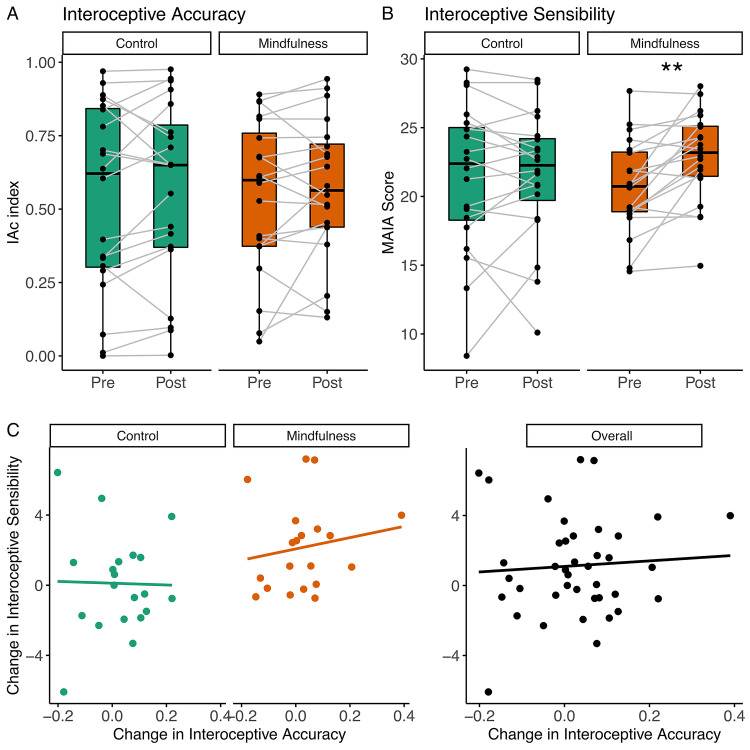
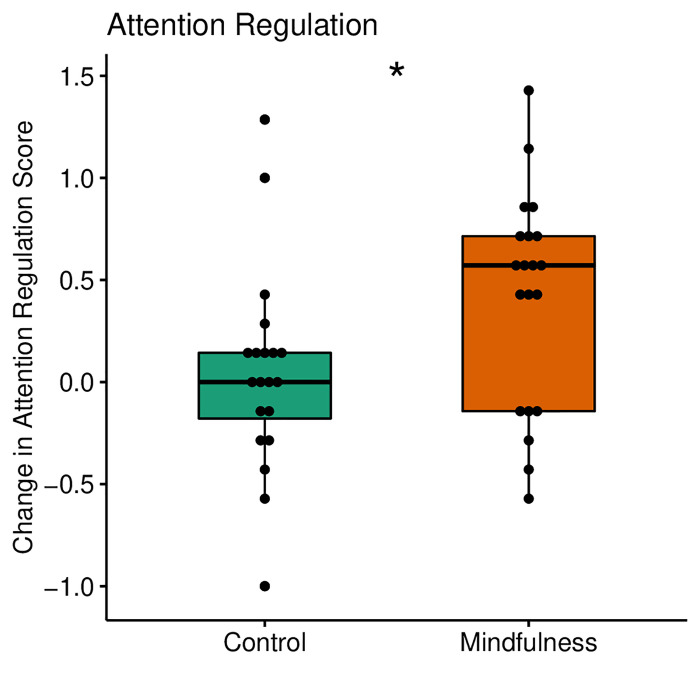
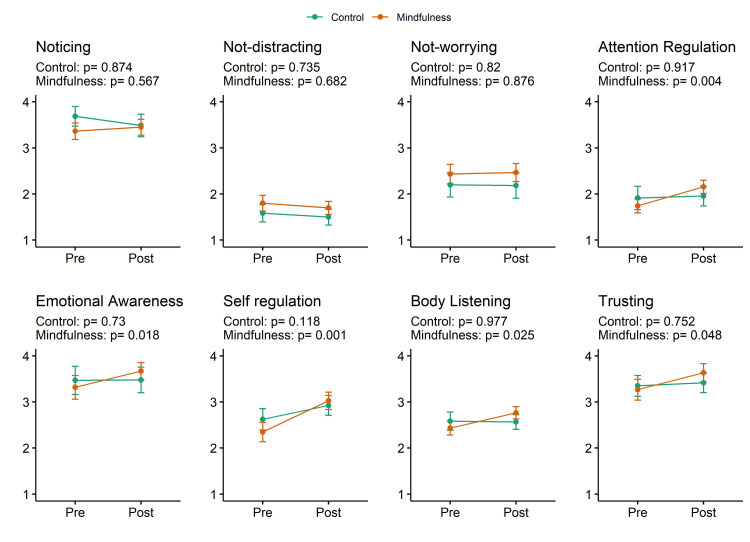
Interoception is a collection of different representations of signals originating within the body. The way of perceiving these signals seems to be related to both emotion regulation and dysregulation, and its dysfunction is implicated across a variety of affective disorders. There is a growing body of research investigating the relationship between mindfulness meditation practices and interoception showing an increase in interoceptive processes with regular training. In this study, we assessed the effects of a three-day mindfulness training on interoceptive accuracy and sensibility in a young healthy adult sample. Moreover, we also performed a mediation analysis on interoceptive sensibility and anxiety. Healthy participants (n = 40) naive to mindfulness practices were randomized to a brief mindfulness training (MT) (n = 20, females = 10) or to an active control group (n = 20, females = 10). Participants were assessed before and after the 3-days intervention for both groups on measures of interoception and anxiety in a modified intention-to-treat approach. The brief mindfulness training group increased interoceptive sensibility while active control had no effects on this variable. Five out of eight subdomains of interoceptive sensibility were significantly improved after mindfulness training. There was no significant difference in interoceptive accuracy after training. The effect of a brief mindfulness training on interoceptive sensibility mediated changes in the anxiety state. To date, this is the first study showing a plausible mechanism of a brief mindfulness training to explain the anxiolytic effects of meditation practices. Trial registration: RBR-7b8yh8, March 28th 2017 http://www.ensaiosclinicos.gov.br/rg/RBR-7b8yh8/.
内感受是对源自体内的信号的不同表现的集合。感知这些信号的方式似乎与情绪调节和失调有关,其功能障碍与各种情感障碍有关。越来越多的研究调查了正念冥想练习与内感受之间的关系,研究表明,随着定期训练,内感受过程会增加。在这项研究中,我们评估了为期三天的正念训练对年轻健康成年人样本的内感受准确性和敏感性的影响。此外,我们还对内感受敏感性和焦虑进行了中介分析。对正念实践一无所知的健康参与者(n = 40)被随机分为简短正念训练组(MT)(n = 20,女性= 10)或主动对照组(n = 20,女性= 10)。在修改后的意向治疗方法中,对两组参与者在 3 天干预前后进行了内感受和焦虑的测量。简短的正念训练组增加了内感受敏感性,而主动对照组对此变量没有影响。内感受敏感性的八个子领域中有五个在正念训练后得到了显著改善。训练后内感受准确性没有显著差异。简短的正念训练对内感受敏感性的影响可以解释冥想练习的抗焦虑作用。到目前为止,这是第一项表明简短的正念训练对解释冥想练习的抗焦虑作用的一种可能机制的研究。试验注册:RBR-7b8yh8,2017 年 3 月 28 日http://www.ensaiosclinicos.gov.br/rg/RBR-7b8yh8/。