Howard Hughes Medical Institute and Department of Biochemistry and Molecular Biophysics, Chevy Chase, MD, USA.
Zuckerman Mind Brain and Behavior Institute, Columbia University, New York, NY, USA.
Nature. 2022 Oct;610(7933):722-730. doi: 10.1038/s41586-022-05266-z. Epub 2022 Sep 7.
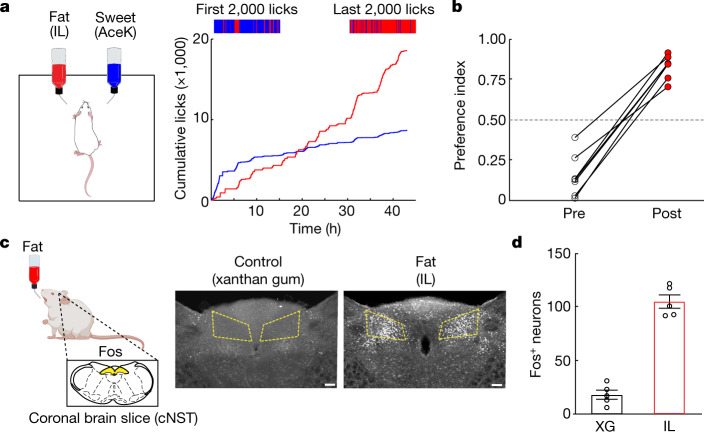
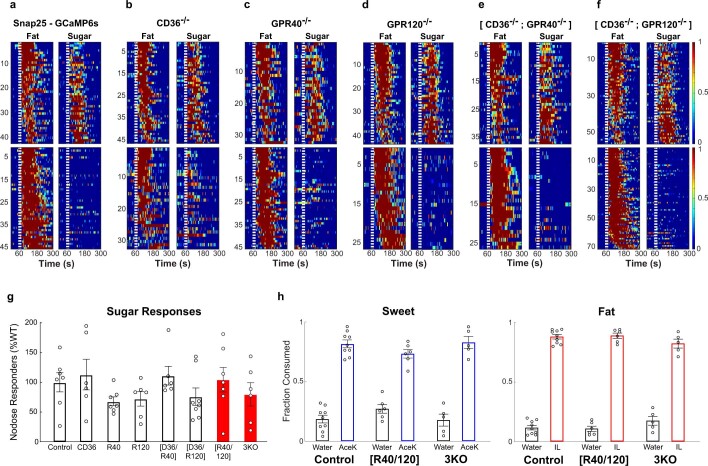
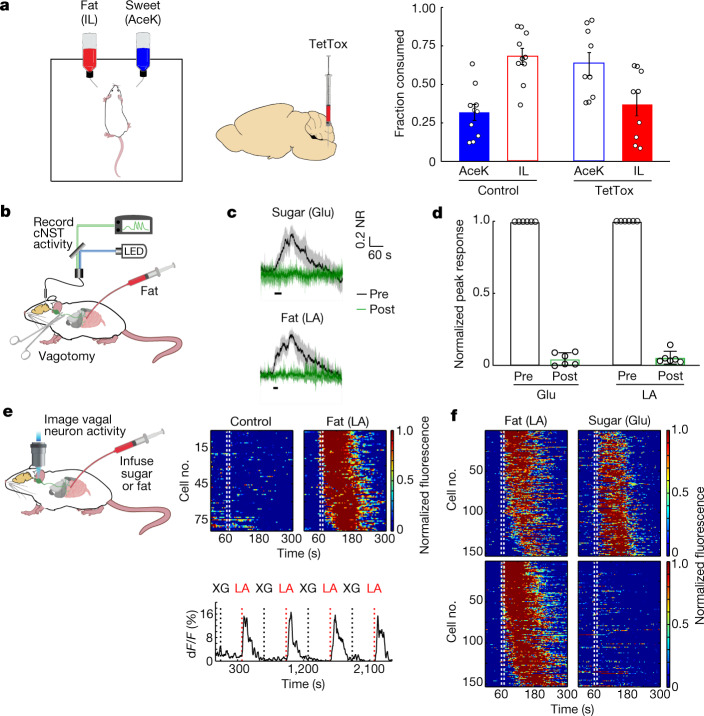
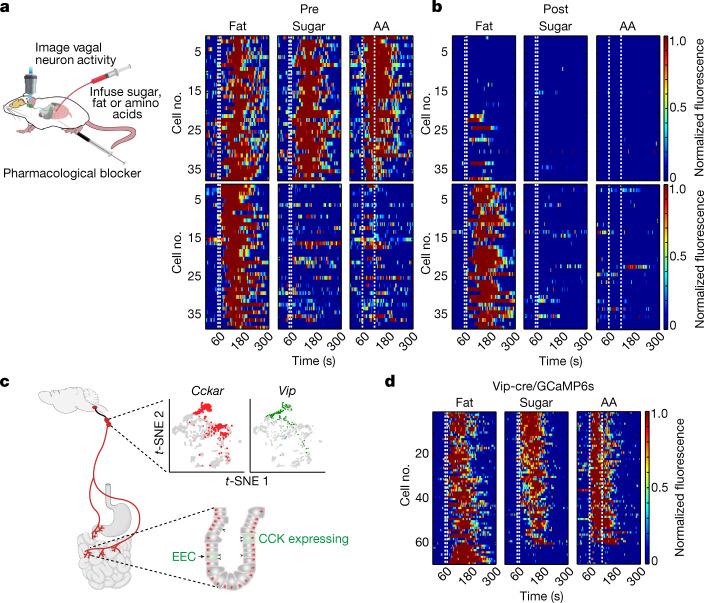
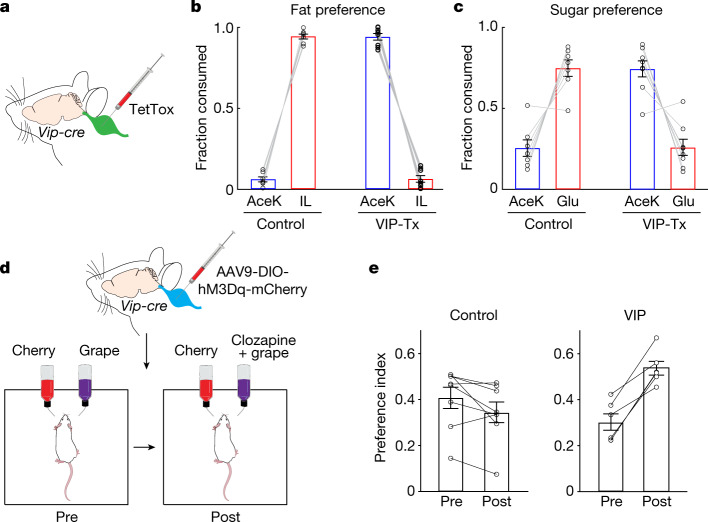
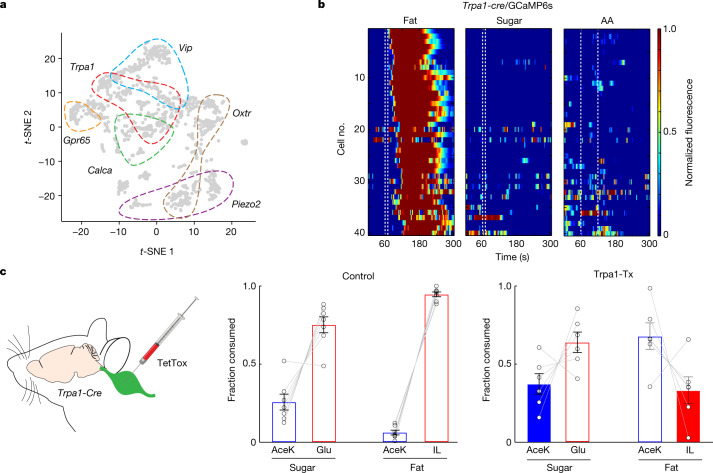
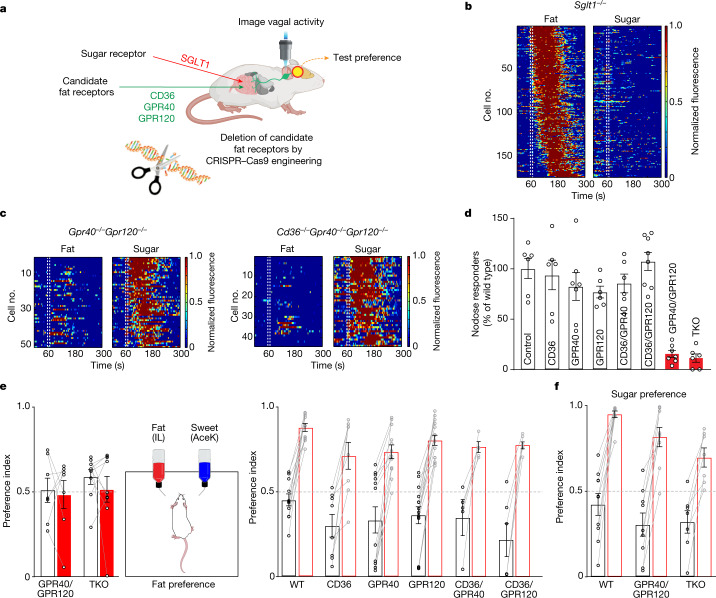
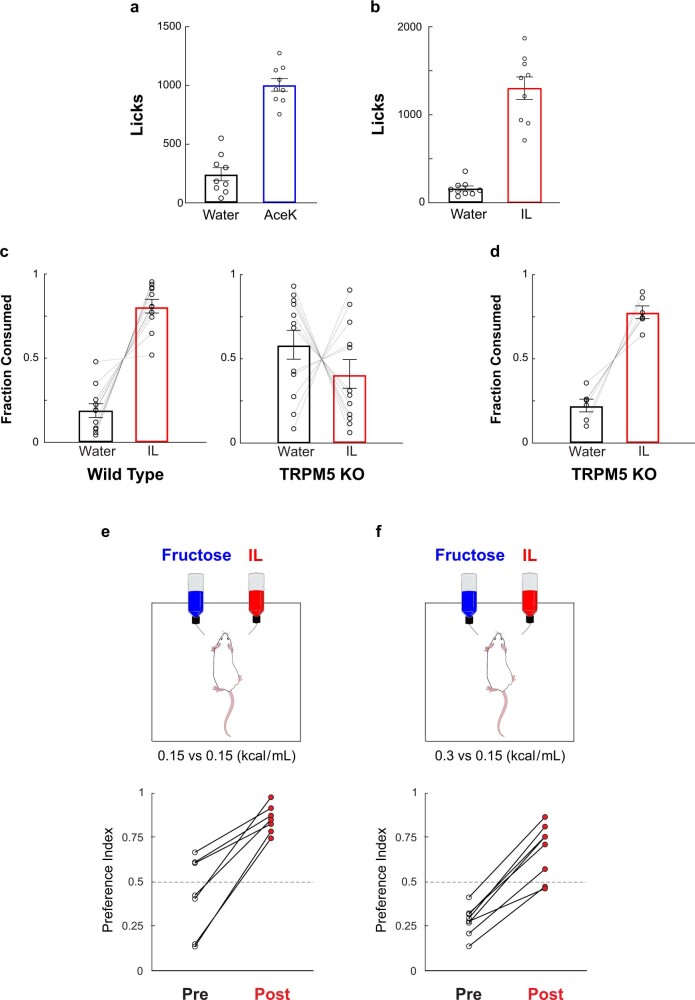
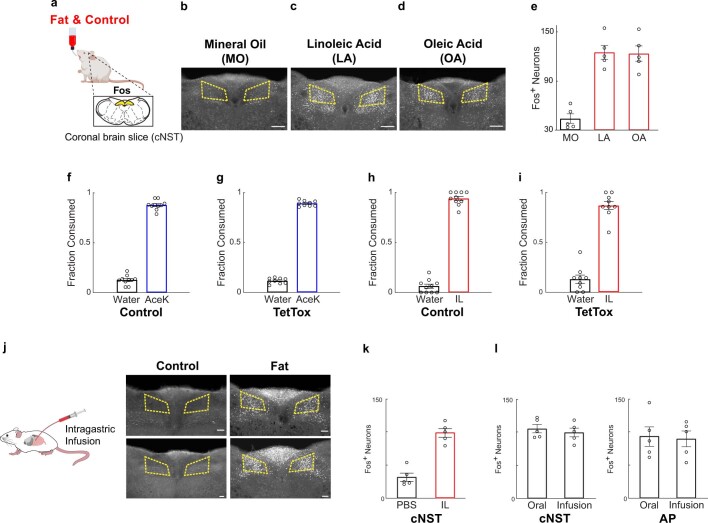
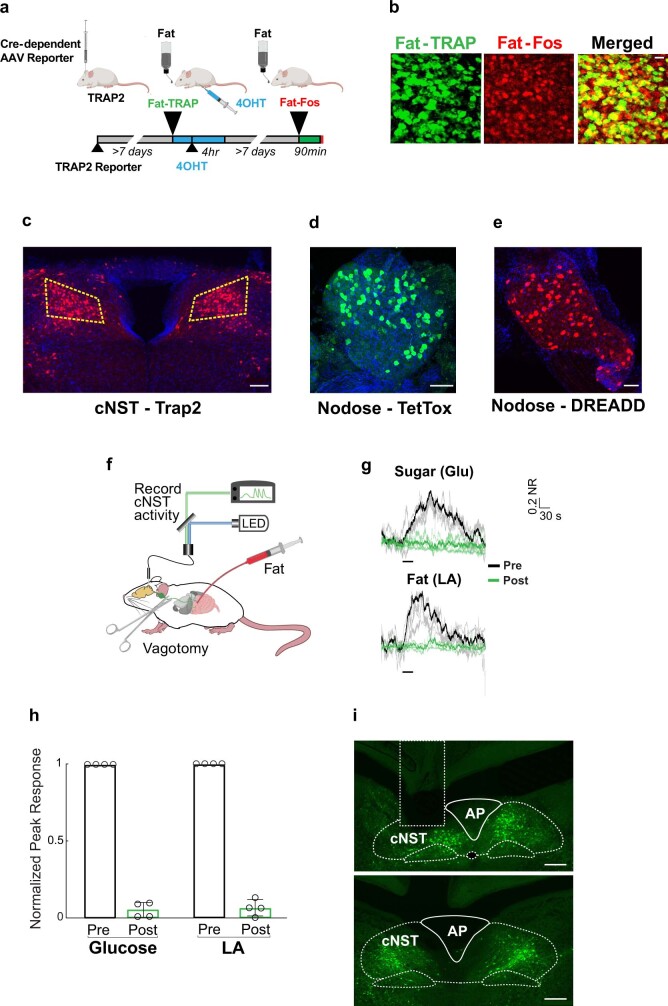
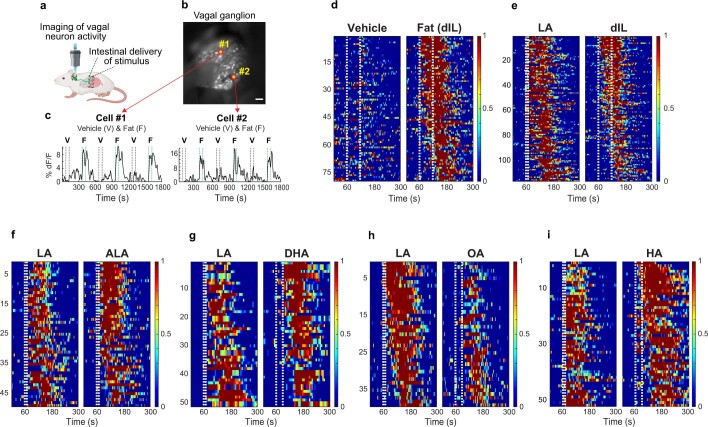
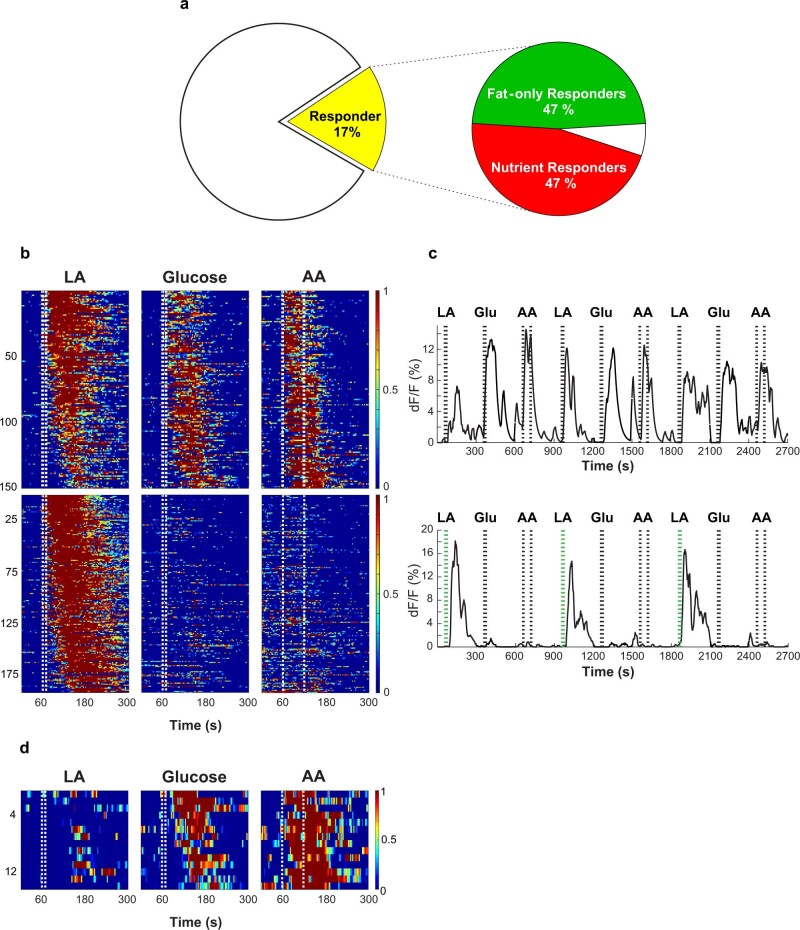
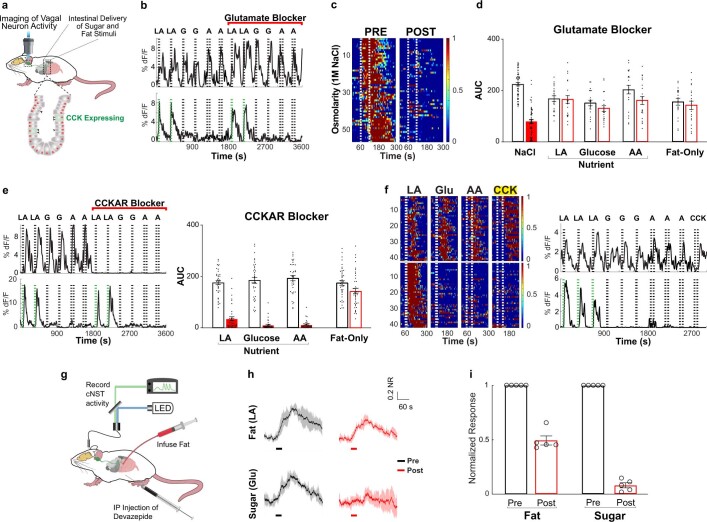
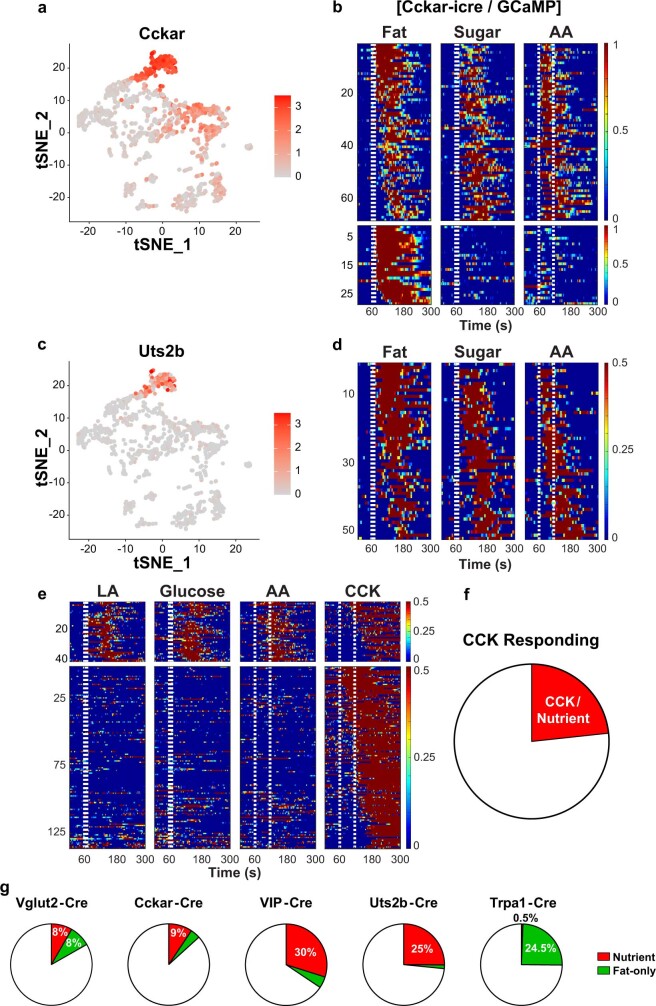
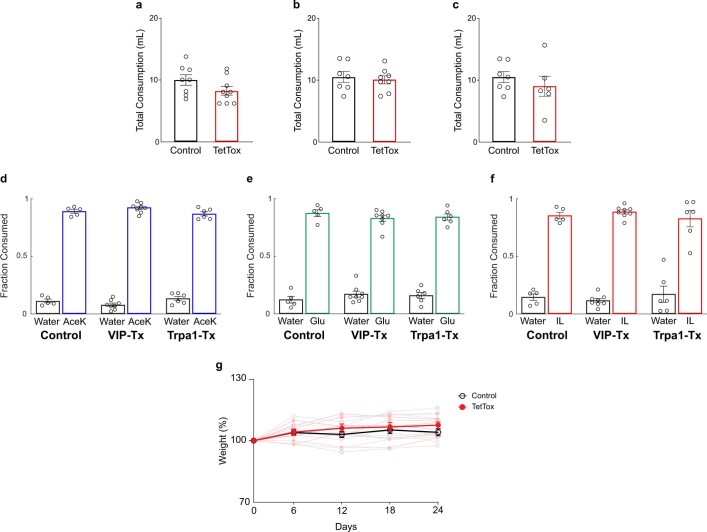
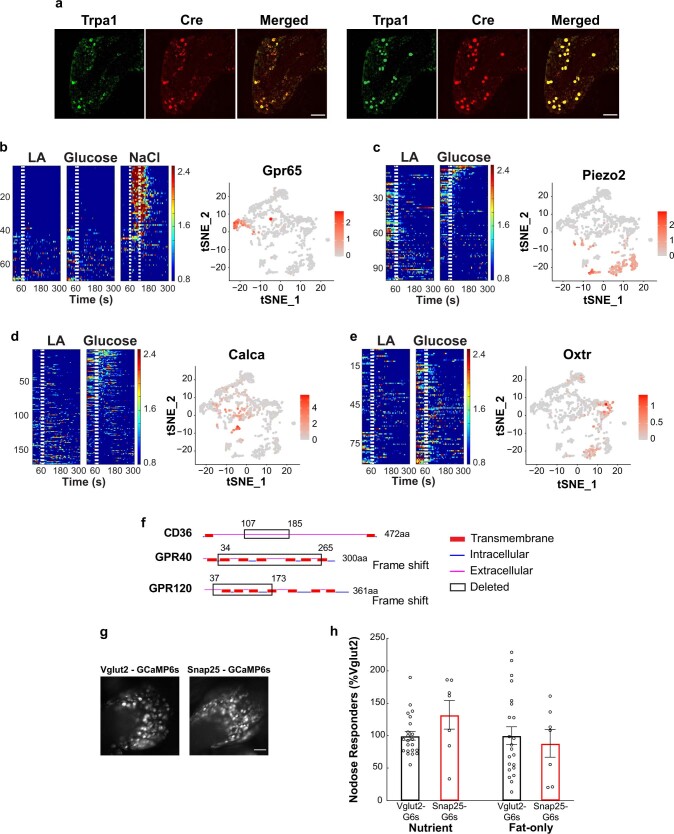
The perception of fat evokes strong appetitive and consummatory responses. Here we show that fat stimuli can induce behavioural attraction even in the absence of a functional taste system. We demonstrate that fat acts after ingestion via the gut-brain axis to drive preference for fat. Using single-cell data, we identified the vagal neurons responding to intestinal delivery of fat, and showed that genetic silencing of this gut-to-brain circuit abolished the development of fat preference. Next, we compared the gut-to-brain pathways driving preference for fat versus sugar, and uncovered two parallel systems, one functioning as a general sensor of essential nutrients, responding to intestinal stimulation with sugar, fat and amino acids, whereas the other is activated only by fat stimuli. Finally, we engineered mice lacking candidate receptors to detect the presence of intestinal fat, and validated their role as the mediators of gut-to-brain fat-evoked responses. Together, these findings reveal distinct cells and receptors that use the gut-brain axis as a fundamental conduit for the development of fat preference.
脂肪的感知会引起强烈的食欲和满足感反应。在这里,我们表明,即使在没有功能性味觉系统的情况下,脂肪刺激也可以引起行为吸引力。我们证明,脂肪通过肠道-大脑轴在摄入后起作用,从而促使人们喜欢脂肪。使用单细胞数据,我们鉴定出对肠道输送脂肪有反应的迷走神经元,并表明该肠道-大脑回路的遗传沉默消除了脂肪偏好的发展。接下来,我们比较了驱动对脂肪和糖偏好的肠道-大脑途径,发现了两个平行的系统,一个作为必需营养素的一般传感器起作用,对肠道刺激物(糖、脂肪和氨基酸)做出反应,而另一个仅由脂肪刺激物激活。最后,我们设计了缺乏候选受体的小鼠来检测肠道脂肪的存在,并验证了它们作为肠道-大脑脂肪诱发反应的介质的作用。总之,这些发现揭示了不同的细胞和受体,它们利用肠道-大脑轴作为发展脂肪偏好的基本途径。