Department of Chronic Diseases and Metabolism (CHROMETA), Translational Research Center for Gastrointestinal Disorders (TARGID), KU Leuven, Leuven, Belgium.
Laboratory of Cellular and Molecular Immunology, GIGA Institute, Liege University, Liege, Belgium.
Mucosal Immunol. 2022 Jun;15(6):1296-1308. doi: 10.1038/s41385-022-00563-2. Epub 2022 Sep 7.
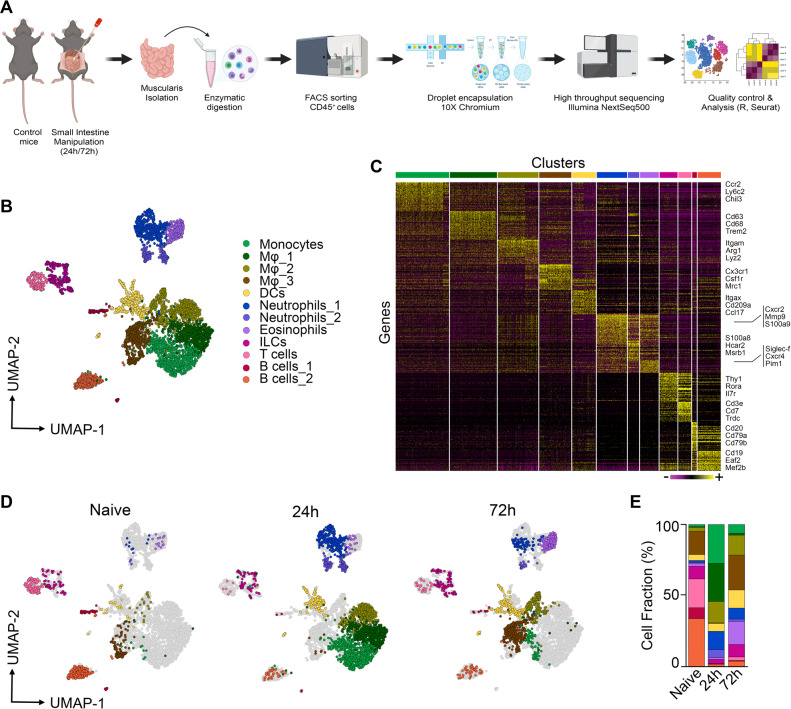
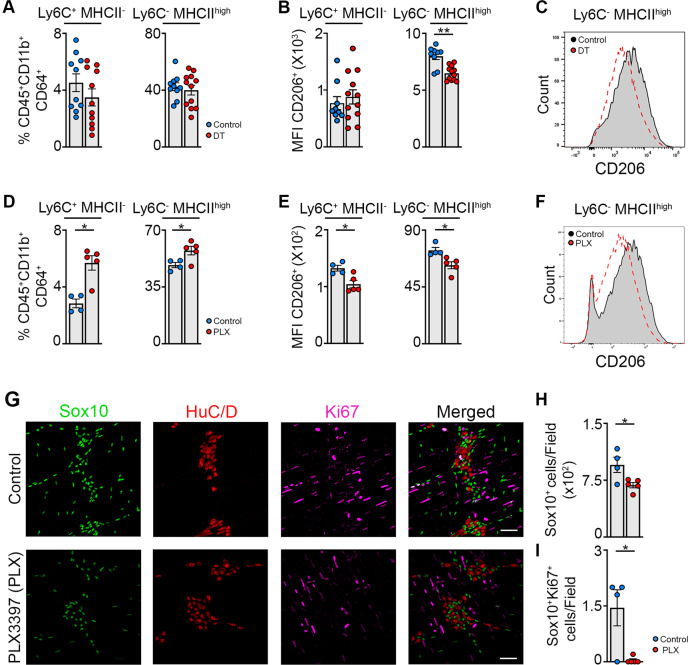
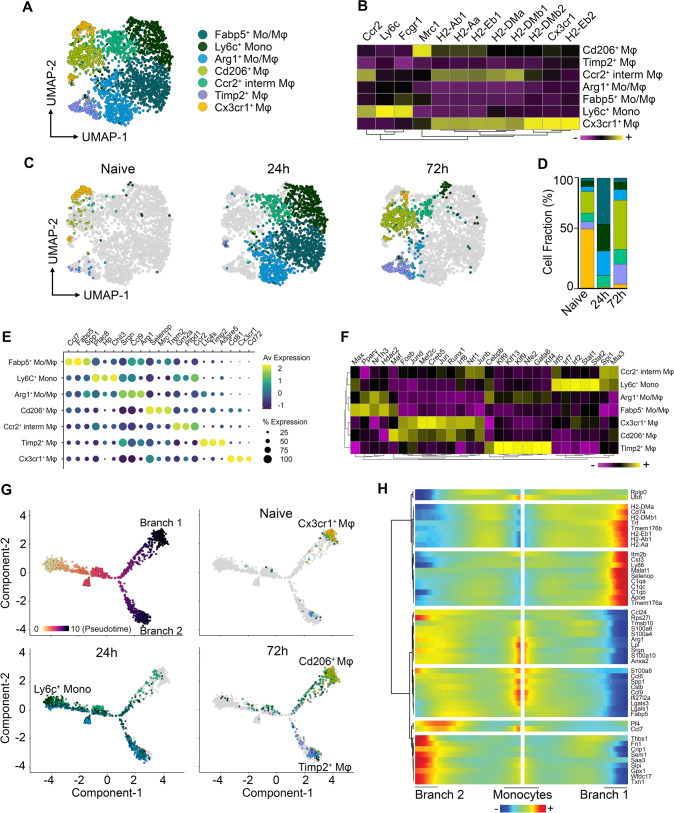
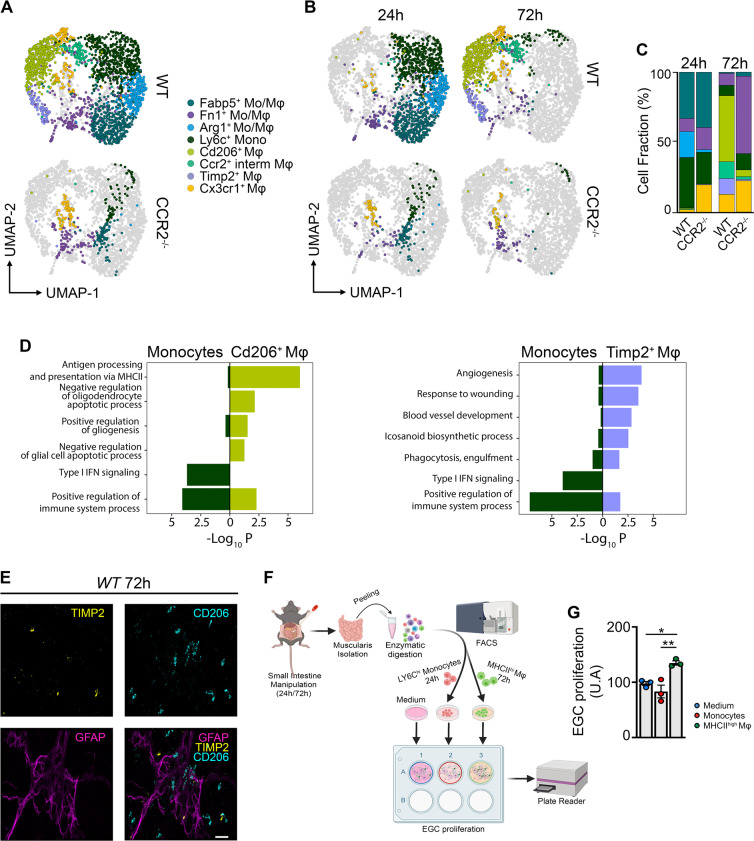
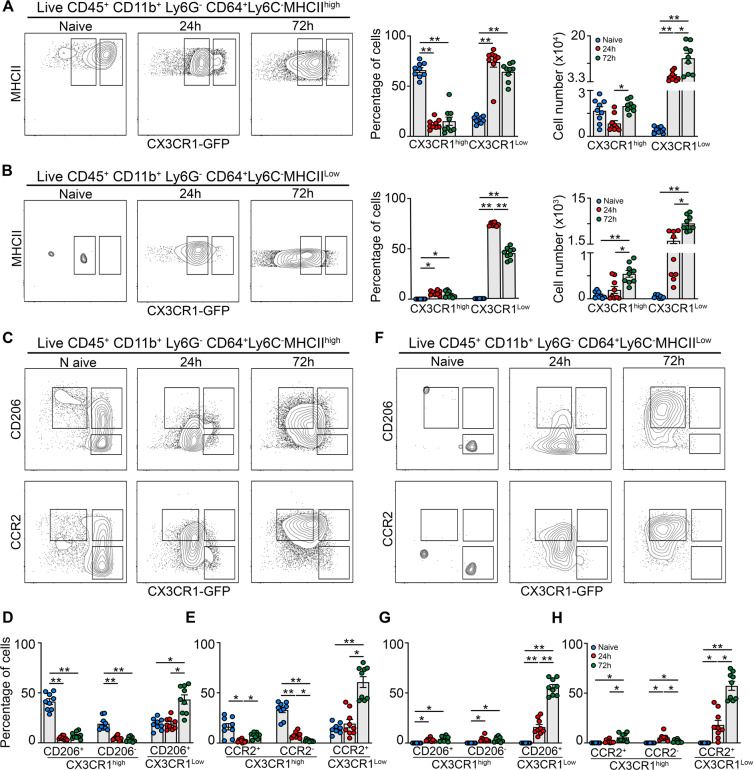
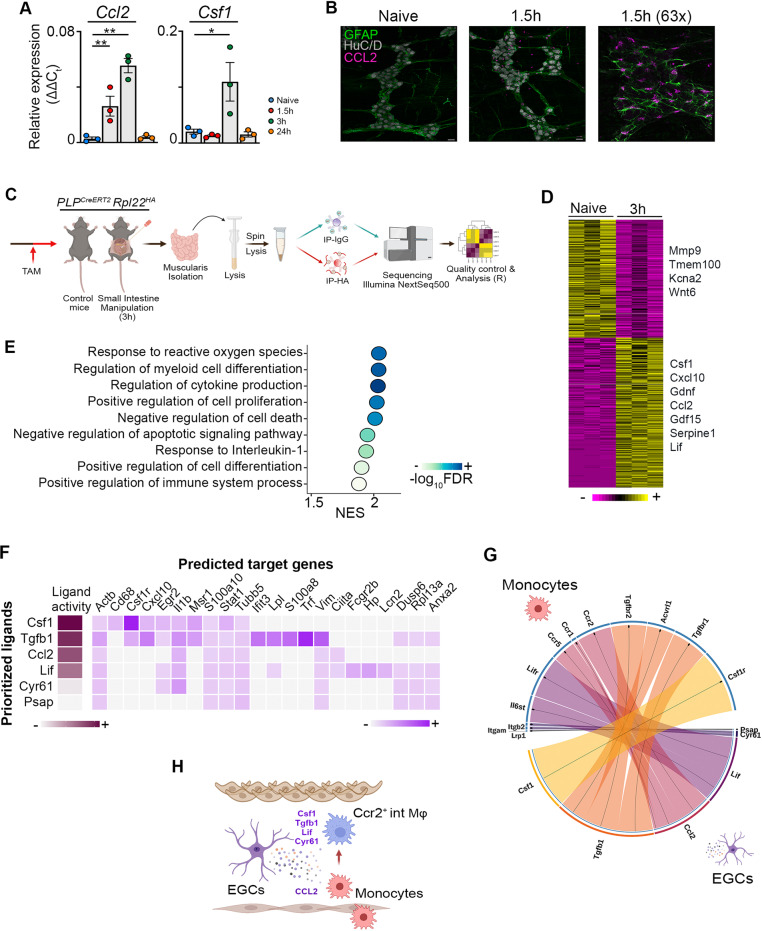
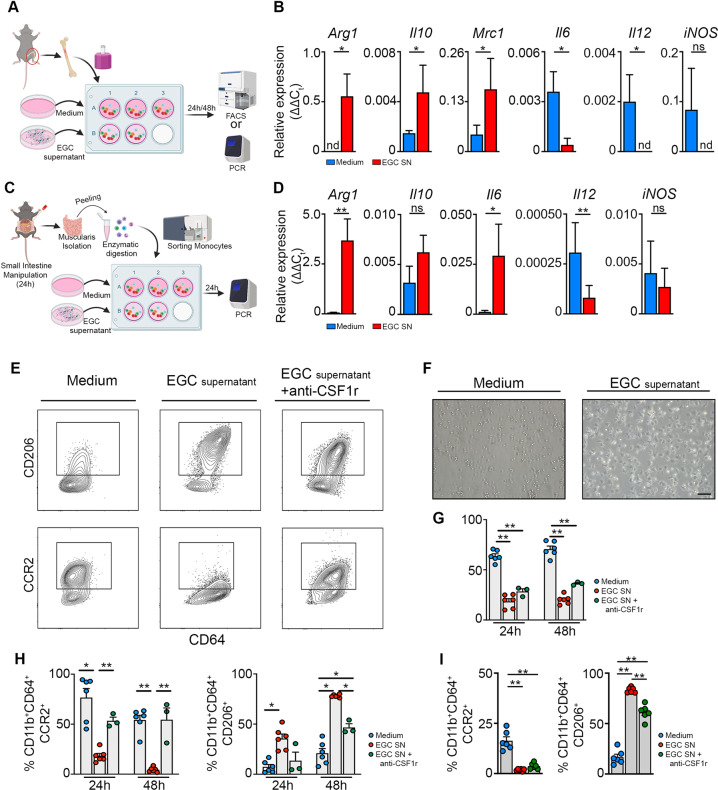
Monocyte-derived macrophages (Mφs) are crucial regulators during muscularis inflammation. However, it is unclear which micro-environmental factors are responsible for monocyte recruitment and anti-inflammatory Mφ differentiation in this paradigm. Here, we investigate Mφ heterogeneity at different stages of muscularis inflammation and determine how environmental cues can attract and activate tissue-protective Mφs. Results showed that muscularis inflammation induced marked alterations in mononuclear phagocyte populations associated with a rapid infiltration of Ly6c monocytes that locally acquired unique transcriptional states. Trajectory inference analysis revealed two main pro-resolving Mφ subpopulations during the resolution of muscularis inflammation, i.e. Cd206 MhcII and Timp2 MhcII Mφs. Interestingly, we found that damage to the micro-environment upon muscularis inflammation resulted in EGC activation, which in turn stimulated monocyte infiltration and the consequent differentiation in anti-inflammatory CD206 Mφs via CCL2 and CSF1, respectively. In addition, CSF1-CSF1R signaling was shown to be essential for the differentiation of monocytes into CD206 Mφs and EGC proliferation during muscularis inflammation. Our study provides a comprehensive insight into pro-resolving Mφ differentiation and their regulators during muscularis inflammation. We deepened our understanding in the interaction between EGCs and Mφs, thereby highlighting pro-resolving Mφ differentiation as a potential novel therapeutic strategy for the treatment of intestinal inflammation.
单核细胞衍生的巨噬细胞(Mφ)在肌层炎症中是至关重要的调节者。然而,尚不清楚哪些微环境因素负责在这种情况下募集单核细胞和分化抗炎 Mφ。在这里,我们研究了肌层炎症不同阶段的 Mφ 异质性,并确定环境线索如何吸引和激活组织保护性 Mφ。结果表明,肌层炎症导致与 Ly6c 单核细胞快速浸润相关的单核吞噬细胞群体发生明显改变,这些单核细胞在局部获得独特的转录状态。轨迹推理分析显示,在肌层炎症消退过程中存在两种主要的促解决 Mφ 亚群,即 Cd206 MHCII 和 Timp2 MHCII Mφ。有趣的是,我们发现肌层炎症对微环境的损害导致 EGC 激活,进而通过 CCL2 和 CSF1 分别刺激单核细胞浸润和随后分化为抗炎性 CD206 Mφ。此外,CSF1-CSF1R 信号对于单核细胞分化为 CD206 Mφ 和 EGC 在肌层炎症期间的增殖是必需的。我们的研究提供了对肌层炎症中促解决 Mφ 分化及其调节因子的全面深入了解。我们加深了对 EGC 和 Mφ 之间相互作用的理解,从而强调了促解决 Mφ 分化作为治疗肠道炎症的一种潜在新的治疗策略。