• 文献检索
  • 文档翻译
  • 深度研究
  • 学术资讯
  • Suppr Zotero 插件Zotero 插件
  • 邀请有礼
  • 套餐&价格
  • 历史记录
应用&插件
Suppr Zotero 插件Zotero 插件浏览器插件Mac 客户端Windows 客户端微信小程序
定价
高级版会员购买积分包购买API积分包
服务
文献检索文档翻译深度研究API 文档MCP 服务
关于我们
关于 Suppr公司介绍联系我们用户协议隐私条款
关注我们

Suppr 超能文献

核心技术专利:CN118964589B侵权必究
粤ICP备2023148730 号-1Suppr @ 2026

文献检索

告别复杂PubMed语法,用中文像聊天一样搜索,搜遍4000万医学文献。AI智能推荐,让科研检索更轻松。

立即免费搜索

文件翻译

保留排版,准确专业,支持PDF/Word/PPT等文件格式,支持 12+语言互译。

免费翻译文档

深度研究

AI帮你快速写综述,25分钟生成高质量综述,智能提取关键信息,辅助科研写作。

立即免费体验

新型冠状病毒肺炎与认知障碍:神经侵袭与血脑屏障功能障碍。

COVID-19 and cognitive impairment: neuroinvasive and blood‒brain barrier dysfunction.

机构信息

Department of Neurology, Guangdong Key Laboratory of Age-Related Cardiac and Cerebral Diseases, Affiliated Hospital of Guangdong Medical University, Zhanjiang, 524000, China.

Department of Trauma Center, Hengyang Medical School, Affiliated Nanhua Hospital, University of South China, Hengyang, 421002, China.

出版信息

J Neuroinflammation. 2022 Sep 7;19(1):222. doi: 10.1186/s12974-022-02579-8.

DOI:10.1186/s12974-022-02579-8
PMID:36071466
原文链接:https://pmc.ncbi.nlm.nih.gov/articles/PMC9450840/
Abstract

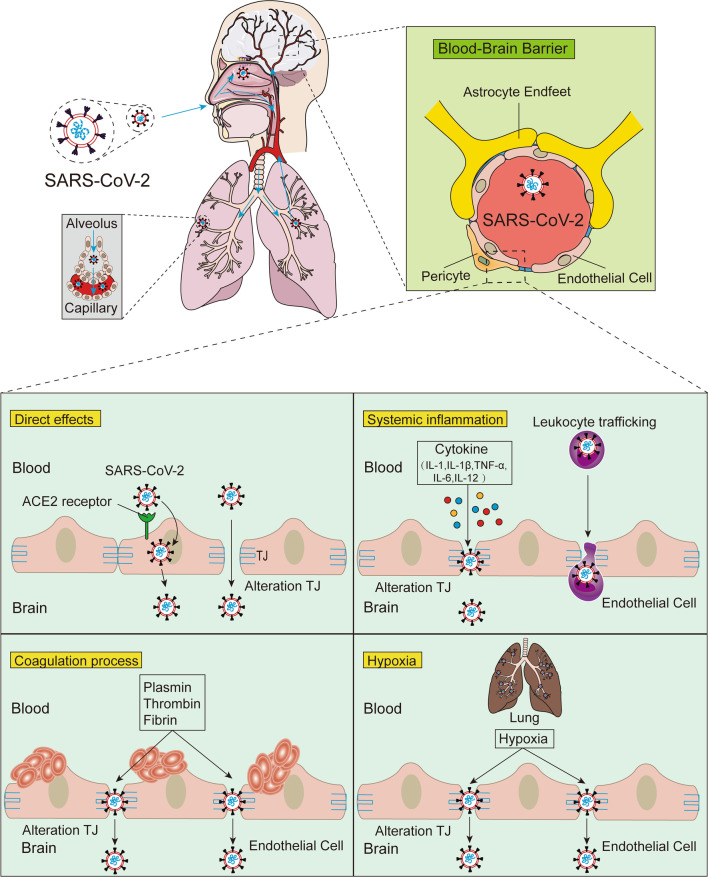
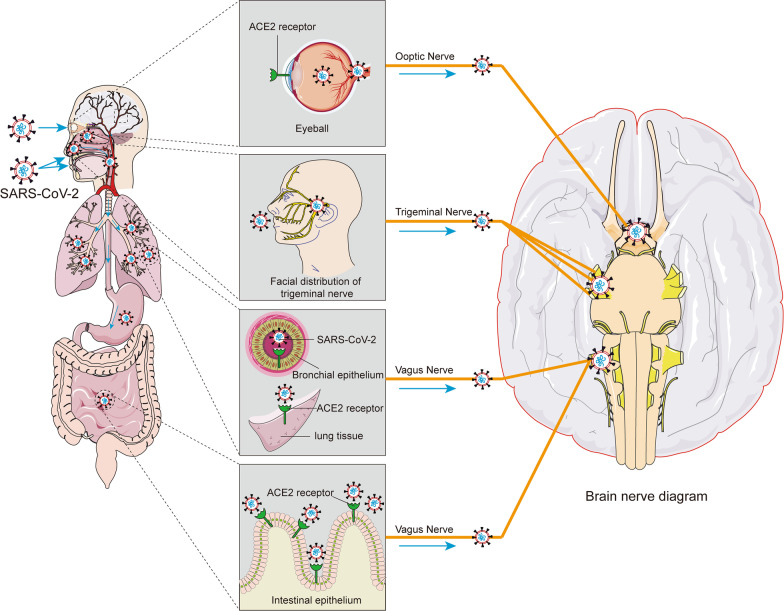
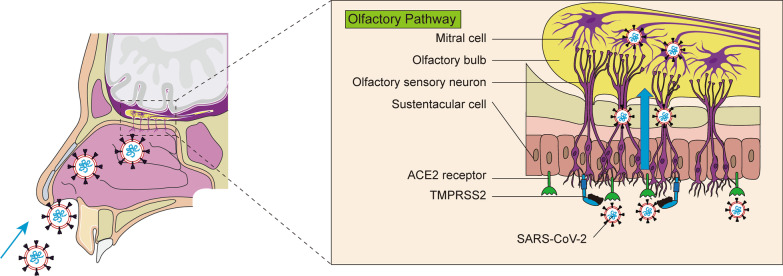
Coronavirus disease 2019 (COVID-19), caused by severe acute respiratory syndrome coronavirus 2 (SARS-CoV-2), has led to a global pandemic. Although COVID-19 was initially described as a respiratory disease, there is growing evidence that SARS-CoV-2 is able to invade the brains of COVID-19 patients and cause cognitive impairment. It has been reported that SARS-CoV-2 may have invasive effects on a variety of cranial nerves, including the olfactory, trigeminal, optic, and vagus nerves, and may spread to other brain regions via infected nerve endings, retrograde transport, and transsynaptic transmission. In addition, the blood-brain barrier (BBB), composed of neurovascular units (NVUs) lining the brain microvasculature, acts as a physical barrier between nerve cells and circulating cells of the immune system and is able to regulate the transfer of substances between the blood and brain parenchyma. Therefore, the BBB may be an important structure for the direct and indirect interaction of SARS-CoV-2 with the brain via the blood circulation. In this review, we assessed the potential involvement of neuroinvasion under the SARS-CoV-2 infection, and the potential impact of BBB disorder under SARS-CoV-2 infection on cognitive impairment.

摘要

新型冠状病毒病(COVID-19)由严重急性呼吸系统综合症冠状病毒 2(SARS-CoV-2)引起,已导致全球大流行。虽然 COVID-19 最初被描述为一种呼吸道疾病,但越来越多的证据表明,SARS-CoV-2 能够侵入 COVID-19 患者的大脑并导致认知障碍。据报道,SARS-CoV-2 可能对多种颅神经具有侵袭作用,包括嗅觉、三叉神经、视神经和迷走神经,并且可能通过感染的神经末梢、逆行运输和突触间传递传播到其他大脑区域。此外,由大脑微血管内皮细胞组成的血脑屏障(BBB)充当神经细胞和循环免疫细胞之间的物理屏障,并能够调节血液和脑实质之间物质的转移。因此,BBB 可能是 SARS-CoV-2 通过血液循环与大脑直接和间接相互作用的重要结构。在这篇综述中,我们评估了 SARS-CoV-2 感染下的神经侵袭的潜在可能性,以及 SARS-CoV-2 感染下 BBB 障碍对认知障碍的潜在影响。
https://cdn.ncbi.nlm.nih.gov/pmc/blobs/b72e/9454234/d43be53eecbc/12974_2022_2579_Fig3_HTML.jpg
https://cdn.ncbi.nlm.nih.gov/pmc/blobs/b72e/9454234/d285c2939d7d/12974_2022_2579_Fig1_HTML.jpg
https://cdn.ncbi.nlm.nih.gov/pmc/blobs/b72e/9454234/68e7286e8117/12974_2022_2579_Fig2_HTML.jpg
https://cdn.ncbi.nlm.nih.gov/pmc/blobs/b72e/9454234/d43be53eecbc/12974_2022_2579_Fig3_HTML.jpg
https://cdn.ncbi.nlm.nih.gov/pmc/blobs/b72e/9454234/d285c2939d7d/12974_2022_2579_Fig1_HTML.jpg
https://cdn.ncbi.nlm.nih.gov/pmc/blobs/b72e/9454234/68e7286e8117/12974_2022_2579_Fig2_HTML.jpg
https://cdn.ncbi.nlm.nih.gov/pmc/blobs/b72e/9454234/d43be53eecbc/12974_2022_2579_Fig3_HTML.jpg

相似文献

1
COVID-19 and cognitive impairment: neuroinvasive and blood‒brain barrier dysfunction.新型冠状病毒肺炎与认知障碍:神经侵袭与血脑屏障功能障碍。
J Neuroinflammation. 2022 Sep 7;19(1):222. doi: 10.1186/s12974-022-02579-8.
2
COVID-19 and Long COVID: Disruption of the Neurovascular Unit, Blood-Brain Barrier, and Tight Junctions.COVID-19 和长新冠:神经血管单元、血脑屏障和紧密连接的破坏。
Neuroscientist. 2024 Aug;30(4):421-439. doi: 10.1177/10738584231194927. Epub 2023 Sep 11.
3
Neurological manifestations of SARS-CoV-2: complexity, mechanism and associated disorders.SARS-CoV-2 引发的神经系统表现:复杂性、机制与相关紊乱。
Eur J Med Res. 2023 Aug 30;28(1):307. doi: 10.1186/s40001-023-01293-2.
4
Neuroinvasion, neurotropic, and neuroinflammatory events of SARS-CoV-2: understanding the neurological manifestations in COVID-19 patients.SARS-CoV-2 的神经入侵、嗜神经性和神经炎症事件:了解 COVID-19 患者的神经表现。
Neurol Sci. 2020 Oct;41(10):2657-2669. doi: 10.1007/s10072-020-04575-3. Epub 2020 Jul 28.
5
Severe acute respiratory syndrome coronavirus 2 may be an underappreciated pathogen of the central nervous system.严重急性呼吸综合征冠状病毒 2 可能是中枢神经系统中被低估的病原体。
Eur J Neurol. 2020 Nov;27(11):2348-2360. doi: 10.1111/ene.14442. Epub 2020 Aug 14.
6
Caveolin-1 mediates blood-brain barrier permeability, neuroinflammation, and cognitive impairment in SARS-CoV-2 infection.窖蛋白-1 介导严重急性呼吸综合征冠状病毒 2 感染的血脑屏障通透性、神经炎症和认知障碍。
J Neuroimmunol. 2024 Mar 15;388:578309. doi: 10.1016/j.jneuroim.2024.578309. Epub 2024 Feb 4.
7
Neuro-COVID-19: an insidious virus in action.神经新冠病毒:一个暗藏的活动病毒。
Neurol Neurochir Pol. 2022;56(1):48-60. doi: 10.5603/PJNNS.a2021.0072. Epub 2021 Oct 13.
8
Evidence of central nervous system infection and neuroinvasive routes, as well as neurological involvement, in the lethality of SARS-CoV-2 infection.SARS-CoV-2 感染致死性中的中枢神经系统感染和神经侵袭途径以及神经受累的证据。
J Med Virol. 2021 Mar;93(3):1304-1313. doi: 10.1002/jmv.26570. Epub 2020 Oct 14.
9
COVID-19-Associated Neurological Disorders: The Potential Route of CNS Invasion and Blood-Brain Relevance.COVID-19 相关神经系统疾病:CNS 入侵和血脑相关性的潜在途径。
Cells. 2020 Oct 27;9(11):2360. doi: 10.3390/cells9112360.
10
Neurological manifestations of patients with COVID-19: potential routes of SARS-CoV-2 neuroinvasion from the periphery to the brain.新型冠状病毒肺炎患者的神经系统表现:SARS-CoV-2 从外周向大脑入侵的潜在途径。
Front Med. 2020 Oct;14(5):533-541. doi: 10.1007/s11684-020-0786-5. Epub 2020 May 4.

引用本文的文献

1
White matter changes in recovered COVID-19 patients: insights from DTI, DKI, and NODDI metrics.康复的新冠肺炎患者的白质变化:来自扩散张量成像(DTI)、扩散峰度成像(DKI)和神经突方向离散与密度成像(NODDI)指标的见解
Front Neurol. 2025 Jul 18;16:1580262. doi: 10.3389/fneur.2025.1580262. eCollection 2025.
2
Anxiety in post-covid-19 syndrome - prevalence, mechanisms and treatment.新冠后综合征中的焦虑——患病率、机制与治疗
Neurosci Appl. 2023 Dec 24;3:103932. doi: 10.1016/j.nsa.2023.103932. eCollection 2024.
3
Increasing incidence of ADHD among children, adolescents and young adults: COVID-19 pandemic-driven trend in Korea (2012-2023).

本文引用的文献

1
[Ocular symptoms in SARS-CoV-2 infection].[严重急性呼吸综合征冠状病毒2型感染中的眼部症状]
Pol Merkur Lekarski. 2022 Apr 19;50(296):86-93.
2
Changes in cognitive functioning after COVID-19: A systematic review and meta-analysis.新冠病毒感染后认知功能的变化:系统评价和荟萃分析。
Alzheimers Dement. 2022 May;18(5):1047-1066. doi: 10.1002/alz.12644. Epub 2022 Mar 17.
3
One-Year Trajectory of Cognitive Changes in Older Survivors of COVID-19 in Wuhan, China: A Longitudinal Cohort Study.中国武汉 COVID-19 老年幸存者认知变化的一年轨迹:一项纵向队列研究。
韩国儿童、青少年和青年中注意力缺陷多动障碍发病率上升:COVID-19大流行驱动的趋势(2012 - 2023年)
BMJ Ment Health. 2025 Jun 20;28(1):e301662. doi: 10.1136/bmjment-2025-301662.
4
Dual inflammation in schizophrenia infected with COVID-19: Impact on cognitive function.感染新冠病毒的精神分裂症患者的双重炎症:对认知功能的影响。
Brain Behav Immun Health. 2025 Apr 26;46:100997. doi: 10.1016/j.bbih.2025.100997. eCollection 2025 Jul.
5
Cerebral Hemodynamic Alterations in Dialysis COVID-19 Survivors: A Transcranial Doppler Ultrasound Study on Intracranial Pressure Dynamics.透析的新冠肺炎幸存者的脑血流动力学改变:一项关于颅内压动态的经颅多普勒超声研究
Kidney Dial. 2025;5(2). doi: 10.3390/kidneydial5020012. Epub 2025 Apr 3.
6
Epidemiology, Symptoms and Pathophysiology of Long Covid Complications.长期新冠并发症的流行病学、症状及病理生理学
J Cell Immunol. 2024;6(5):219-230. doi: 10.33696/immunology.6.209.
7
Persistent Symptoms and Associated Risk Factors of COVID-19: A Cross-Sectional Study in Minia, Upper Egypt.新冠病毒病的持续症状及相关危险因素:埃及上埃及米尼亚的一项横断面研究
Healthcare (Basel). 2025 Mar 22;13(7):699. doi: 10.3390/healthcare13070699.
8
Role of toll-like receptors in post-COVID-19 associated neurodegenerative disorders?Toll样受体在新冠后相关神经退行性疾病中的作用?
Front Med (Lausanne). 2025 Mar 26;12:1458281. doi: 10.3389/fmed.2025.1458281. eCollection 2025.
9
Changes in cerebrovascular reactivity within functional networks in older adults with long-COVID.长期新冠病毒感染的老年人功能网络内脑血管反应性的变化。
Front Neurol. 2025 Mar 26;16:1504573. doi: 10.3389/fneur.2025.1504573. eCollection 2025.
10
Multimodal MRI analysis of COVID-19 effects on pediatric brain.新冠病毒对儿童大脑影响的多模态磁共振成像分析
Sci Rep. 2025 Apr 5;15(1):11691. doi: 10.1038/s41598-025-96191-4.
JAMA Neurol. 2022 May 1;79(5):509-517. doi: 10.1001/jamaneurol.2022.0461.
4
The blood-brain barrier is dysregulated in COVID-19 and serves as a CNS entry route for SARS-CoV-2.在 COVID-19 中,血脑屏障失调,并成为 SARS-CoV-2 进入中枢神经系统的途径。
Stem Cell Reports. 2022 Feb 8;17(2):307-320. doi: 10.1016/j.stemcr.2021.12.011. Epub 2022 Jan 20.
5
Inappropriate sinus tachycardia in post-COVID-19 syndrome.新冠后综合征中的不适当窦性心动过速
Sci Rep. 2022 Jan 7;12(1):298. doi: 10.1038/s41598-021-03831-6.
6
Severe stroke in patients admitted to intensive care unit after COVID-19 infection: Pictorial essay of a case series.新型冠状病毒肺炎感染后入住重症监护病房患者的重症卒中:病例系列图文报道
Brain Hemorrhages. 2022 Mar;3(1):29-35. doi: 10.1016/j.hest.2021.12.002. Epub 2021 Dec 13.
7
SARS-CoV-2: is there neuroinvasion?SARS-CoV-2:是否存在神经入侵?
Fluids Barriers CNS. 2021 Jul 14;18(1):32. doi: 10.1186/s12987-021-00267-y.
8
SARS-CoV-2 Impairs Vision.SARS-CoV-2 损害视力。
J Neuroophthalmol. 2021 Jun 1;41(2):166-169. doi: 10.1097/WNO.0000000000001273.
9
Global Incidence of Neurological Manifestations Among Patients Hospitalized With COVID-19-A Report for the GCS-NeuroCOVID Consortium and the ENERGY Consortium.全球因 COVID-19 住院的患者的神经学表现发生率——GCS-NeuroCOVID 联盟和 ENERGY 联盟的报告。
JAMA Netw Open. 2021 May 3;4(5):e2112131. doi: 10.1001/jamanetworkopen.2021.12131.
10
6-month neurological and psychiatric outcomes in 236 379 survivors of COVID-19: a retrospective cohort study using electronic health records.236379 例 COVID-19 幸存者的 6 个月神经和精神结局:使用电子健康记录的回顾性队列研究。
Lancet Psychiatry. 2021 May;8(5):416-427. doi: 10.1016/S2215-0366(21)00084-5. Epub 2021 Apr 6.