Dale Oen Vibeke, Svihus Jeanett, Solberg Sara Helene Røyland, Harris Anette, Eid Jarle
Department of Psychosocial Science, University of Bergen, Bergen, Norway.
Front Psychol. 2022 Aug 22;13:937935. doi: 10.3389/fpsyg.2022.937935. eCollection 2022.
On March 11, 2020, the World Health Organization declared the novel coronavirus outbreak a global pandemic. The crisis that follows presented significant adverse challenges for organizations and business leaders around the world. The present study aims to explore how the extreme context of the COVID-19 influenced crisis leadership, with emphasis on coping and adaptive approaches, in Norwegian leaders during the early stage of the pandemic.
A group of 11 Norwegian business leaders from different private sector companies were subject to an in depth, semi structured interview after the first 9 months of COVID-19. A sensemaking perspective and the Cognitive Activation Theory of Stress (CATS) were used to interpret the results.
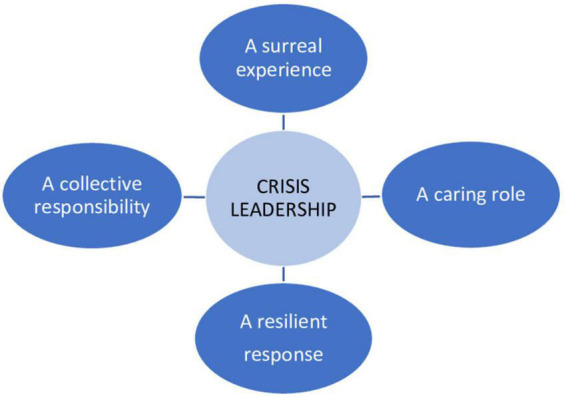
The pandemic called for crisis leadership and a rapid adaptation to a radically changed situation. Restructuring of organizational processes and introduction of new routines were followed by support and caring for their employees during the first wave of the pandemic. All the leaders coped well with the situation, and some were excited over the opportunity to make a difference in this demanding and stressful situation. Many emphasized that the pandemic was an external threat, resulting in an acceptance of the situation, more transparency, collaboration, and generosity within the organization. Especially the willingness to change was challenged in a positive way. A more blurred line between office and home, and absence of social activities were mentioned as negative outcomes.
2020年3月11日,世界卫生组织宣布新型冠状病毒疫情为全球大流行。随之而来的危机给世界各地的组织和企业领导人带来了重大的不利挑战。本研究旨在探讨在疫情初期,新冠疫情的极端背景如何影响挪威领导人的危机领导力,重点关注应对和适应方法。
在新冠疫情爆发的前9个月后,对来自不同私营部门公司的11名挪威企业领导人进行了深入的半结构化访谈。采用意义建构视角和压力认知激活理论(CATS)来解释结果。
疫情需要危机领导力以及迅速适应彻底改变的形势。在疫情的第一波期间,在重组组织流程和引入新常规之后,还要对员工给予支持和关怀。所有领导人都很好地应对了这种情况,一些人对在这种苛刻且压力巨大的情况下有所作为的机会感到兴奋。许多人强调,疫情是一种外部威胁,导致组织内部接受现状、更加透明、协作和慷慨。特别是变革的意愿受到了积极的挑战。办公和家庭之间的界限更加模糊以及社交活动的缺失被提及为负面结果。