Department of Biomedical Sciences and Biofilms-Research Center for Biointerfaces (BRCB), Faculty of Health and Society, Malmö University, 205 06 Malmö, Sweden.
Institute for Advanced Materials, School of Materials Science and Engineering, Jiangsu University, Zhenjiang, Jiangsu 212 013, China.
ACS Appl Mater Interfaces. 2022 Sep 21;14(37):41790-41799. doi: 10.1021/acsami.2c12029. Epub 2022 Sep 8.
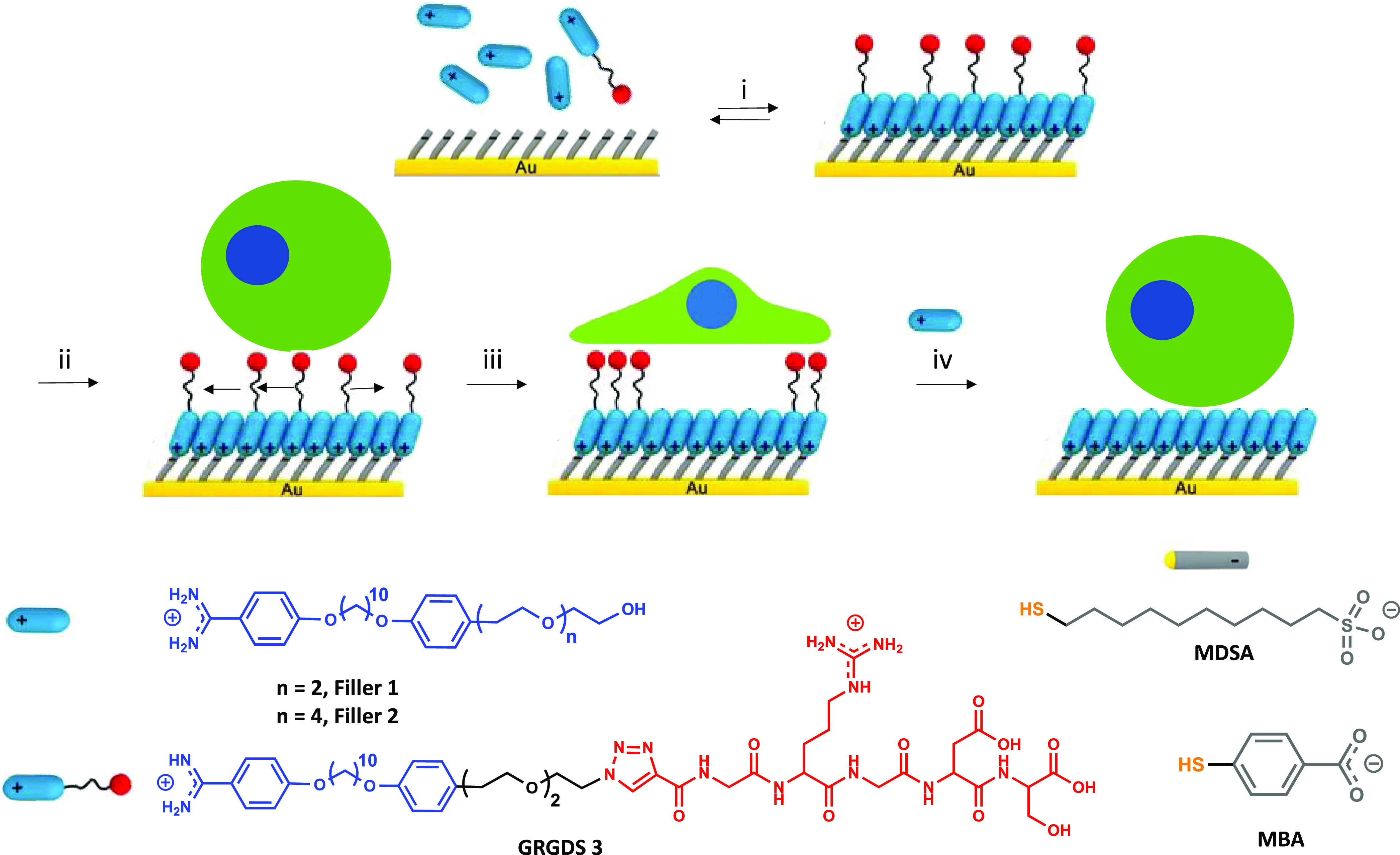
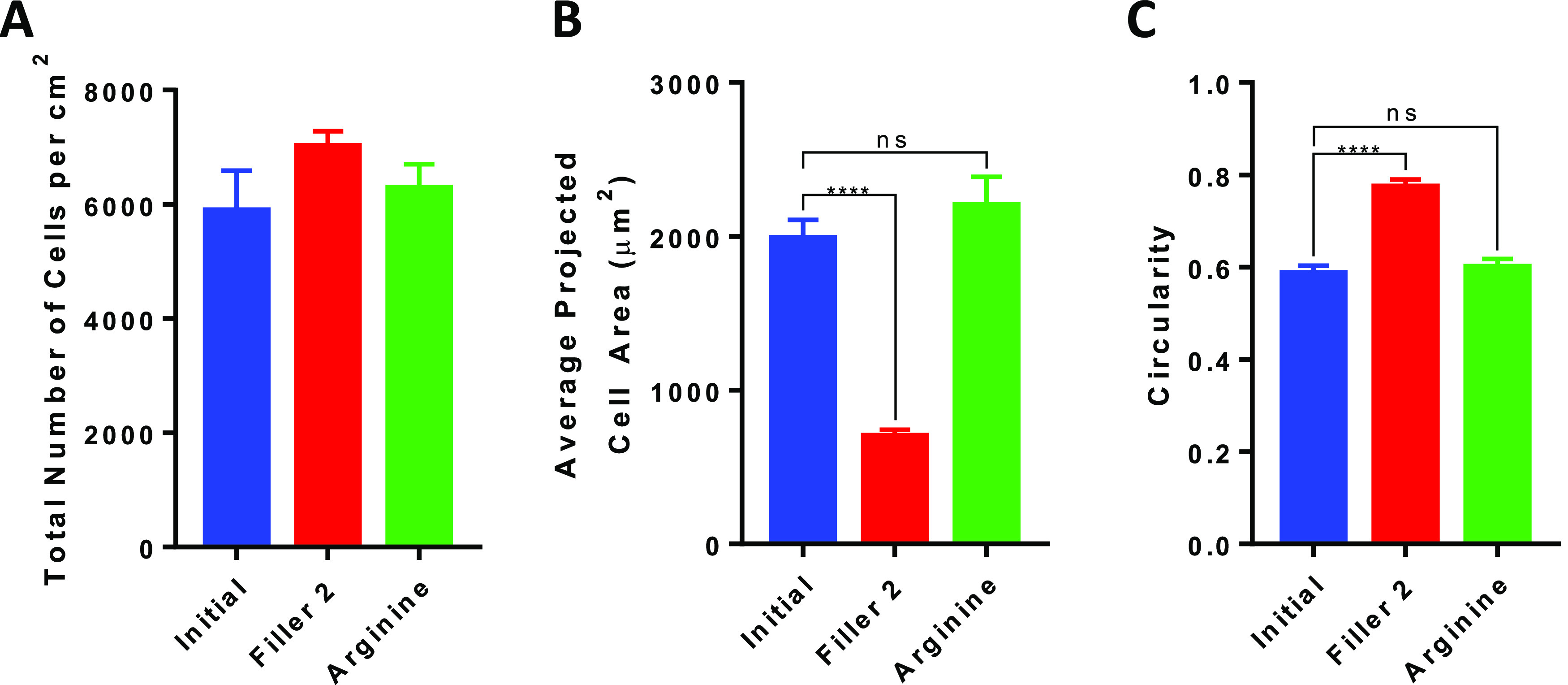
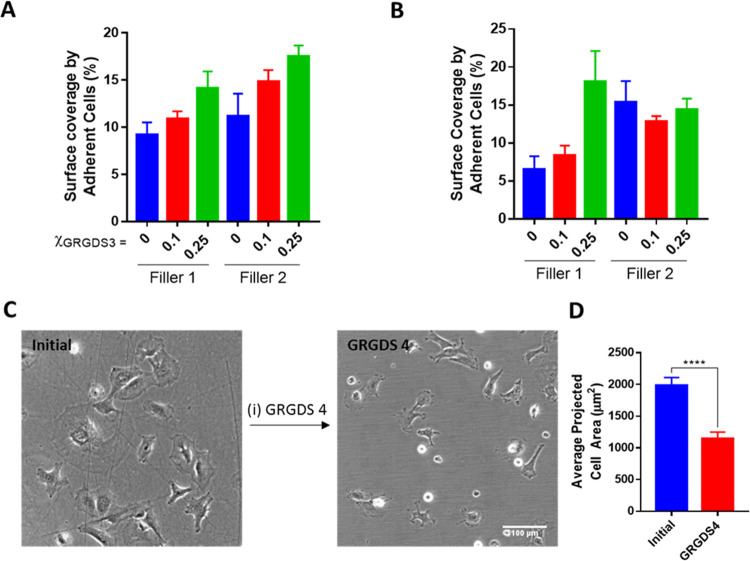
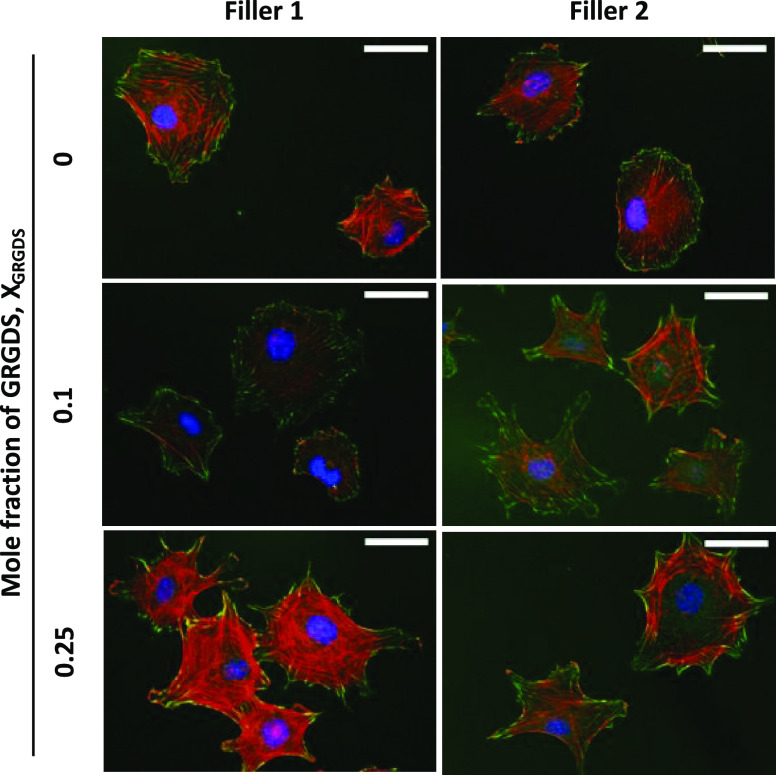
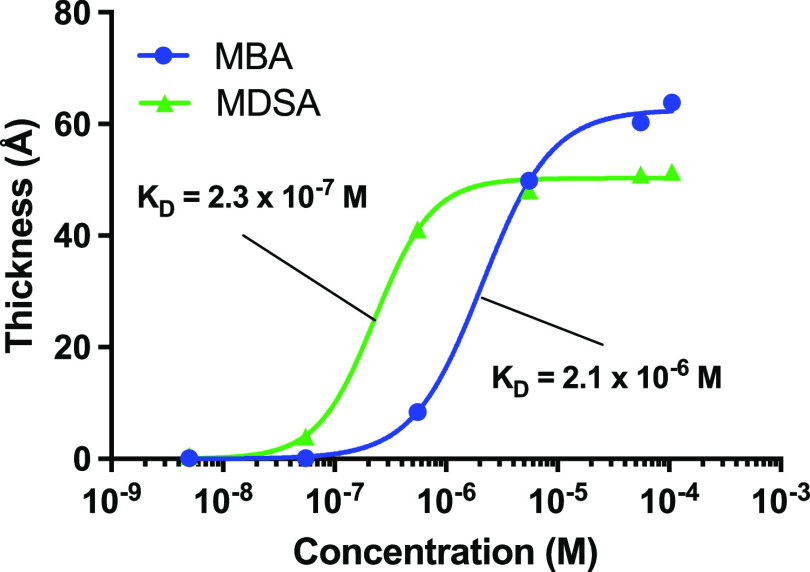
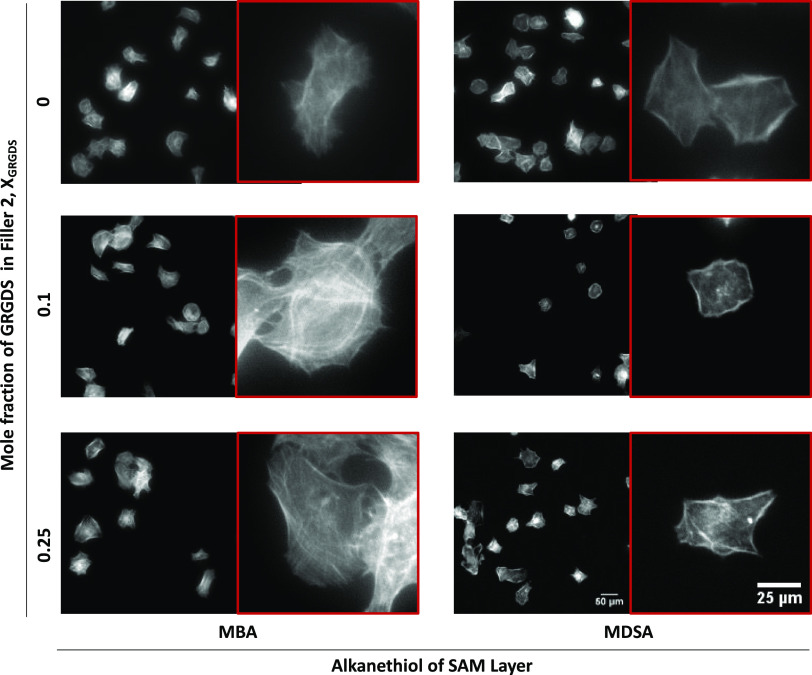
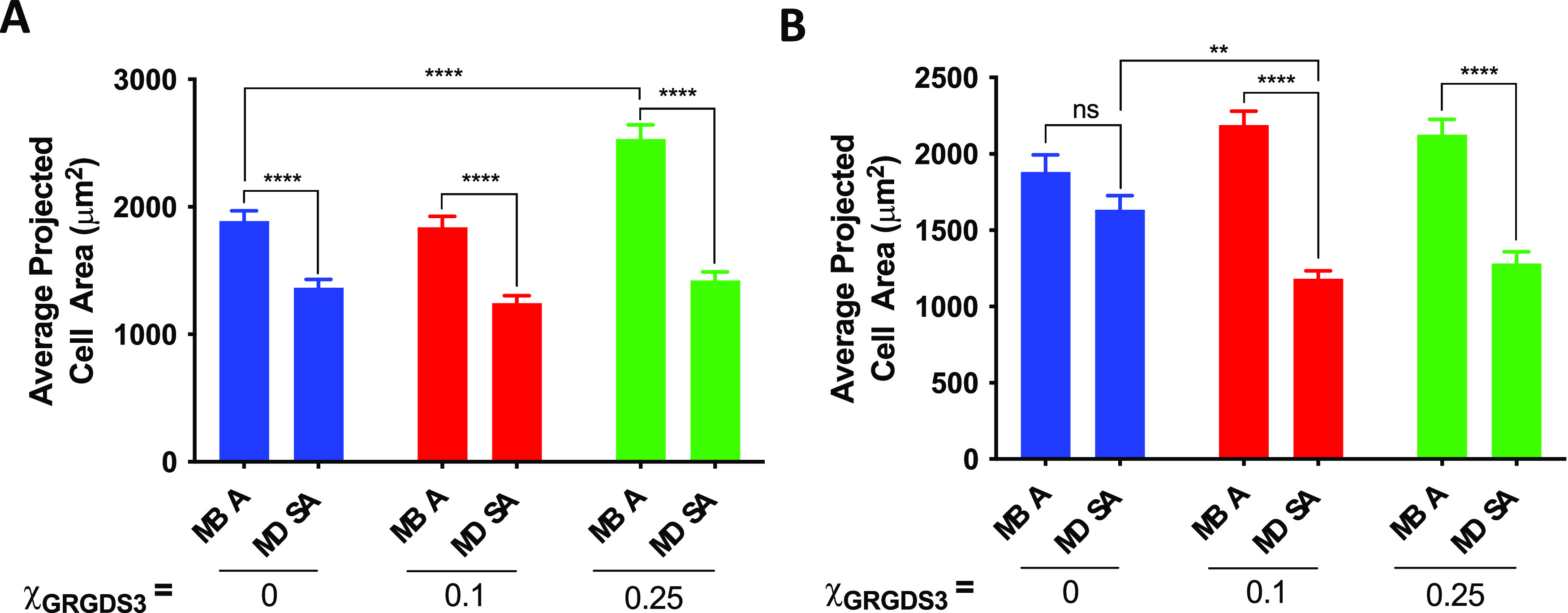
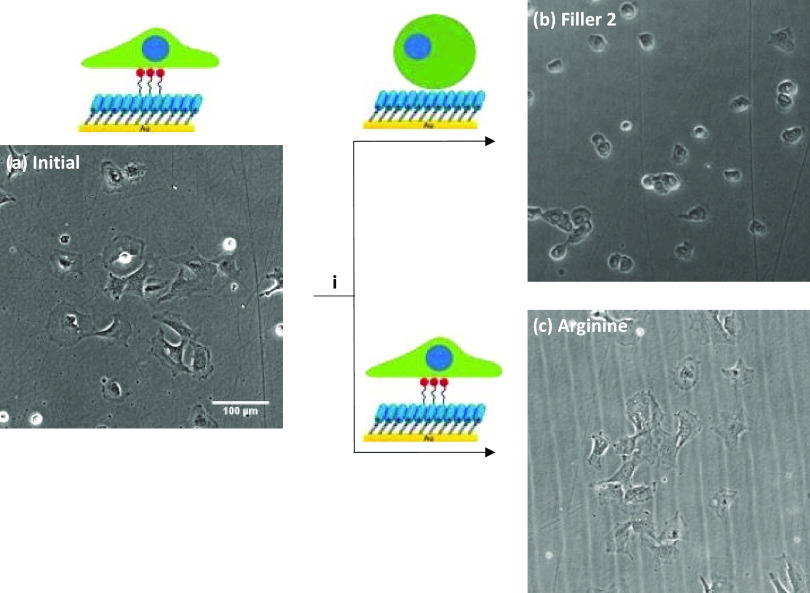
Cells adhering onto surfaces sense and respond to chemical and physical surface features. The control over cell adhesion behavior influences cell migration, proliferation, and differentiation, which are important considerations in biomaterial design for cell culture, tissue engineering, and regenerative medicine. Here, we report on a supramolecular-based approach to prepare reversible self-assembled monolayers (rSAMs) with tunable lateral mobility and dynamic control over surface composition to regulate cell adhesion behavior. These layers were prepared by incubating oxoacid-terminated thiol SAMs on gold in a pH 8 HEPES buffer solution containing different mole fractions of ω-(ethylene glycol)- and ω-(GRGDS)-, α-benzamidino bolaamphiphiles. Cell shape and morphology were influenced by the strength of the interactions between the amidine-functionalized amphiphiles and the oxoacid of the underlying SAMs. Dynamic control over surface composition, achieved by the addition of inert filler amphiphiles to the RGD-functionalized rSAMs, reversed the cell adhesion process. In summary, rSAMs featuring mobile bioactive ligands offer unique capabilities to influence and control cell adhesion behavior, suggesting a broad use in biomaterial design, tissue engineering, and regenerative medicine.
细胞黏附到表面上时,会感知并响应表面的化学和物理特征。对细胞黏附行为的控制会影响细胞的迁移、增殖和分化,这在细胞培养、组织工程和再生医学中对生物材料设计是重要的考虑因素。在这里,我们报告了一种基于超分子的方法,用于制备具有可调横向迁移率和动态表面组成控制的可逆自组装单层(rSAMs),以调节细胞黏附行为。这些层是通过在 pH 8 的 HEPES 缓冲溶液中,将末端为氧杂酸的硫醇 SAM 孵育在金上,得到的,其中含有不同摩尔分数的 ω-(乙二醇)-和 ω-(GRGDS)-、α-苯甲脒 bolaamphiphiles。细胞的形状和形态受到酰胺功能化两亲物与底层 SAM 中氧杂酸之间相互作用强度的影响。通过向 RGD 功能化 rSAMs 中添加惰性填充两亲物,实现了对表面组成的动态控制,从而逆转了细胞黏附过程。总之,具有移动生物活性配体的 rSAMs 提供了独特的能力来影响和控制细胞黏附行为,这表明其在生物材料设计、组织工程和再生医学中有广泛的应用。