Department of Brain Sciences, Weizmann Institute of Science, Rehovot 7610001, Israel.
Department of Biological Sciences, University at Buffalo, The State University of New York, Buffalo, NY 14260, USA.
Curr Biol. 2022 Oct 24;32(20):4372-4385.e7. doi: 10.1016/j.cub.2022.08.038. Epub 2022 Sep 7.
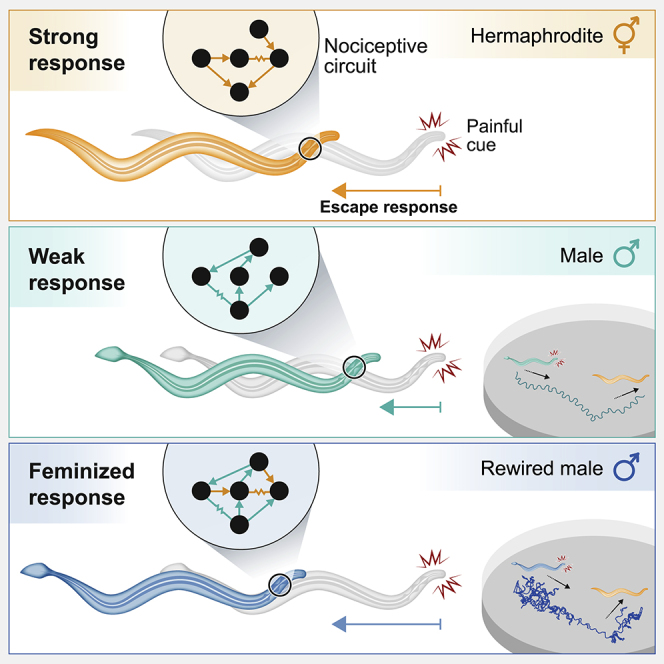
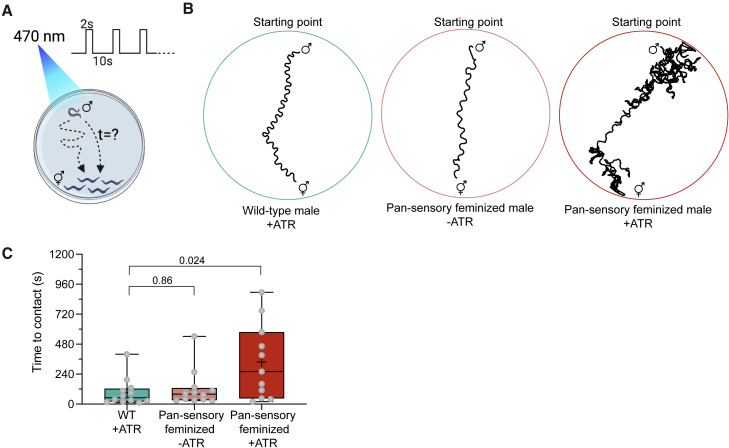
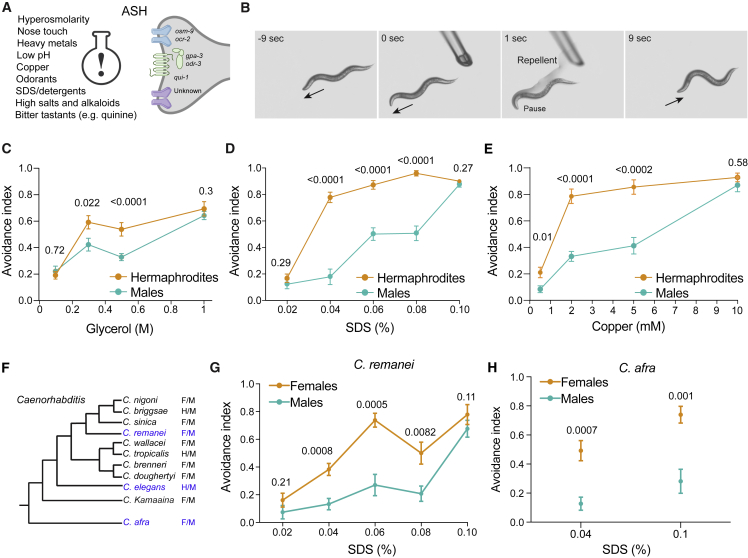
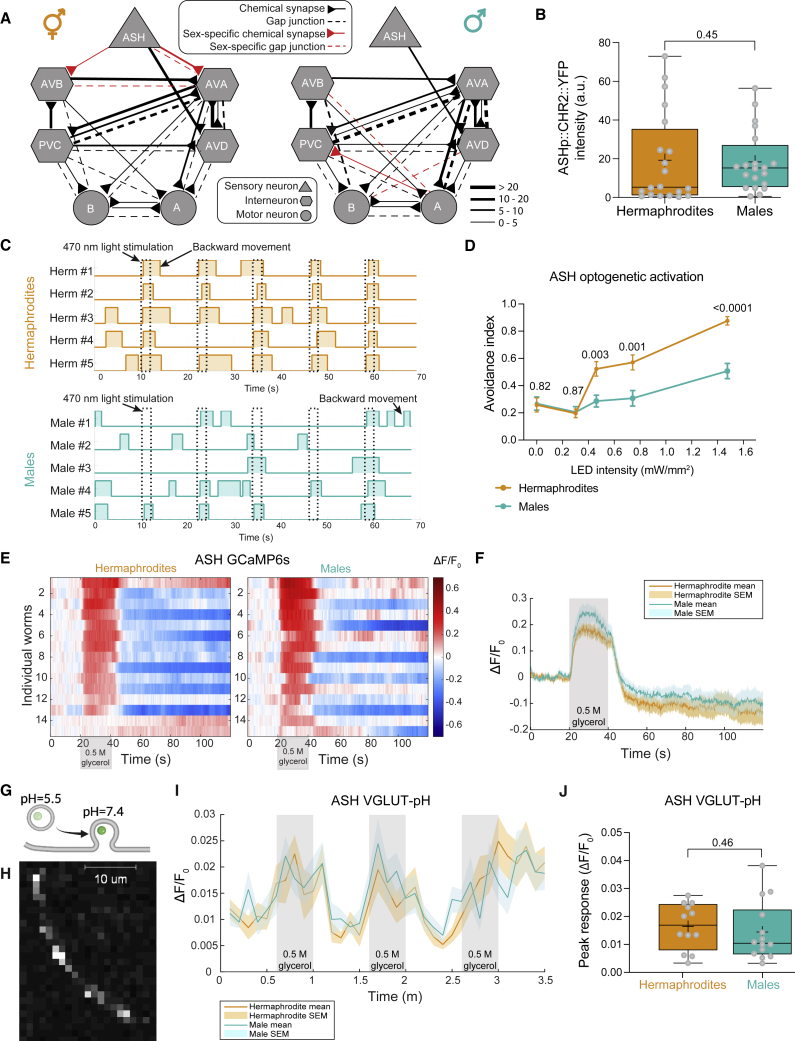
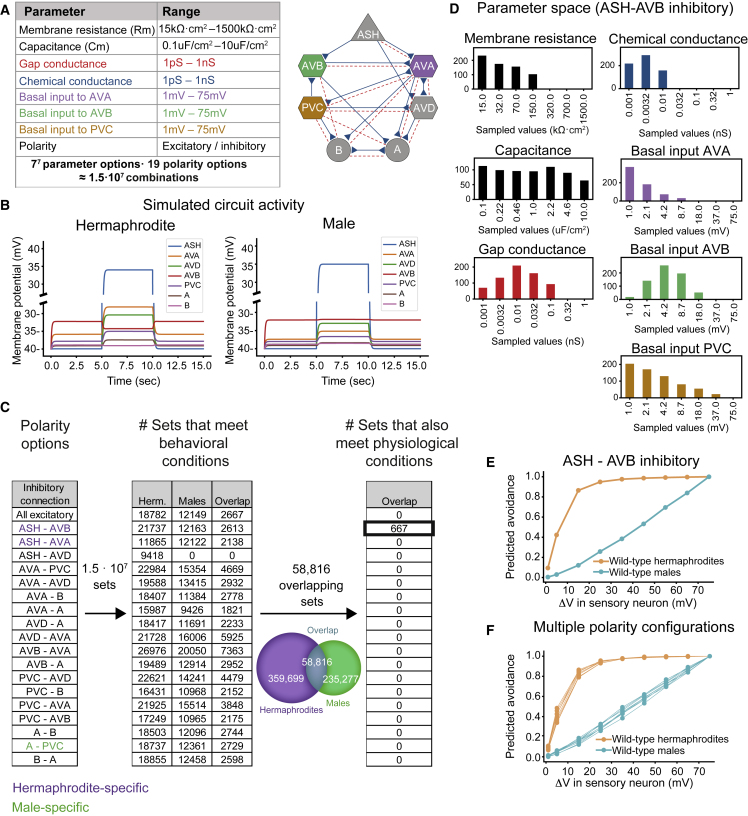
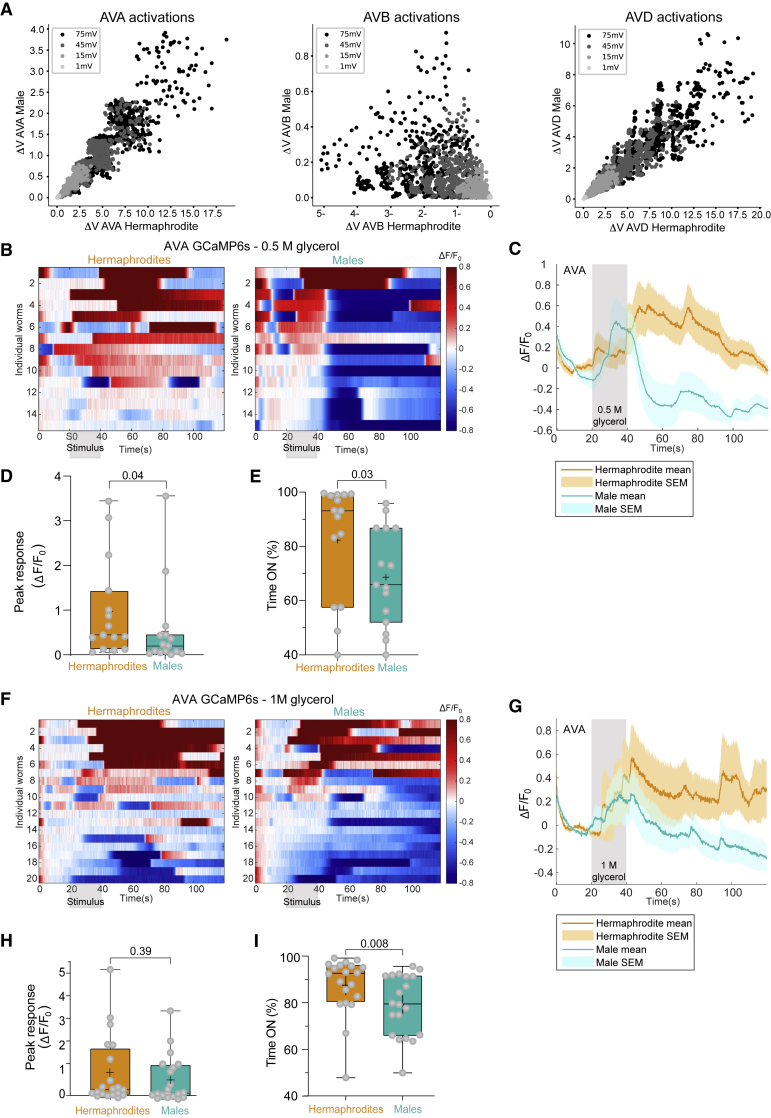
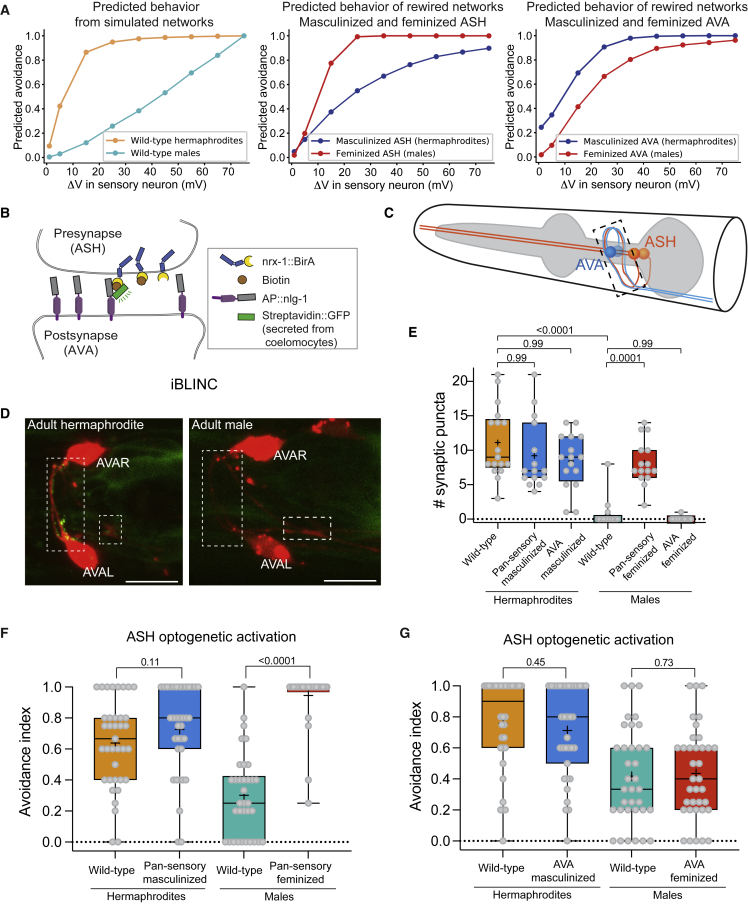
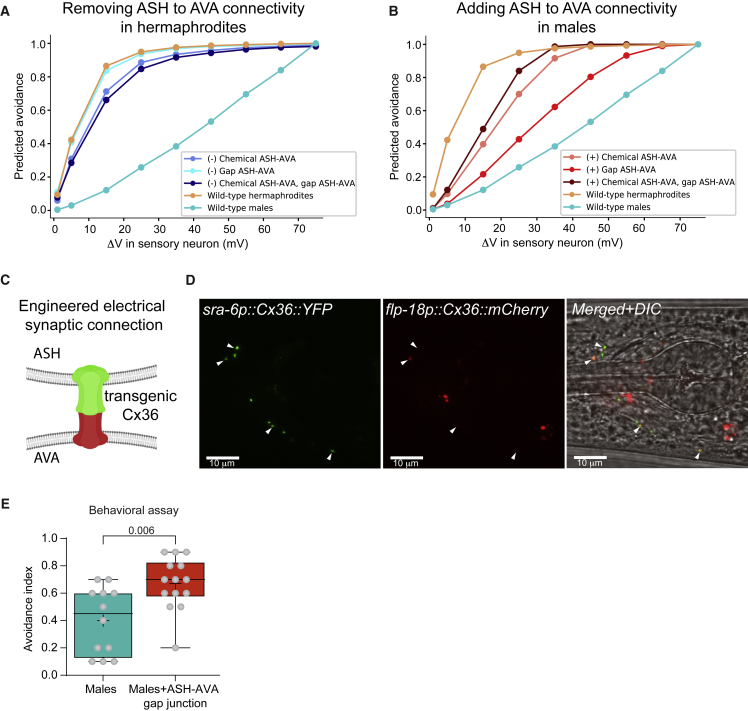
The effect of the detailed connectivity of a neural circuit on its function and the resulting behavior of the organism is a key question in many neural systems. Here, we study the circuit for nociception in C. elegans, which is composed of the same neurons in the two sexes that are wired differently. We show that the nociceptive sensory neurons respond similarly in the two sexes, yet the animals display sexually dimorphic behaviors to the same aversive stimuli. To uncover the role of the downstream network topology in shaping behavior, we learn and simulate network models that replicate the observed dimorphic behaviors and use them to predict simple network rewirings that would switch behavior between the sexes. We then show experimentally that these subtle synaptic rewirings indeed flip behavior. Interestingly, when presented with aversive cues, rewired males were compromised in finding mating partners, suggesting that network topologies that enable efficient avoidance of noxious cues have a reproductive "cost." Our results present a deconstruction of the design of a neural circuit that controls sexual behavior and how to reprogram it.
神经回路的详细连接对其功能以及生物体的行为的影响是许多神经系统的关键问题。在这里,我们研究了秀丽隐杆线虫的痛觉回路,它由两性中相同的神经元组成,但连接方式不同。我们发现,痛觉感觉神经元在两性中反应相似,但动物对相同的厌恶刺激表现出性别二态的行为。为了揭示下游网络拓扑结构在塑造行为中的作用,我们学习和模拟了能够再现观察到的二态性行为的网络模型,并使用它们来预测简单的网络重新连接,这些重新连接可以在性别之间切换行为。然后,我们通过实验证明,这些微妙的突触重新连接确实可以改变行为。有趣的是,当面临厌恶线索时,经过重新布线的雄性在寻找交配伴侣方面受到了损害,这表明能够有效避免有害线索的网络拓扑结构具有生殖“代价”。我们的研究结果对控制性行为的神经回路的设计进行了剖析,并展示了如何对其进行重新编程。