• 文献检索
  • 文档翻译
  • 深度研究
  • 学术资讯
  • Suppr Zotero 插件Zotero 插件
  • 邀请有礼
  • 套餐&价格
  • 历史记录
应用&插件
Suppr Zotero 插件Zotero 插件浏览器插件Mac 客户端Windows 客户端微信小程序
定价
高级版会员购买积分包购买API积分包
服务
文献检索文档翻译深度研究API 文档MCP 服务
关于我们
关于 Suppr公司介绍联系我们用户协议隐私条款
关注我们

Suppr 超能文献

核心技术专利:CN118964589B侵权必究
粤ICP备2023148730 号-1Suppr @ 2026

文献检索

告别复杂PubMed语法,用中文像聊天一样搜索,搜遍4000万医学文献。AI智能推荐,让科研检索更轻松。

立即免费搜索

文件翻译

保留排版,准确专业,支持PDF/Word/PPT等文件格式,支持 12+语言互译。

免费翻译文档

深度研究

AI帮你快速写综述,25分钟生成高质量综述,智能提取关键信息,辅助科研写作。

立即免费体验

转录组谱分析突出了克里米亚-刚果出血热病毒感染后调节的生物学过程和 III 型干扰素抗病毒反应。

Transcriptome profiling highlights regulated biological processes and type III interferon antiviral responses upon Crimean-Congo hemorrhagic fever virus infection.

机构信息

State Key Laboratory of Virology and National Virus Resource Center, Wuhan Institute of Virology, Chinese Academy of Sciences, Wuhan, 430071/430207, China; University of Chinese Academy of Sciences, Beijing, 101408, China.

State Key Laboratory of Virology and National Virus Resource Center, Wuhan Institute of Virology, Chinese Academy of Sciences, Wuhan, 430071/430207, China.

出版信息

Virol Sin. 2023 Feb;38(1):34-46. doi: 10.1016/j.virs.2022.09.002. Epub 2022 Sep 6.

DOI:10.1016/j.virs.2022.09.002
PMID:36075566
原文链接:https://pmc.ncbi.nlm.nih.gov/articles/PMC10006212/
Abstract

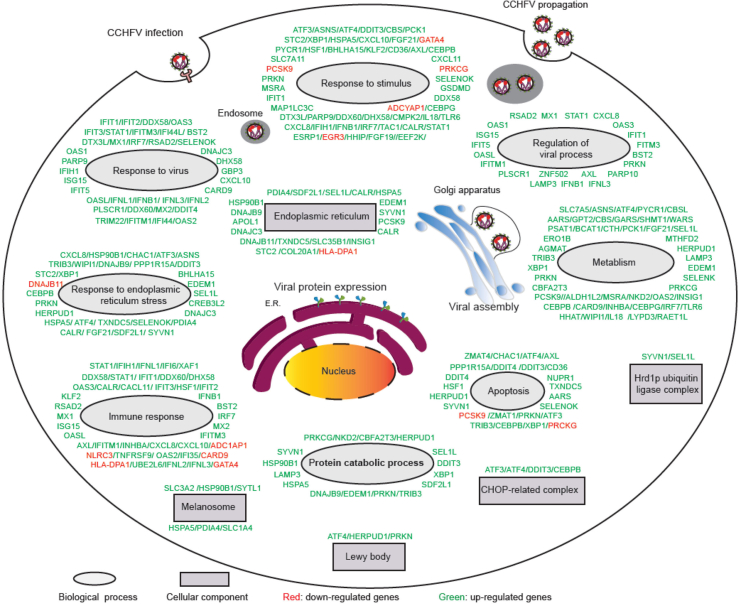
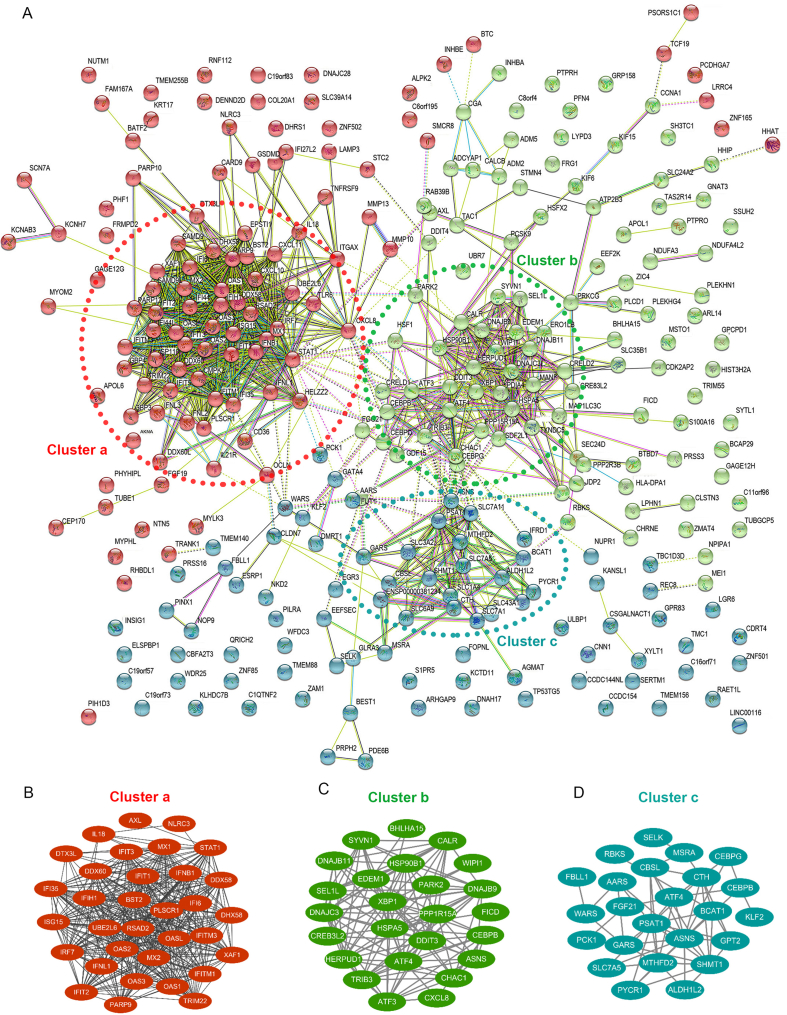
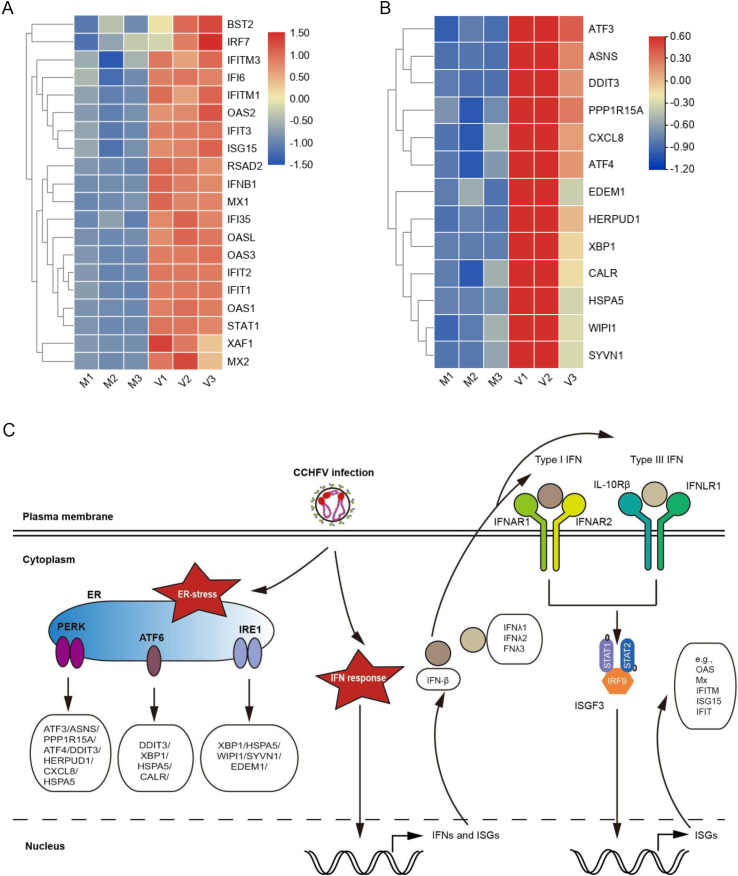
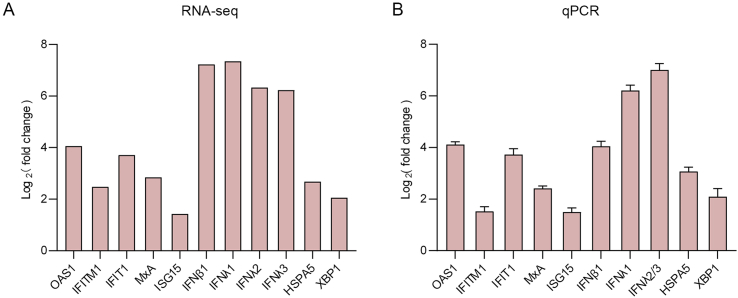
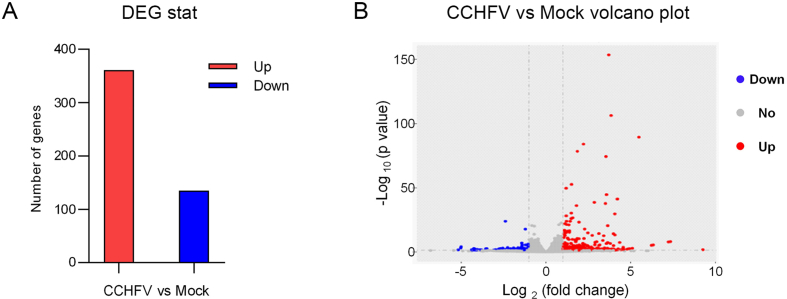
Crimean-Congo hemorrhagic fever virus (CCHFV) is a biosafety level-4 (BSL-4) pathogen that causes Crimean-Congo hemorrhagic fever (CCHF) characterized by hemorrhagic manifestation, multiple organ failure and high mortality rate, posing great threat to public health. Despite the recently increasing research efforts on CCHFV, host cell responses associated with CCHFV infection remain to be further characterized. Here, to better understand the cellular response to CCHFV infection, we performed a transcriptomic analysis in human kidney HEK293 ​cells by high-throughput RNA sequencing (RNA-seq) technology. In total, 496 differentially expressed genes (DEGs), including 361 up-regulated and 135 down-regulated genes, were identified in CCHFV-infected cells. These regulated genes were mainly involved in host processes including defense response to virus, response to stress, regulation of viral process, immune response, metabolism, stimulus, apoptosis and protein catabolic process. Therein, a significant up-regulation of type III interferon (IFN) signaling pathway as well as endoplasmic reticulum (ER) stress response was especially remarkable. Subsequently, representative DEGs from these processes were well validated by RT-qPCR, confirming the RNA-seq results and the typical regulation of IFN responses and ER stress by CCHFV. Furthermore, we demonstrate that not only type I but also type III IFNs (even at low dosages) have substantial anti-CCHFV activities. Collectively, the data may provide new and comprehensive insights into the virus-host interactions and particularly highlights the potential role of type III IFNs in restricting CCHFV, which may help inform further mechanistic delineation of the viral infection and development of anti-CCHFV strategies.

摘要

克里米亚-刚果出血热病毒(CCHFV)是一种生物安全 4 级(BSL-4)病原体,可引起克里米亚-刚果出血热(CCHF),其特征为出血表现、多器官衰竭和高死亡率,对公共卫生构成巨大威胁。尽管最近对 CCHFV 的研究有所增加,但与 CCHFV 感染相关的宿主细胞反应仍需进一步表征。在这里,为了更好地了解细胞对 CCHFV 感染的反应,我们通过高通量 RNA 测序(RNA-seq)技术对人肾 HEK293 细胞进行了转录组分析。总共鉴定出 496 个差异表达基因(DEGs),包括 361 个上调基因和 135 个下调基因,这些基因在 CCHFV 感染细胞中受到调控。这些调节基因主要参与宿主过程,包括对病毒的防御反应、应激反应、病毒过程的调节、免疫反应、代谢、刺激、凋亡和蛋白质分解过程。其中,III 型干扰素(IFN)信号通路和内质网(ER)应激反应的显著上调尤为显著。随后,通过 RT-qPCR 对这些过程中的代表性 DEGs 进行了验证,证实了 RNA-seq 结果以及 CCHFV 对 IFN 反应和 ER 应激的典型调节。此外,我们证明了不仅是 I 型干扰素,而且 III 型干扰素(即使在低剂量下)也具有显著的抗 CCHFV 活性。总之,这些数据可能为病毒-宿主相互作用提供新的和全面的见解,特别是强调了 III 型干扰素在限制 CCHFV 方面的潜在作用,这可能有助于进一步阐明病毒感染的机制和开发抗 CCHFV 策略。
https://cdn.ncbi.nlm.nih.gov/pmc/blobs/9c77/10006212/0359ccd3bf83/gr8.jpg
https://cdn.ncbi.nlm.nih.gov/pmc/blobs/9c77/10006212/789e76d34887/gr1.jpg
https://cdn.ncbi.nlm.nih.gov/pmc/blobs/9c77/10006212/2597c37574f5/gr2.jpg
https://cdn.ncbi.nlm.nih.gov/pmc/blobs/9c77/10006212/d4870301ca1d/gr3.jpg
https://cdn.ncbi.nlm.nih.gov/pmc/blobs/9c77/10006212/fe61ab0c577a/gr4.jpg
https://cdn.ncbi.nlm.nih.gov/pmc/blobs/9c77/10006212/f69b2ba6cf65/gr5.jpg
https://cdn.ncbi.nlm.nih.gov/pmc/blobs/9c77/10006212/47299dd774d7/gr6.jpg
https://cdn.ncbi.nlm.nih.gov/pmc/blobs/9c77/10006212/bab9c900e3cc/gr7.jpg
https://cdn.ncbi.nlm.nih.gov/pmc/blobs/9c77/10006212/0359ccd3bf83/gr8.jpg
https://cdn.ncbi.nlm.nih.gov/pmc/blobs/9c77/10006212/789e76d34887/gr1.jpg
https://cdn.ncbi.nlm.nih.gov/pmc/blobs/9c77/10006212/2597c37574f5/gr2.jpg
https://cdn.ncbi.nlm.nih.gov/pmc/blobs/9c77/10006212/d4870301ca1d/gr3.jpg
https://cdn.ncbi.nlm.nih.gov/pmc/blobs/9c77/10006212/fe61ab0c577a/gr4.jpg
https://cdn.ncbi.nlm.nih.gov/pmc/blobs/9c77/10006212/f69b2ba6cf65/gr5.jpg
https://cdn.ncbi.nlm.nih.gov/pmc/blobs/9c77/10006212/47299dd774d7/gr6.jpg
https://cdn.ncbi.nlm.nih.gov/pmc/blobs/9c77/10006212/bab9c900e3cc/gr7.jpg
https://cdn.ncbi.nlm.nih.gov/pmc/blobs/9c77/10006212/0359ccd3bf83/gr8.jpg

相似文献

1
Transcriptome profiling highlights regulated biological processes and type III interferon antiviral responses upon Crimean-Congo hemorrhagic fever virus infection.转录组谱分析突出了克里米亚-刚果出血热病毒感染后调节的生物学过程和 III 型干扰素抗病毒反应。
Virol Sin. 2023 Feb;38(1):34-46. doi: 10.1016/j.virs.2022.09.002. Epub 2022 Sep 6.
2
Multi-omics insights into host-viral response and pathogenesis in Crimean-Congo hemorrhagic fever viruses for novel therapeutic target.对克里米亚-刚果出血热病毒的宿主-病毒反应和发病机制的多组学研究为新型治疗靶点提供了线索。
Elife. 2022 Apr 19;11:e76071. doi: 10.7554/eLife.76071.
3
Nucleoside-Modified mRNA Vaccines Protect IFNAR Mice against Crimean-Congo Hemorrhagic Fever Virus Infection.核苷修饰的 mRNA 疫苗可保护 IFNAR 小鼠免受克里米亚-刚果出血热病毒感染。
J Virol. 2022 Feb 9;96(3):e0156821. doi: 10.1128/JVI.01568-21. Epub 2021 Nov 24.
4
Hepatocyte pathway alterations in response to in vitro Crimean Congo hemorrhagic fever virus infection.细胞途径改变在体外克里米亚-刚果出血热病毒感染的反应。
Virus Res. 2014 Jan 22;179:187-203. doi: 10.1016/j.virusres.2013.10.013. Epub 2013 Oct 30.
5
Immunization with DNA Plasmids Coding for Crimean-Congo Hemorrhagic Fever Virus Capsid and Envelope Proteins and/or Virus-Like Particles Induces Protection and Survival in Challenged Mice.用编码克里米亚-刚果出血热病毒衣壳蛋白和包膜蛋白的DNA质粒及/或病毒样颗粒进行免疫可诱导受攻击小鼠产生保护作用并使其存活。
J Virol. 2017 Apr 28;91(10). doi: 10.1128/JVI.02076-16. Print 2017 May 15.
6
Crimean-Congo Hemorrhagic Fever Mouse Model Recapitulating Human Convalescence.克里米亚-刚果出血热小鼠模型再现人类恢复期。
J Virol. 2019 Aug 28;93(18). doi: 10.1128/JVI.00554-19. Print 2019 Sep 15.
7
Virus-Derived DNA Forms Mediate the Persistent Infection of Tick Cells by Hazara Virus and Crimean-Congo Hemorrhagic Fever Virus.病毒衍生 DNA 介导哈扎拉病毒和克里米亚-刚果出血热病毒对蜱细胞的持续感染。
J Virol. 2021 Nov 23;95(24):e0163821. doi: 10.1128/JVI.01638-21. Epub 2021 Oct 6.
8
Heat Shock Protein 70 Family Members Interact with Crimean-Congo Hemorrhagic Fever Virus and Hazara Virus Nucleocapsid Proteins and Perform a Functional Role in the Nairovirus Replication Cycle.热休克蛋白70家族成员与克里米亚-刚果出血热病毒和哈扎拉病毒核衣壳蛋白相互作用,并在奈罗病毒复制周期中发挥功能作用。
J Virol. 2016 Sep 29;90(20):9305-16. doi: 10.1128/JVI.00661-16. Print 2016 Oct 15.
9
Antagonistic antiviral activity between IFN-lambda and IFN-alpha against lethal Crimean-Congo hemorrhagic fever virus in vitro.干扰素λ与干扰素α在体外对致死性克里米亚-刚果出血热病毒的拮抗抗病毒活性。
PLoS One. 2015 Feb 18;10(2):e0116816. doi: 10.1371/journal.pone.0116816. eCollection 2015.
10
Crimean-Congo Hemorrhagic Fever Virus: Current Advances and Future Prospects of Antiviral Strategies.克里米亚-刚果出血热病毒:抗病毒策略的当前进展和未来展望。
Viruses. 2021 Jun 22;13(7):1195. doi: 10.3390/v13071195.

引用本文的文献

1
Elevated interferon-induced transmembrane protein 3 in platelets and megakaryocytes suppresses Crimean-Congo hemorrhagic fever viral infection by interacting with glycoprotein Gc.血小板和巨核细胞中升高的干扰素诱导跨膜蛋白3通过与糖蛋白Gc相互作用抑制克里米亚-刚果出血热病毒感染。
Virol Sin. 2025 Jun;40(3):361-373. doi: 10.1016/j.virs.2025.05.002. Epub 2025 May 21.
2
Turkey B Cell Transcriptome Profile During Turkey Hemorrhagic Enteritis Virus (THEV) Infection Highlights Upregulated Apoptosis and Breakdown Pathways That May Mediate Immunosuppression.火鸡出血性肠炎病毒(THEV)感染期间火鸡B细胞转录组图谱突显了可能介导免疫抑制的上调凋亡和分解途径。
Viruses. 2025 Feb 21;17(3):299. doi: 10.3390/v17030299.
3

本文引用的文献

1
Multi-omics insights into host-viral response and pathogenesis in Crimean-Congo hemorrhagic fever viruses for novel therapeutic target.对克里米亚-刚果出血热病毒的宿主-病毒反应和发病机制的多组学研究为新型治疗靶点提供了线索。
Elife. 2022 Apr 19;11:e76071. doi: 10.7554/eLife.76071.
2
Interactome profiling reveals interaction of SARS-CoV-2 NSP13 with host factor STAT1 to suppress interferon signaling.相互作用组分析揭示了SARS-CoV-2 NSP13与宿主因子STAT1相互作用以抑制干扰素信号传导。
J Mol Cell Biol. 2021 Dec 30;13(10):760-762. doi: 10.1093/jmcb/mjab068.
3
Host response transcriptomic analysis of Crimean-Congo hemorrhagic fever pathogenesis in the cynomolgus macaque model.
Recent Advances in Crimean-Congo Hemorrhagic Fever Virus Detection, Treatment, and Vaccination: Overview of Current Status and Challenges.
克里米亚-刚果出血热病毒检测、治疗及疫苗接种的最新进展:现状与挑战概述
Biol Proced Online. 2024 Jun 26;26(1):20. doi: 10.1186/s12575-024-00244-3.
4
Interactome profiling of Crimean-Congo hemorrhagic fever virus glycoproteins.克里米亚-刚果出血热病毒糖蛋白的互作组谱分析。
Nat Commun. 2023 Nov 14;14(1):7365. doi: 10.1038/s41467-023-43206-1.
5
Systems-level temporal immune-metabolic profile in Crimean-Congo hemorrhagic fever virus infection.克里米亚-刚果出血热病毒感染的系统水平时间免疫代谢特征。
Proc Natl Acad Sci U S A. 2023 Sep 12;120(37):e2304722120. doi: 10.1073/pnas.2304722120. Epub 2023 Sep 5.
6
Comparative characterization of Crimean-Congo hemorrhagic fever virus cell culture systems with application to propagation and titration methods.比较克里米亚-刚果出血热病毒细胞培养系统的特征,并将其应用于繁殖和滴定方法。
Virol J. 2023 Jun 19;20(1):128. doi: 10.1186/s12985-023-02089-w.
塞姆利基森林病毒病发病机制的恒河猴模型的宿主反应转录组分析。
Sci Rep. 2021 Oct 6;11(1):19807. doi: 10.1038/s41598-021-99130-1.
4
Crimean-Congo Hemorrhagic Fever Virus: Current Advances and Future Prospects of Antiviral Strategies.克里米亚-刚果出血热病毒:抗病毒策略的当前进展和未来展望。
Viruses. 2021 Jun 22;13(7):1195. doi: 10.3390/v13071195.
5
Differential Cell Line Susceptibility to Crimean-Congo Hemorrhagic Fever Virus.不同细胞系对克里米亚-刚果出血热病毒的易感性差异
Front Cell Infect Microbiol. 2021 Mar 24;11:648077. doi: 10.3389/fcimb.2021.648077. eCollection 2021.
6
Host restriction of emerging high-pathogenic bunyaviruses via MOV10 by targeting viral nucleoprotein and blocking ribonucleoprotein assembly.通过靶向病毒核蛋白并阻断核糖核蛋白组装,利用 MOV10 对新兴高致病性 bunyaviruses 进行宿主限制。
PLoS Pathog. 2020 Dec 7;16(12):e1009129. doi: 10.1371/journal.ppat.1009129. eCollection 2020 Dec.
7
The emerging tick-borne Crimean-Congo haemorrhagic fever virus: A narrative review.新兴的蜱传克里米亚-刚果出血热病毒:叙述性综述。
Travel Med Infect Dis. 2020 Sep-Oct;37:101871. doi: 10.1016/j.tmaid.2020.101871. Epub 2020 Sep 3.
8
2020 taxonomic update for phylum Negarnaviricota (Riboviria: Orthornavirae), including the large orders Bunyavirales and Mononegavirales.2020 年对 Negarnaviricota 门(Riboviria:Orthornavirae)的分类学进行了更新,包括大目 Bunyavirales 和 Mononegavirales。
Arch Virol. 2020 Dec;165(12):3023-3072. doi: 10.1007/s00705-020-04731-2. Epub 2020 Sep 4.
9
Differential Growth Characteristics of Crimean-Congo Hemorrhagic Fever Virus in Kidney Cells of Human and Bovine Origin.克里米亚-刚果出血热病毒在人源和牛源肾细胞中的差异生长特性。
Viruses. 2020 Jun 25;12(6):685. doi: 10.3390/v12060685.
10
A RIG-I-like receptor directs antiviral responses to a bunyavirus and is antagonized by virus-induced blockade of TRIM25-mediated ubiquitination.一种 RIG-I 样受体指导抗病毒反应针对布尼亚病毒,并被病毒诱导的 TRIM25 介导的泛素化阻断所拮抗。
J Biol Chem. 2020 Jul 10;295(28):9691-9711. doi: 10.1074/jbc.RA120.013973. Epub 2020 May 29.