Clinic of Psychiatry, Social Psychiatry and Psychotherapy, Hannover Medical School, 30625 Hanover, Germany.
Present Address: Social Psychiatry Counseling Center, Region Hannover, Podbielskistr. 157, 30177, Hanover, Germany.
BMC Psychiatry. 2022 Sep 8;22(1):597. doi: 10.1186/s12888-022-04208-3.
Borna disease virus 1 (BoDV-1) is a non-segmented, negative-strand RNA virus that persistently infects mammals including humans. BoDV-1 worldwide occurring strains display highly conserved genomes with overlapping genetic signatures between those of either human or animal origin. BoDV-1 infection may cause behavioral and cognitive disturbances in animals but has also been found in human major depression and obsessive-compulsive disorder (OCD). However, the impact of BoDV-1 on memory functions in OCD is unknown.
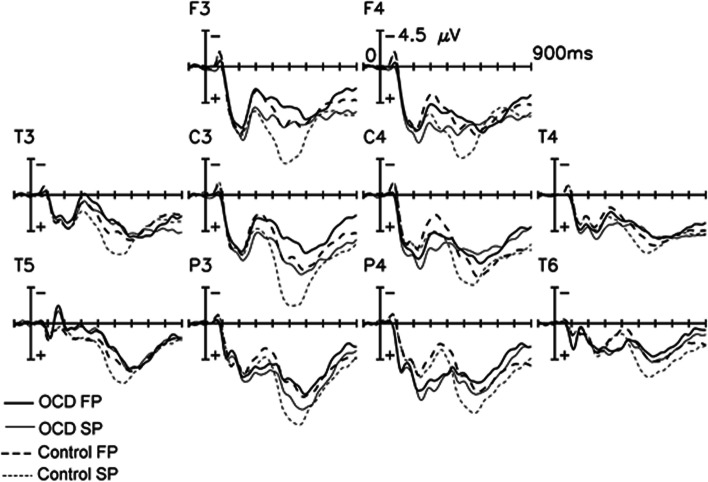
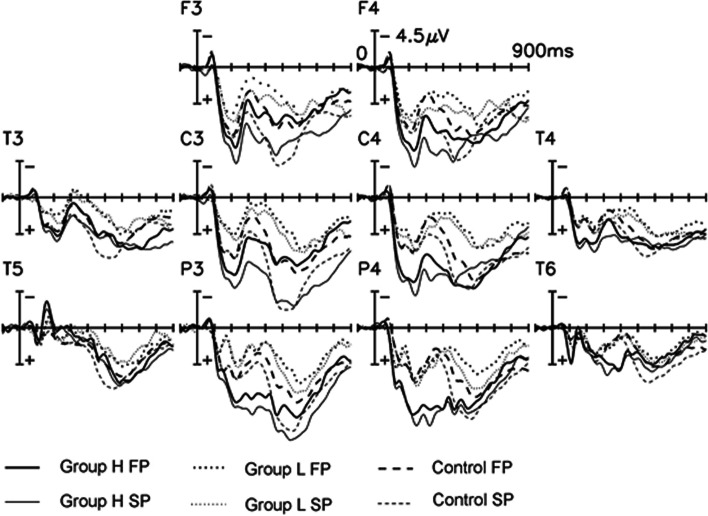
To evaluate the cognitive impact of BoDV-1 in OCD, event-related brain potentials (ERPs) were recorded in a continuous word recognition paradigm in OCD patients (n = 16) and in healthy controls (n = 12). According to the presence of BoDV-1-specific circulating immune complexes (CIC), they were divided into two groups, namely group H (high) and L (low), n = 8 each. Typically, ERPs to repeated items are characterized by more positive waveforms beginning approximately 250 ms post-stimulus. This "old/new effect" has been shown to be relevant for memory processing. The early old/new effect (ca. 300-500 ms) with a frontal distribution is proposed to be a neural correlate of familiarity-based recognition. The late old/new effect (post-500 ms) is supposed to reflect memory recollection processes.
OCD patients were reported to show a normal early old/new effect and a reduced late old/new effect compared to normal controls. In our study, OCD patients with a high virus load (group H) displayed exactly these effects, while patients with a low virus load (group L) did not differ from healthy controls.
These results confirmed that OCD patients had impaired memory recollection processes compared to the normal controls which may to some extent be related to their BoDV-1 infection.
博尔纳病病毒 1(BoDV-1)是一种非节段、负链 RNA 病毒,持续感染哺乳动物,包括人类。全世界流行的 BoDV-1 株显示出高度保守的基因组,其遗传特征在人类或动物来源之间重叠。BoDV-1 感染可能导致动物的行为和认知障碍,但也在人类重度抑郁症和强迫症(OCD)中发现。然而,BoDV-1 对 OCD 记忆功能的影响尚不清楚。
为了评估 BoDV-1 在 OCD 中的认知影响,在 OCD 患者(n=16)和健康对照组(n=12)中,使用连续单词识别范式记录事件相关脑电位(ERPs)。根据是否存在 BoDV-1 特异性循环免疫复合物(CIC),他们被分为两组,即高(H)组和低(L)组,每组 n=8。通常,重复项目的 ERPs 以刺激后约 250 毫秒开始的更正向波形为特征。这种“旧/新效应”被证明与记忆处理有关。具有额部分布的早期旧/新效应(约 300-500 毫秒)被认为是基于熟悉度的识别的神经相关性。后期旧/新效应(500 毫秒后)被认为反映了记忆回忆过程。
据报道,与正常对照组相比,OCD 患者表现出正常的早期旧/新效应和降低的晚期旧/新效应。在我们的研究中,高病毒载量(H 组)的 OCD 患者表现出完全相同的效应,而低病毒载量(L 组)的患者与健康对照组没有差异。
这些结果证实,与正常对照组相比,OCD 患者的记忆回忆过程受损,这在一定程度上可能与他们的 BoDV-1 感染有关。