Department of Anatomy and Histology, School of Medicine, Nankai University, Tianjin 300071, China.
Int J Mol Sci. 2022 Sep 2;23(17):10025. doi: 10.3390/ijms231710025.
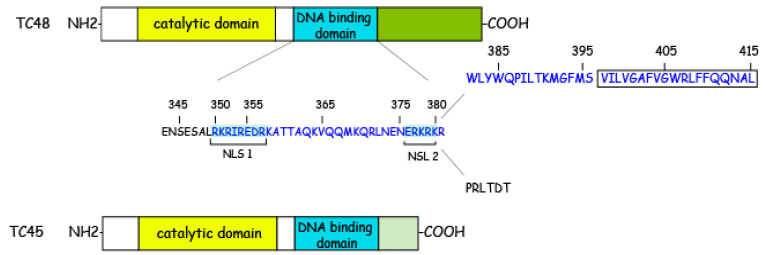
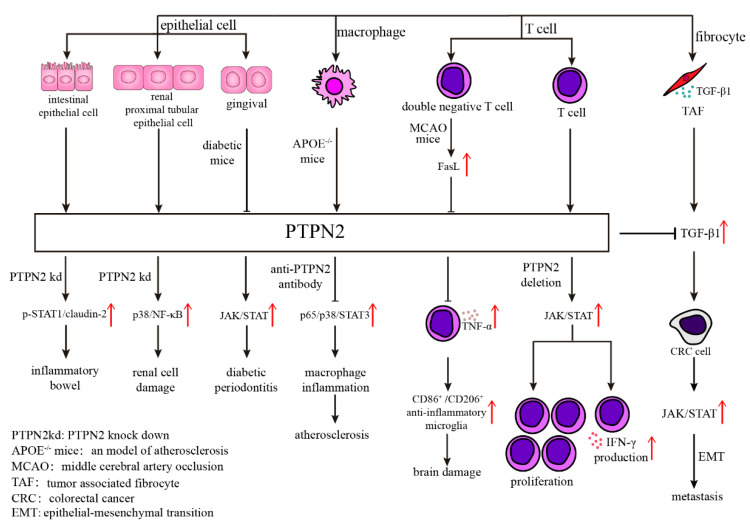
PTPN2 (protein tyrosine phosphatase non-receptor 2), also called TCPTP (T cell protein tyrosine phosphatase), is a member of the PTP family signaling proteins. Phosphotyrosine-based signaling of this non-transmembrane protein is essential for regulating cell growth, development, differentiation, survival, and migration. In particular, PTPN2 received researchers' attention when Manguso et al. identified PTPN2 as a cancer immunotherapy target using in vivo CRISPR library screening. In this review, we attempt to summarize the important functions of PTPN2 in terms of its structural and functional properties, inflammatory reactions, immunomodulatory properties, and tumor immunity. PTPN2 exerts synergistic anti-inflammatory effects in various inflammatory cells and regulates the developmental differentiation of immune cells. The diversity of PTPN2 effects in different types of tumors makes it a potential target for tumor immunotherapy.
PTPN2(蛋白酪氨酸磷酸酶非受体 2),也称为 TCPTP(T 细胞蛋白酪氨酸磷酸酶),是 PTP 家族信号蛋白的成员。这种非跨膜蛋白的磷酸酪氨酸信号对于调节细胞生长、发育、分化、存活和迁移至关重要。特别是,当 Manguso 等人使用体内 CRISPR 文库筛选鉴定 PTPN2 为癌症免疫治疗靶点时,PTPN2 引起了研究人员的关注。在这篇综述中,我们试图根据 PTPN2 的结构和功能特性、炎症反应、免疫调节特性和肿瘤免疫来总结其重要功能。PTPN2 在各种炎症细胞中发挥协同抗炎作用,并调节免疫细胞的发育分化。PTPN2 在不同类型肿瘤中的作用多样性使其成为肿瘤免疫治疗的潜在靶点。