Research Center for Controlling Intercellular Communication, College of Medicine, Inha University, Incheon 22212, Korea.
Department of Molecular Medicine, College of Medicine, Inha University, Incheon 22212, Korea.
Int J Mol Sci. 2022 Sep 4;23(17):10135. doi: 10.3390/ijms231710135.
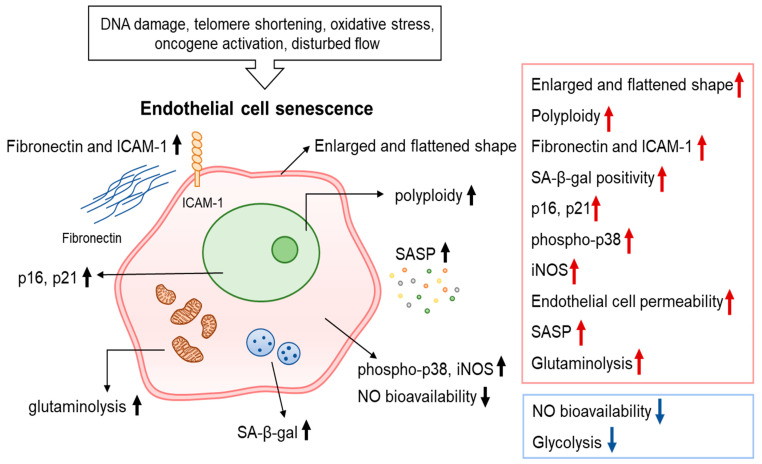
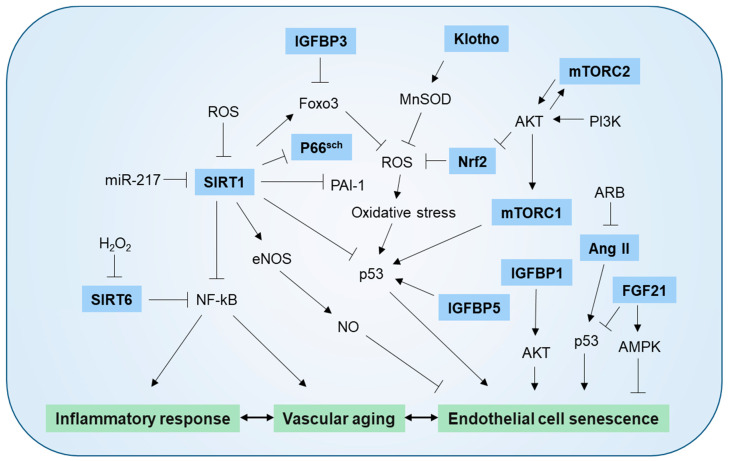
Aging causes a progressive decline in the structure and function of organs. With advancing age, an accumulation of senescent endothelial cells (ECs) contributes to the risk of developing vascular dysfunction and cardiovascular diseases, including hypertension, diabetes, atherosclerosis, and neurodegeneration. Senescent ECs undergo phenotypic changes that alter the pattern of expressed proteins, as well as their morphologies and functions, and have been linked to vascular impairments, such as aortic stiffness, enhanced inflammation, and dysregulated vascular tone. Numerous molecules and pathways, including sirtuins, Klotho, RAAS, IGFBP, NRF2, and mTOR, have been implicated in promoting EC senescence. This review summarizes the molecular players and signaling pathways driving EC senescence and identifies targets with possible therapeutic value in age-related vascular diseases.
衰老是导致器官结构和功能进行性下降的原因。随着年龄的增长,衰老内皮细胞(EC)的积累导致血管功能障碍和心血管疾病的风险增加,包括高血压、糖尿病、动脉粥样硬化和神经退行性变。衰老的 EC 经历表型变化,改变表达蛋白的模式,以及它们的形态和功能,并与血管损伤有关,如主动脉僵硬、增强的炎症和血管张力失调。许多分子和途径,包括沉默调节蛋白、Klotho、肾素-血管紧张素-醛固酮系统、胰岛素样生长因子结合蛋白、NRF2 和 mTOR,都被认为与促进 EC 衰老有关。本综述总结了驱动 EC 衰老的分子参与者和信号通路,并确定了与与年龄相关的血管疾病相关的具有潜在治疗价值的靶点。