Dalal Kesha K, Katari Venkatesh, Kondapalli Narendra, Paruchuri Sailaja, Thodeti Charles K
Department of Physiology and Pharmacology, The University of Toledo College of Medicine and Life Sciences, Toledo, Ohio, United States.
Am J Physiol Heart Circ Physiol. 2025 Aug 1;329(2):H340-H357. doi: 10.1152/ajpheart.00352.2025. Epub 2025 Jun 27.
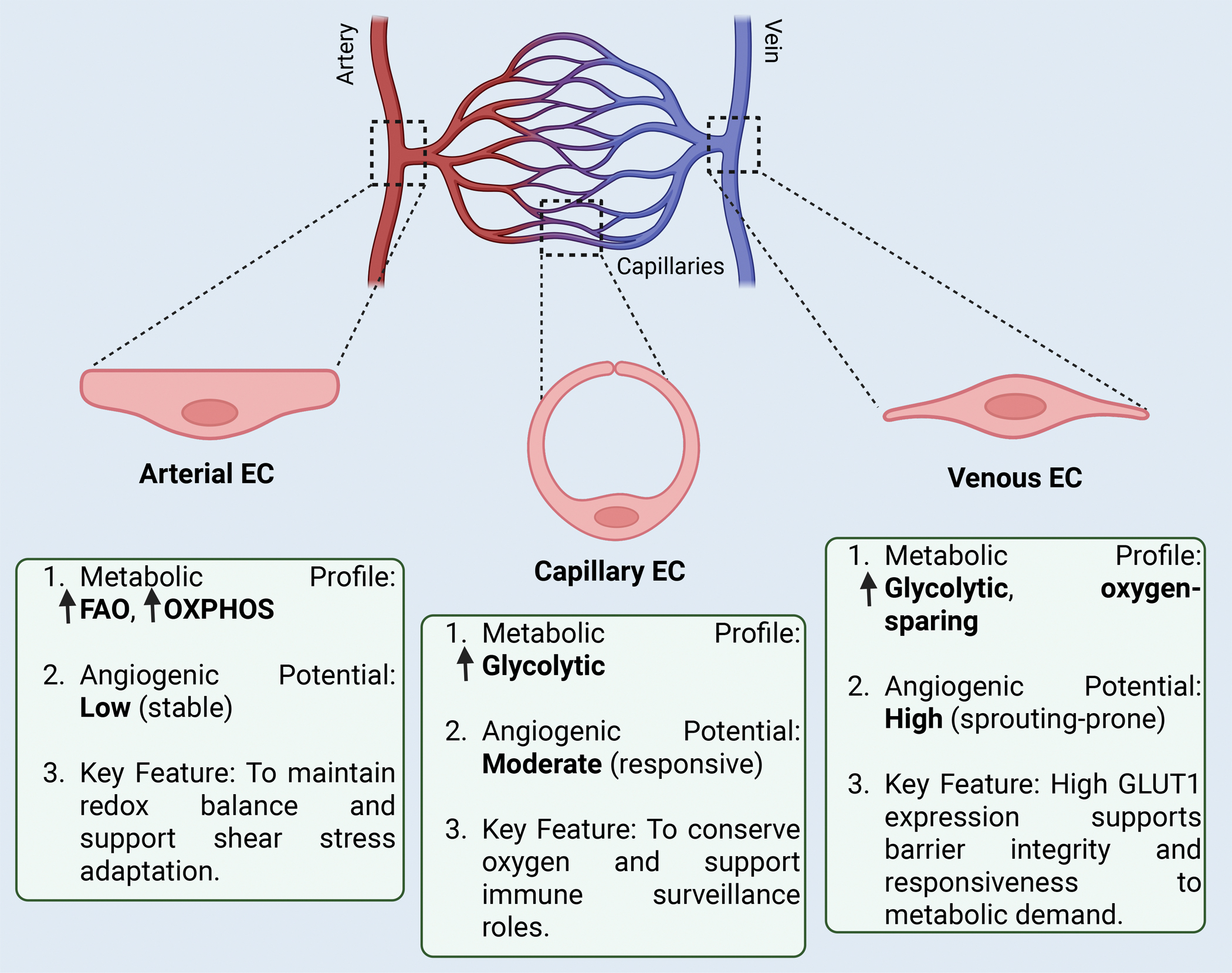
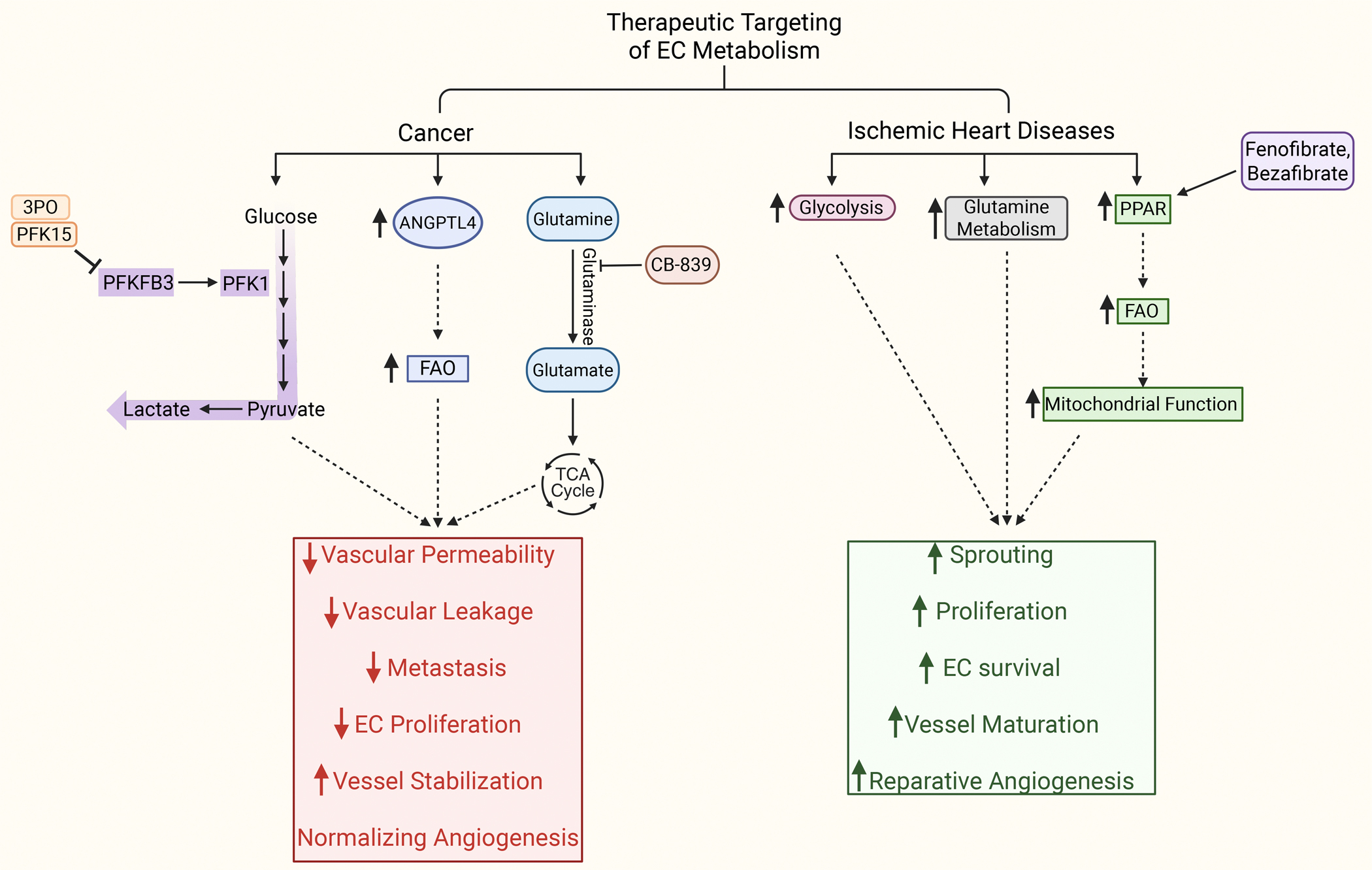
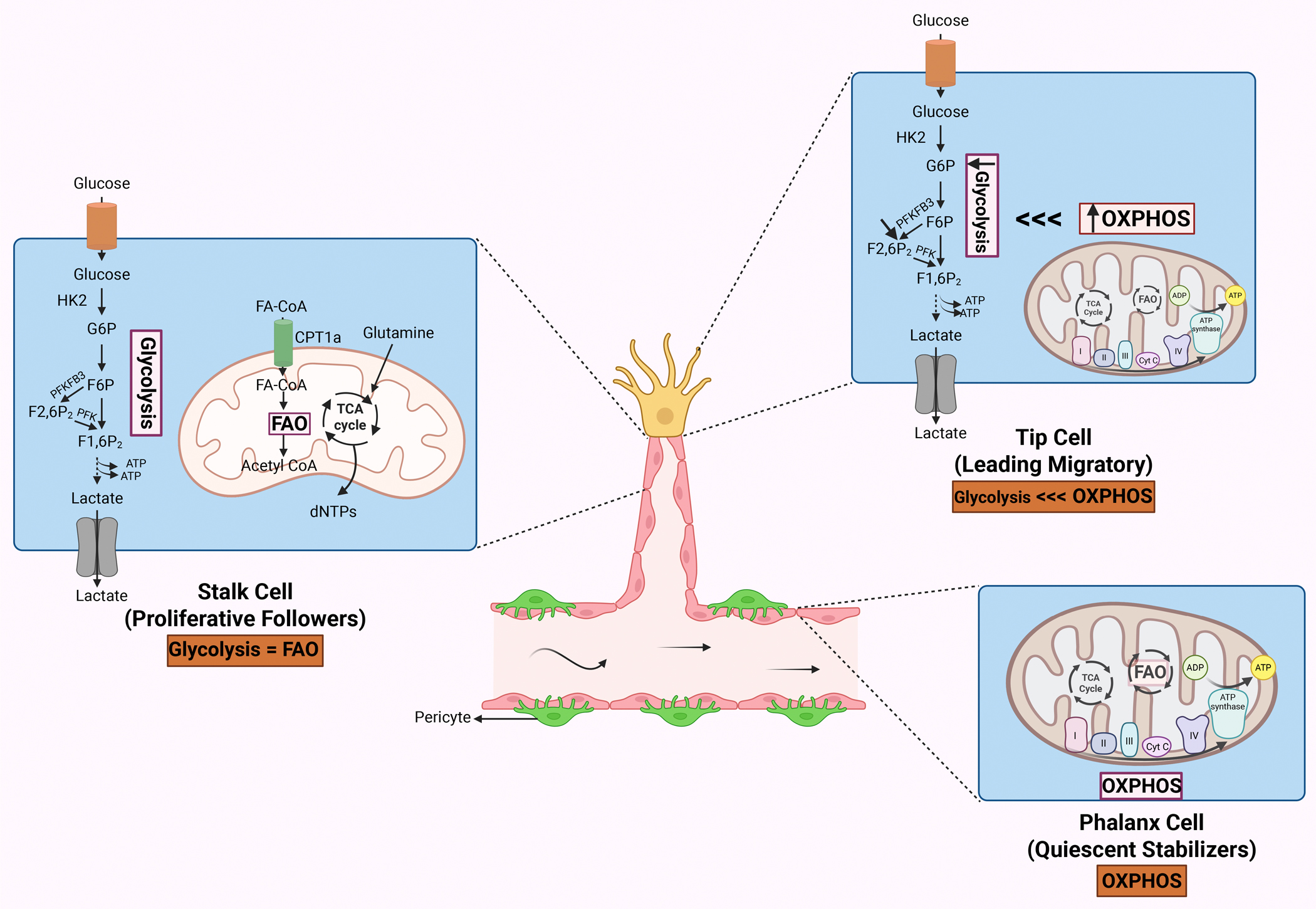
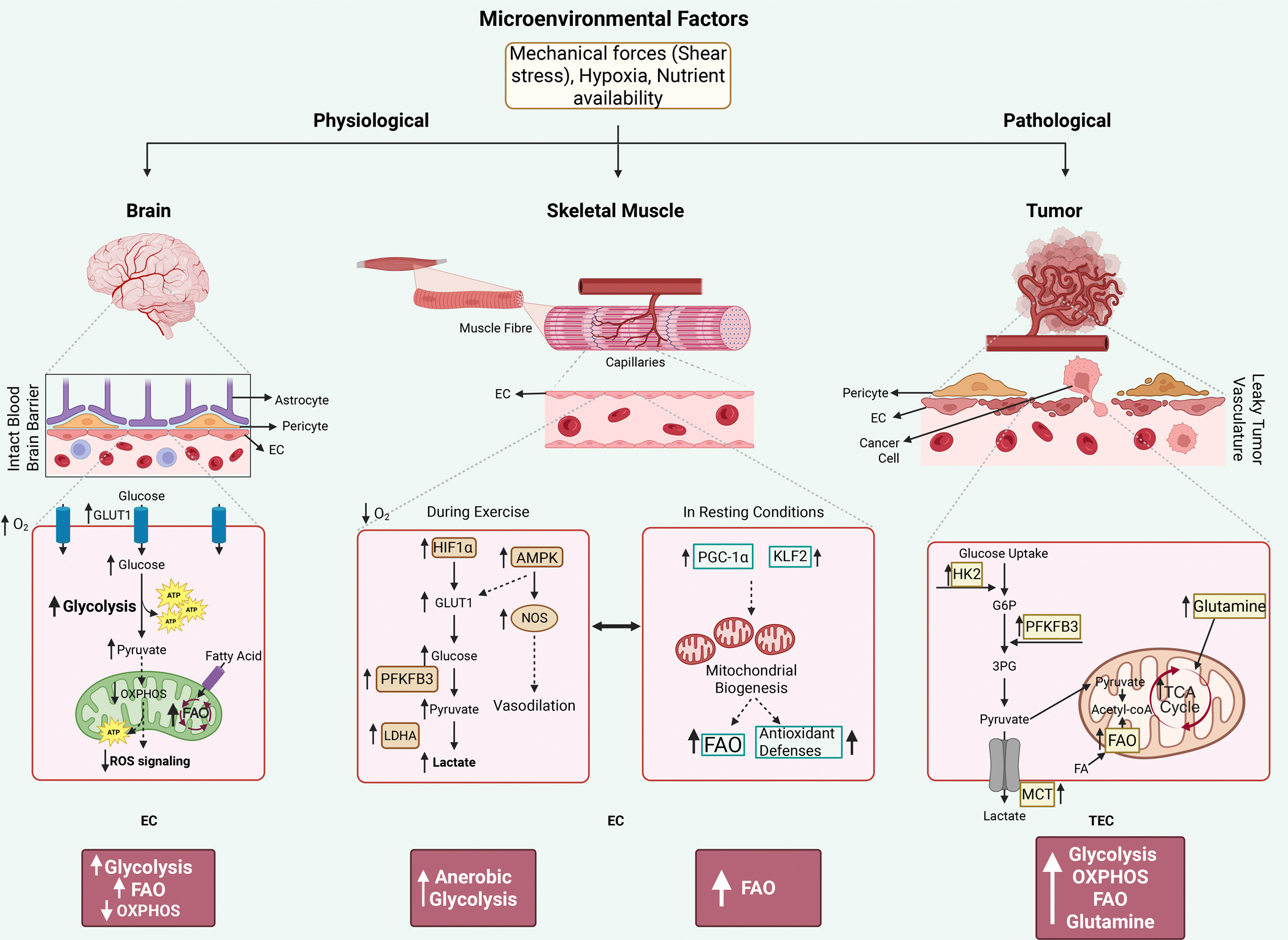
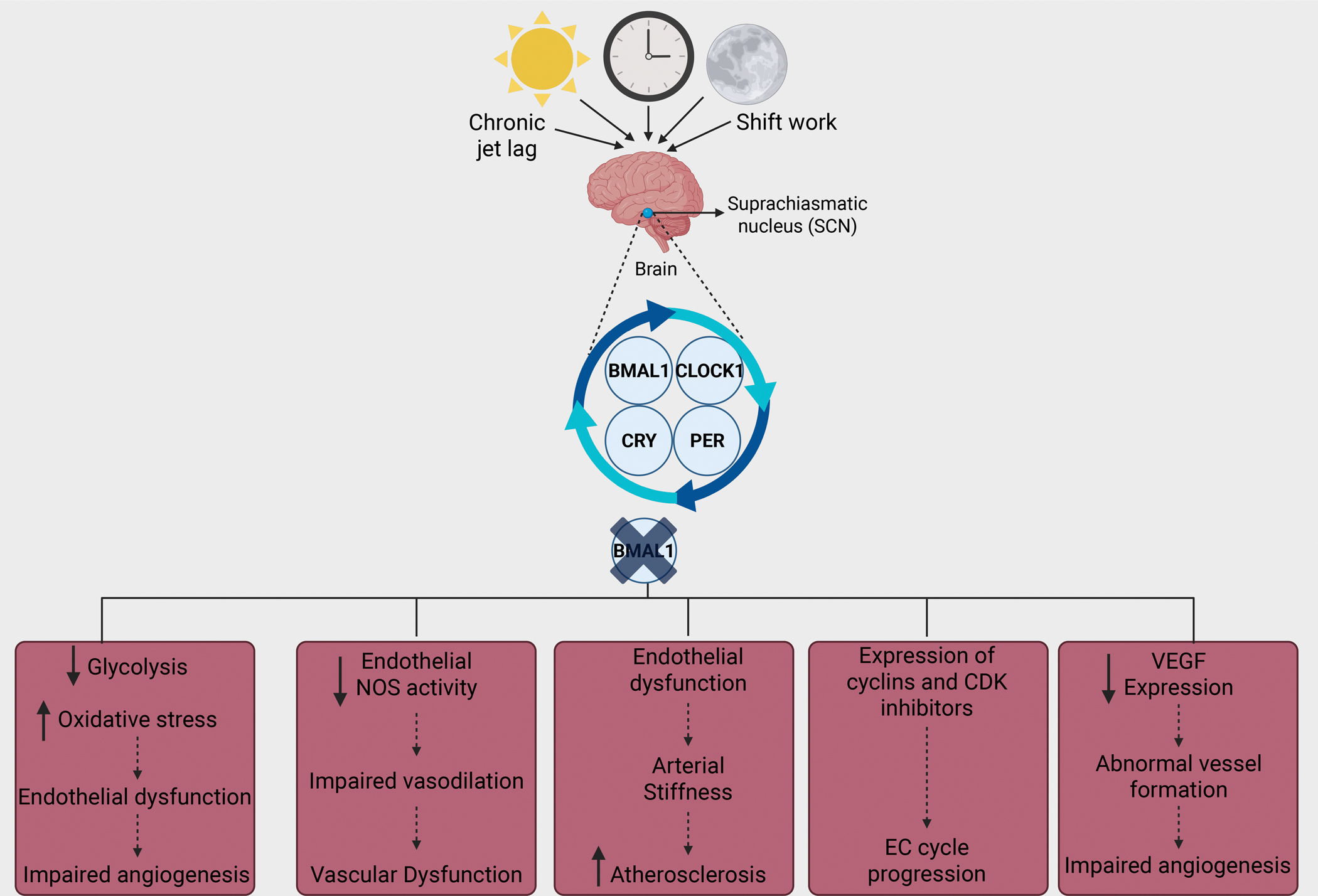
Angiogenesis, a cornerstone of vascular development, tissue regeneration, and tumor progression, is critically orchestrated by the metabolic behavior of endothelial cells (EC). Recent discoveries have redefined EC not as metabolically uniform entities, but as spatially and functionally heterogeneous populations whose metabolic states govern their angiogenic potential. This review presents a comprehensive synthesis of metabolic zonation in EC, spanning arterial, venous, and capillary domains, and highlights cell-type-specific programs during sprouting angiogenesis-including tip, stalk, and phalanx cells. We explore how distinct metabolic pathways-glycolysis, oxidative phosphorylation, fatty acid oxidation, and glutaminolysis-are differentially used across tissue contexts such as the brain, skeletal muscle, kidney, and tumor microenvironments. We discuss technological breakthroughs in spatial metabolomics, temporal (circadian) regulation of endothelial metabolism, and emerging clinical strategies to target EC metabolic vulnerabilities in cancer and ischemic diseases. Furthermore, we advocate for spatiotemporal modeling of EC metabolism using computational and machine learning frameworks to predict angiogenic behavior and accelerate therapeutic discovery. This integrative perspective underscores the need for precision-targeted angiogenic interventions and establishes metabolic zonation as a foundational principle in vascular biology.
血管生成是血管发育、组织再生和肿瘤进展的基石,由内皮细胞(EC)的代谢行为严格调控。最近的发现重新定义了内皮细胞,它们并非代谢均一的细胞群体,而是在空间和功能上具有异质性的群体,其代谢状态决定了它们的血管生成潜力。本文综述全面综合了内皮细胞中的代谢分区,涵盖动脉、静脉和毛细血管区域,并强调了芽生血管生成过程中细胞类型特异性程序,包括顶端细胞、柄细胞和指状细胞。我们探讨了不同的代谢途径——糖酵解、氧化磷酸化、脂肪酸氧化和谷氨酰胺分解代谢——如何在不同组织环境(如脑、骨骼肌、肾脏和肿瘤微环境)中被差异利用。我们讨论了空间代谢组学的技术突破、内皮细胞代谢的时间(昼夜节律)调节以及针对癌症和缺血性疾病中内皮细胞代谢弱点的新兴临床策略。此外,我们主张使用计算和机器学习框架对内皮细胞代谢进行时空建模,以预测血管生成行为并加速治疗发现。这种综合观点强调了精准靶向血管生成干预的必要性,并将代谢分区确立为血管生物学的一项基本原则。