Herzog Henrike, Dogan Senol, Aktas Bahriye, Nel Ivonne
Department of Gynecology, Medical Center, University of Leipzig, 04103 Leipzig, Germany.
Soft Matter Physics Division, Peter-Debye-Institute, University of Leipzig, 04103 Leipzig, Germany.
Cancers (Basel). 2022 Aug 24;14(17):4101. doi: 10.3390/cancers14174101.
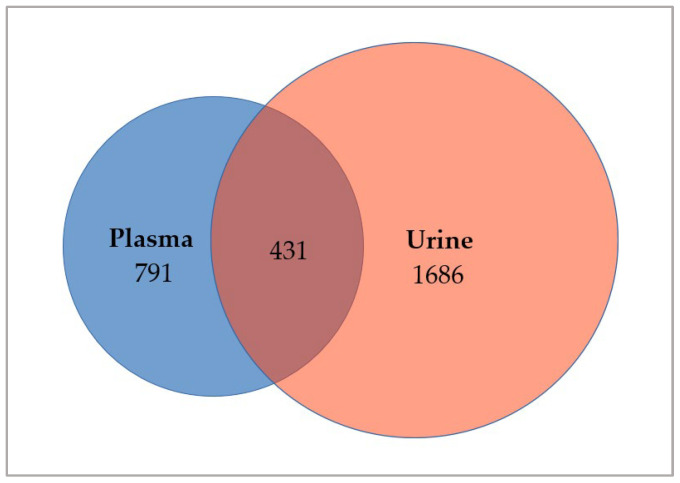
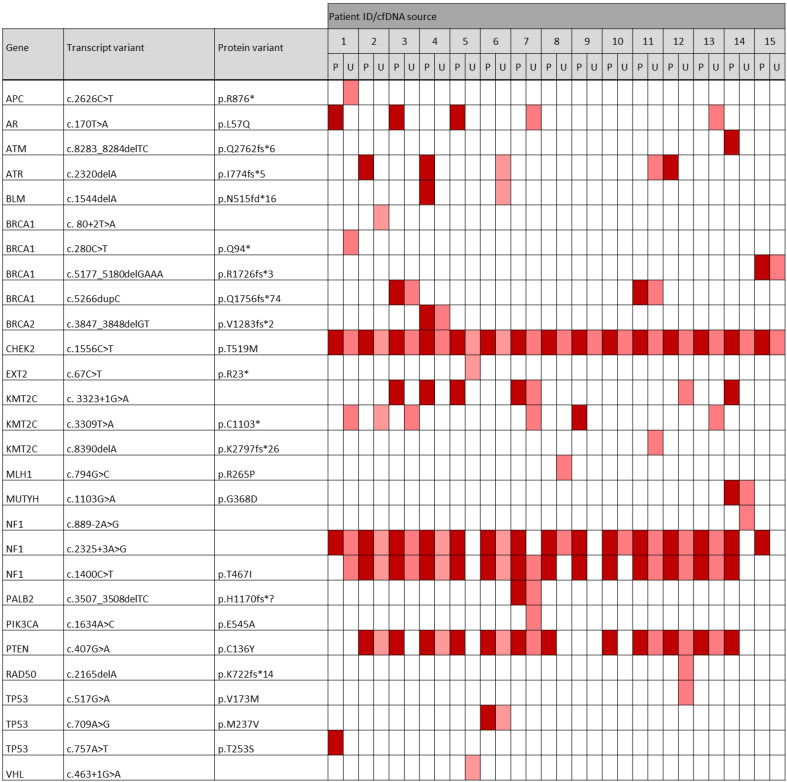
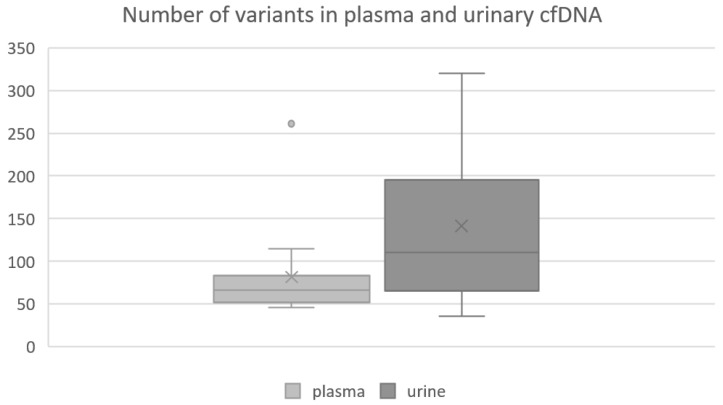
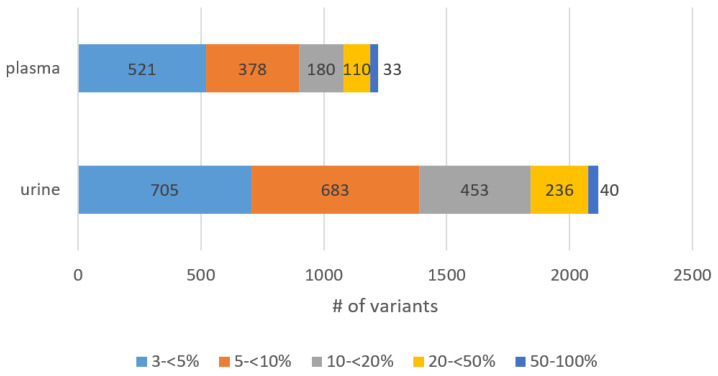
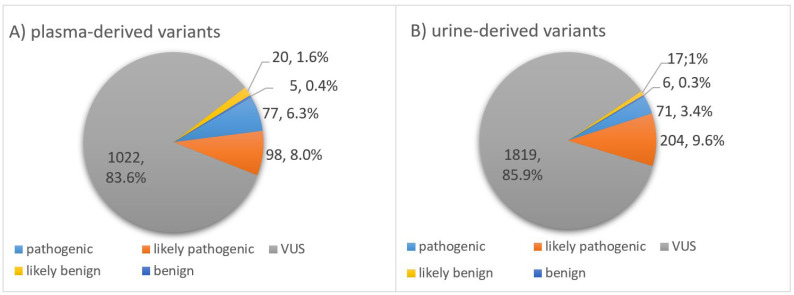
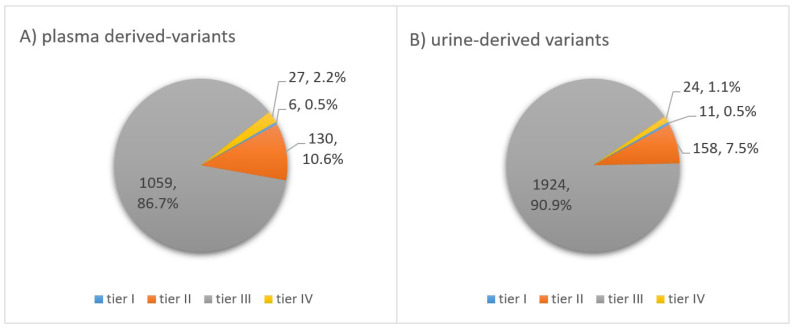
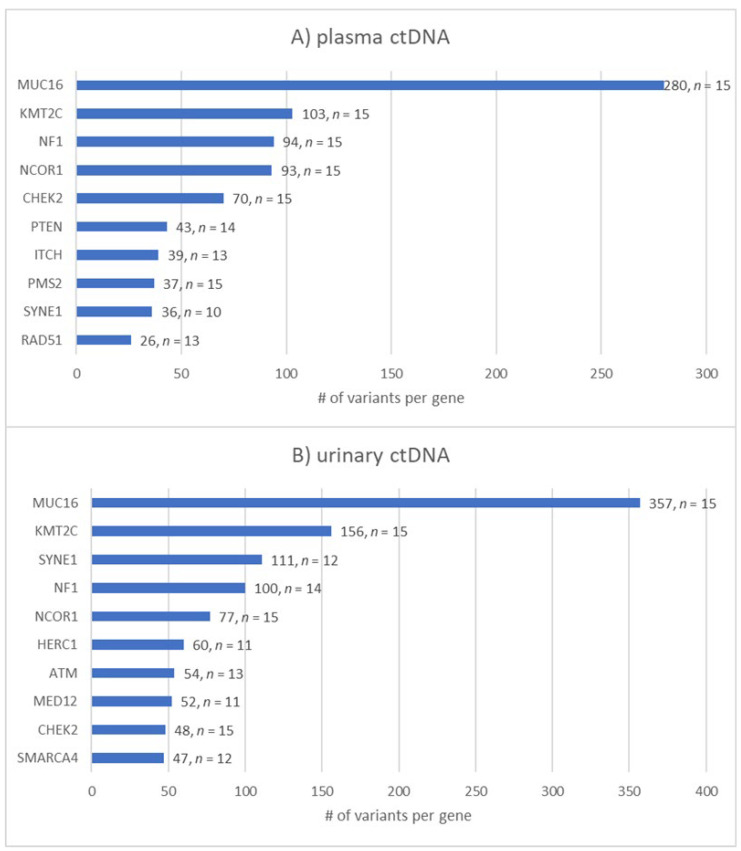
In breast cancer, the genetic profiling of circulating cell-free DNA (cfDNA) from blood plasma was shown to have good potential for clinical use. In contrast, only a few studies were performed investigating urinary cfDNA. In this pilot study, we analyzed plasma-derived and matching urinary cfDNA samples obtained from 15 presurgical triple-negative breast cancer patients. We used a targeted next-generation sequencing approach to identify and compare genetic alterations in both body fluids. The cfDNA concentration was higher in urine compared to plasma, but there was no significant correlation between matched samples. Bioinformatical analysis revealed a total of 3339 somatic breast-cancer-related variants (VAF ≥ 3%), whereof 1222 vs. 2117 variants were found in plasma-derived vs. urinary cfDNA, respectively. Further, 431 shared variants were found in both body fluids. Throughout the cohort, the recovery rate of plasma-derived mutations in matching urinary cfDNA was 47% and even 63% for pathogenic variants only. The most frequently occurring pathogenic and likely pathogenic mutated genes were NF1, CHEK2, KMT2C and PTEN in both body fluids. Notably, a pathogenic CHEK2 (T519M) variant was found in all 30 samples. Taken together, our results indicated that body fluids appear to be valuable sources bearing complementary information regarding the genetic tumor profile.
在乳腺癌中,血浆循环游离DNA(cfDNA)的基因谱分析显示出良好的临床应用潜力。相比之下,仅有少数研究对尿cfDNA进行了调查。在这项初步研究中,我们分析了从15例术前三阴性乳腺癌患者获取的血浆来源及匹配的尿cfDNA样本。我们采用靶向新一代测序方法来识别和比较两种体液中的基因改变。尿中的cfDNA浓度高于血浆,但匹配样本之间无显著相关性。生物信息学分析共发现3339个与乳腺癌相关的体细胞变异(变异等位基因频率≥3%),其中分别在血浆来源的cfDNA和尿cfDNA中发现了1222个和2117个变异。此外,在两种体液中还发现了431个共享变异。在整个队列中,匹配的尿cfDNA中血浆来源突变的回收率为47%,仅致病变异的回收率为63%。两种体液中最常出现的致病和可能致病的突变基因是NF1、CHEK2、KMT2C和PTEN。值得注意的是,在所有30个样本中均发现了致病的CHEK2(T519M)变异。综上所述,我们的结果表明,体液似乎是携带有关肿瘤基因谱互补信息的宝贵来源。