INESC TEC-Instituto de Engenharia de Sistemas e Computadores, Tecnologia e Ciência, Faculty of Engineering, University of Porto, 4200-465 Porto, Portugal.
Neurophysiology Unit, Neurology Department, Centro Hospitalar Universitário de São João, 4200-319 Porto, Portugal.
Sensors (Basel). 2022 Sep 1;22(17):6601. doi: 10.3390/s22176601.
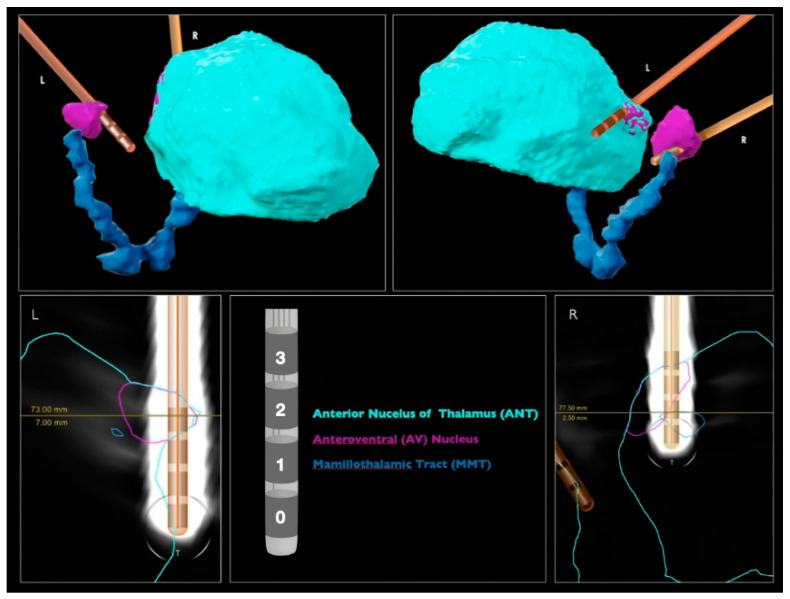
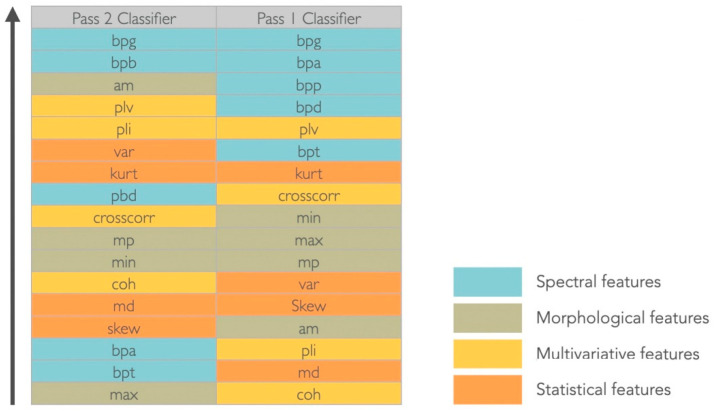
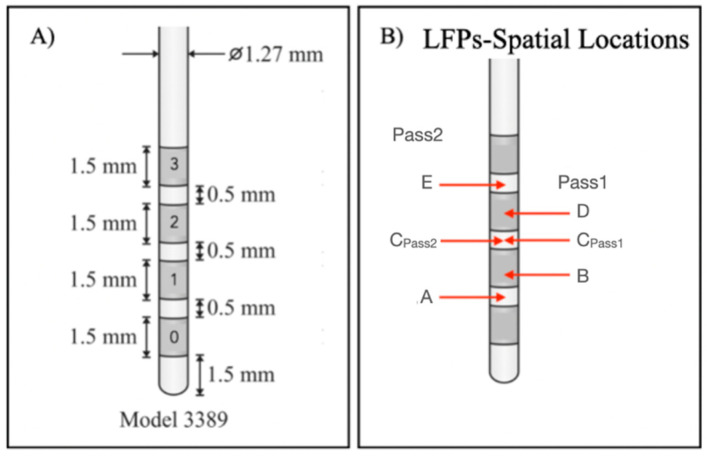
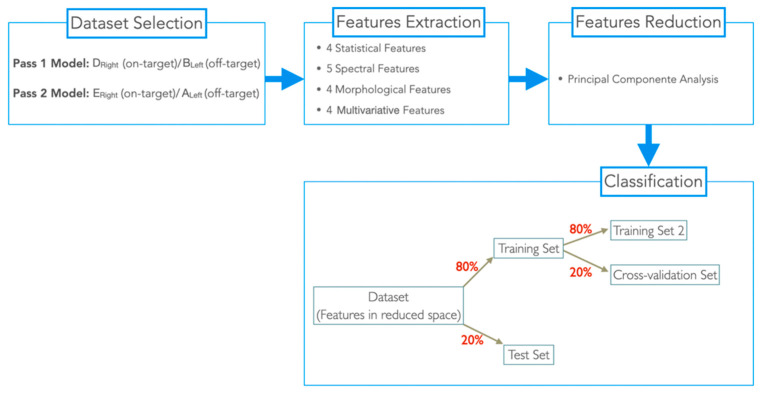
Deep brain stimulation of the Anterior Nucleus of the Thalamus (ANT-DBS) is an effective therapy in epilepsy. Poorer surgical outcomes are related to deviations of the lead from the ANT-target. The target identification relies on the visualization of anatomical structures by medical imaging, which presents some disadvantages. This study aims to research whether ANT-LFPs recorded with the Percept PC neurostimulator can be an asset in the identification of the DBS-target. For this purpose, 17 features were extracted from LFPs recorded from a single patient, who stayed at an Epilepsy Monitoring Unit for a 5-day period. Features were then integrated into two machine learning (ML)-based methodologies, according to different LFP bipolar montages: Pass1 (nonadjacent channels) and Pass2 (adjacent channels). We obtained an accuracy of 76.6% for the Pass1-classifier and 83.33% for the Pass2-classifier in distinguishing locations completely inserted in the target and completely outside. Then, both classifiers were used to predict the target percentage of all combinations, and we found that contacts 3 (left hemisphere) and 2 and 3 (right hemisphere) presented higher signatures of the ANT-target, which agreed with the medical images. This result opens a new window of opportunity for the use of LFPs in the guidance of DBS target identification.
丘脑前核(ANT)深部脑刺激(DBS)是治疗癫痫的有效方法。手术效果较差与导联偏离 ANT 目标有关。目标识别依赖于医学成像对解剖结构的可视化,这存在一些缺点。本研究旨在研究使用 Percept PC 神经刺激器记录的 ANT-LFPs 是否可以成为 DBS 目标识别的一个辅助手段。为此,从一名在癫痫监测病房停留 5 天的患者记录的 LFPs 中提取了 17 个特征。然后,根据不同的 LFPs 双极导联方式(Pass1:非相邻通道和 Pass2:相邻通道),将这些特征整合到两种基于机器学习(ML)的方法中。Pass1 分类器的准确率为 76.6%,Pass2 分类器的准确率为 83.33%,可用于区分完全插入目标和完全不在目标内的位置。然后,这两个分类器都被用来预测所有组合的目标百分比,我们发现接触 3(左半球)和接触 2 和 3(右半球)对 ANT 目标的特征更为明显,这与医学图像一致。这一结果为 LFPs 在指导 DBS 目标识别中的应用开辟了新的机会。