Flournoy Jennifer, Ashkanani Shahad, Chen Yun
Department of Mechanical Engineering, Johns Hopkins University, Baltimore, MD, United States.
Center for Cell Dynamics, Johns Hopkins University, Baltimore, MD, United States.
Front Cell Dev Biol. 2022 Aug 19;10:933474. doi: 10.3389/fcell.2022.933474. eCollection 2022.
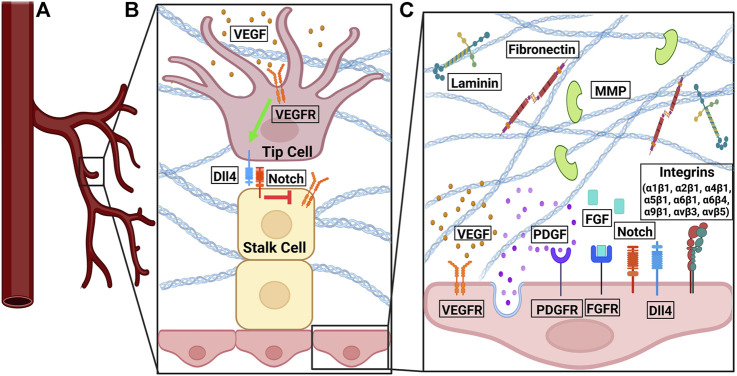
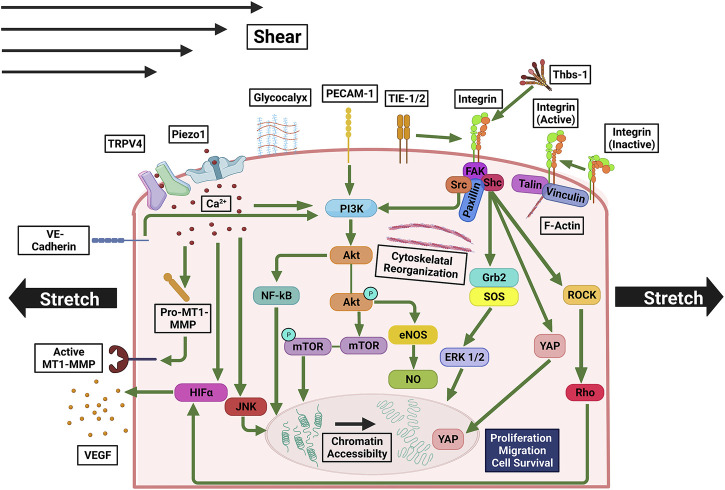
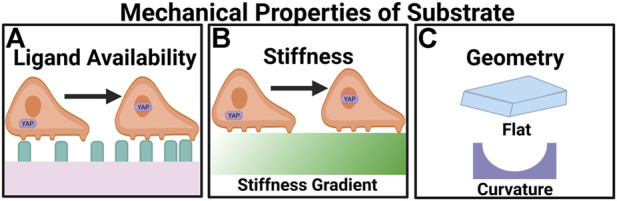
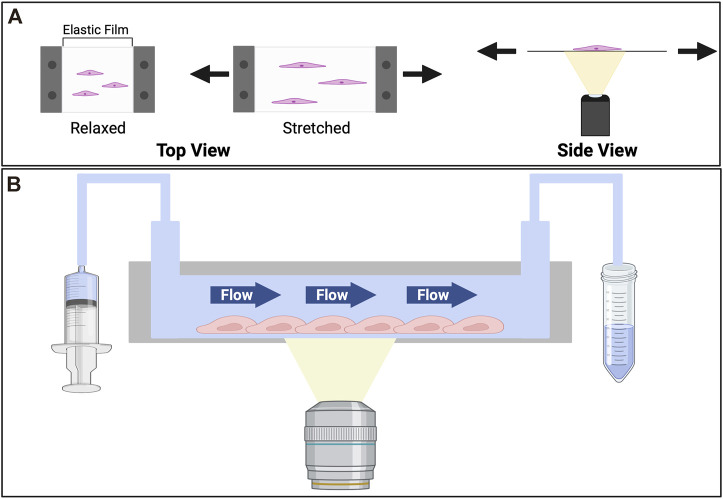
Biophysical and biochemical cues work in concert to regulate angiogenesis. These cues guide angiogenesis during development and wound healing. Abnormal cues contribute to pathological angiogenesis during tumor progression. In this review, we summarize the known signaling pathways involved in mechanotransduction important to angiogenesis. We discuss how variation in the mechanical microenvironment, in terms of stiffness, ligand availability, and topography, can modulate the angiogenesis process. We also present an integrated view on how mechanical perturbations, such as stretching and fluid shearing, alter angiogenesis-related signal transduction acutely, leading to downstream gene expression. Tissue engineering-based approaches to study angiogenesis are reviewed too. Future directions to aid the efforts in unveiling the comprehensive picture of angiogenesis are proposed.
生物物理和生化信号协同作用以调节血管生成。这些信号在发育和伤口愈合过程中引导血管生成。异常信号在肿瘤进展过程中促成病理性血管生成。在本综述中,我们总结了参与对血管生成重要的机械转导的已知信号通路。我们讨论了机械微环境在硬度、配体可用性和拓扑结构方面的变化如何调节血管生成过程。我们还提供了一个综合观点,即拉伸和流体剪切等机械扰动如何急性改变血管生成相关信号转导,从而导致下游基因表达。基于组织工程的研究血管生成的方法也进行了综述。提出了有助于揭示血管生成全貌的未来方向。