Abd-Alrazaq Alaa, Ahmed Arfan, Alali Haitham, Aldardour Ahmad Mohammad, Househ Mowafa
AI Center for Precision Health, Weill Cornell Medicine-Qatar, Doha, Qatar.
Health Management Department, Faculty of Medical and Health Sciences, Liwa College of Technology, Abu Dhabi, United Arab Emirates.
JMIR Serious Games. 2022 Sep 9;10(3):e36754. doi: 10.2196/36754.
Human cognitive processing speed is known to decline with age. Human cognitive processing speed refers to the time that an individual takes from receiving a stimulus to reacting to it. Serious games, which are video games used for training and educational purposes, have the potential to improve processing speed. Numerous systematic reviews have summarized the evidence regarding the effectiveness of serious games in improving processing speed, but they are undermined by some limitations.
This study aimed to examine the effectiveness of serious games on the cognitive processing speed of an older adult population living with cognitive impairment.
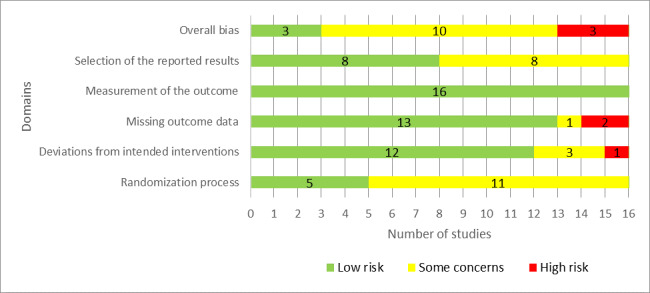
A systematic review of randomized controlled trials (RCTs) was conducted. Two search sources were used in this review: 8 electronic databases and backward and forward reference list checking. A total of 2 reviewers independently checked the eligibility of the studies, extracted data from the included studies, and appraised the risk of bias and quality of the evidence. Evidence from the included studies was synthesized using a narrative and statistical approach (ie, meta-analysis), as appropriate.
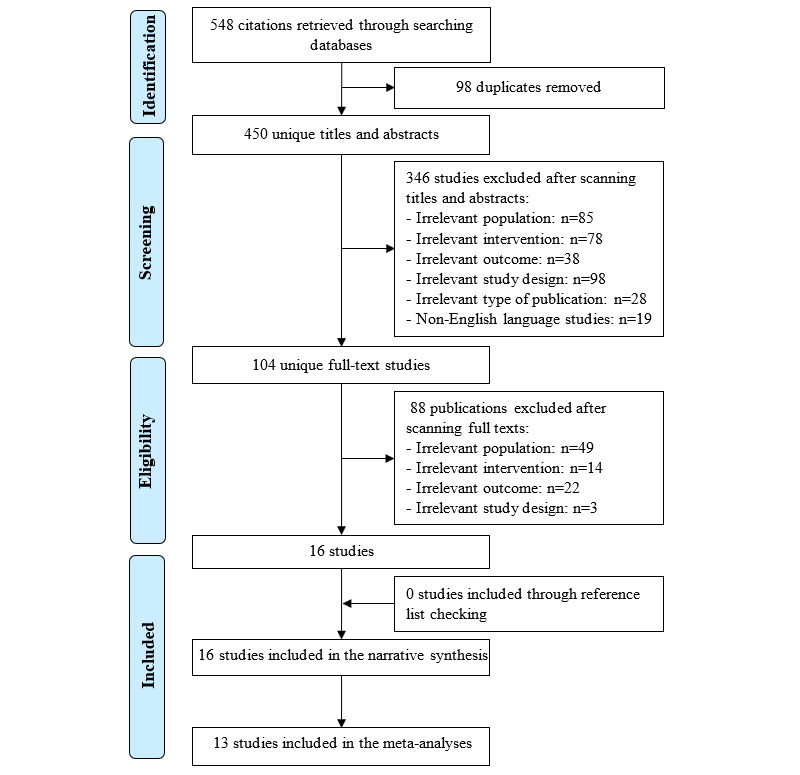
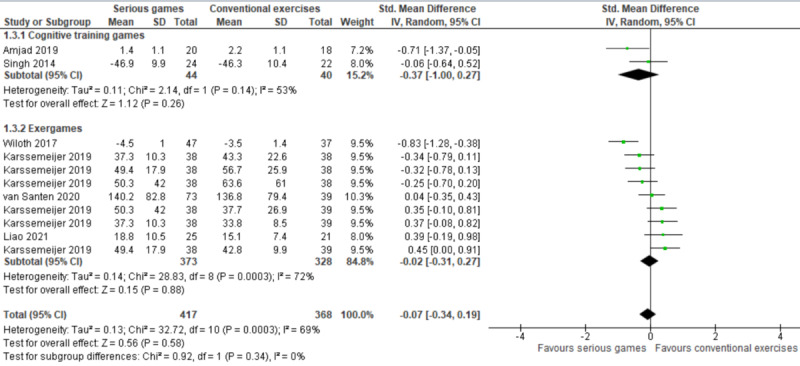
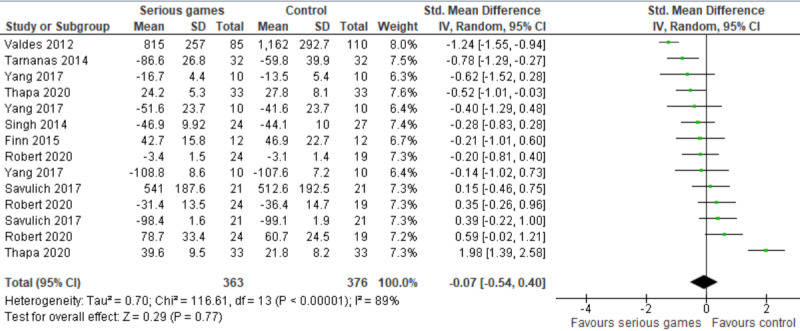
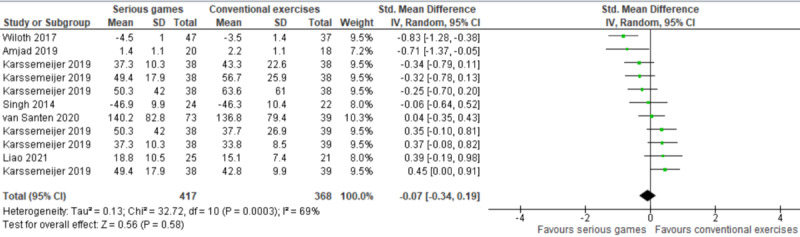
Of the 548 publications identified, 16 (2.9%) RCTs eventually met all eligibility criteria. Very-low-quality evidence from 50% (8/16) and 38% (6/16) of the RCTs showed no statistically significant effect of serious games on processing speed compared with no or passive intervention groups (P=.77) and conventional exercises (P=.58), respectively. A subgroup analysis showed that both types of serious games (cognitive training games: P=.26; exergames: P=.88) were as effective as conventional exercises in improving processing speed.
There is no superiority of serious games over no or passive interventions and conventional exercises in improving processing speed among older adults with cognitive impairment. However, our findings remain inconclusive because of the low quality of the evidence, the small sample size in most of the included studies, and the paucity of studies included in the meta-analyses. Therefore, until more robust evidence is published, serious games should be offered or used as an adjunct to existing interventions. Further trials should be undertaken to investigate the effect of serious games that specifically target processing speed rather than cognitive abilities in general.
PROSPERO CRD42022301667; https://www.crd.york.ac.uk/prospero/display_record.php?RecordID=301667.
已知人类认知处理速度会随着年龄的增长而下降。人类认知处理速度是指个体从接收到刺激到做出反应所花费的时间。严肃游戏是用于训练和教育目的的电子游戏,具有提高处理速度的潜力。许多系统评价总结了有关严肃游戏在提高处理速度方面有效性的证据,但这些证据存在一些局限性。
本研究旨在探讨严肃游戏对患有认知障碍的老年人群认知处理速度的有效性。
对随机对照试验(RCT)进行系统评价。本评价使用了两个检索来源:8个电子数据库以及参考文献列表的回溯和向前检索。共有2名评价者独立检查研究的纳入资格,从纳入研究中提取数据,并评估偏倚风险和证据质量。根据情况,使用叙述性和统计方法(即Meta分析)对纳入研究的证据进行综合分析。
在识别出的548篇出版物中,最终有16项(2.9%)RCT符合所有纳入标准。来自50%(8/16)和38%(6/16)的RCT的极低质量证据表明,与无干预或被动干预组(P=0.77)和传统锻炼组(P=0.58)相比,严肃游戏对处理速度没有统计学上的显著影响。亚组分析表明,两种类型的严肃游戏(认知训练游戏:P=0.26;运动游戏:P=0.88)在提高处理速度方面与传统锻炼同样有效。
在改善认知障碍老年人的处理速度方面,严肃游戏并不优于无干预或被动干预以及传统锻炼。然而,由于证据质量低、大多数纳入研究的样本量小以及Meta分析中纳入的研究数量少,我们的研究结果仍然不确定。因此,在有更有力的证据发表之前,严肃游戏应作为现有干预措施的辅助手段提供或使用。应进行进一步的试验,以研究专门针对处理速度而非一般认知能力的严肃游戏的效果。
PROSPERO CRD42022301667;https://www.crd.york.ac.uk/prospero/display_record.php?RecordID=301667 。