
电子严肃游戏对患有阿尔茨海默病和轻度认知障碍的老年人的影响:随机对照试验的系统评价与荟萃分析
Effects of Electronic Serious Games on Older Adults With Alzheimer's Disease and Mild Cognitive Impairment: Systematic Review With Meta-Analysis of Randomized Controlled Trials.
作者信息
Zuo Xinyi, Tang Yong, Chen Yifang, Zhou Zhimiao
机构信息
Sociology Department, School of Government, Shenzhen University, Shenzhen, Guangdong, China.
Institution of Policy Studies, Lingnan University, Tuen Mun, Hong Kong SAR, China (Hong Kong).
出版信息
JMIR Serious Games. 2024 Jul 31;12:e55785. doi: 10.2196/55785.
BACKGROUND
Serious games (SGs) are nonpharmacological interventions that are widely applied among older adults. To date, no evidence has been published regarding the effect of digital SGs on cognitive ability, daily behavioral capacity, or depression in older adults with Alzheimer's disease (AD) and mild cognitive impairment (MCI).
OBJECTIVE
This study aimed to assess the effect of SGs on older adults with AD and MCI by summarizing and pooling the results of previous studies.
METHODS
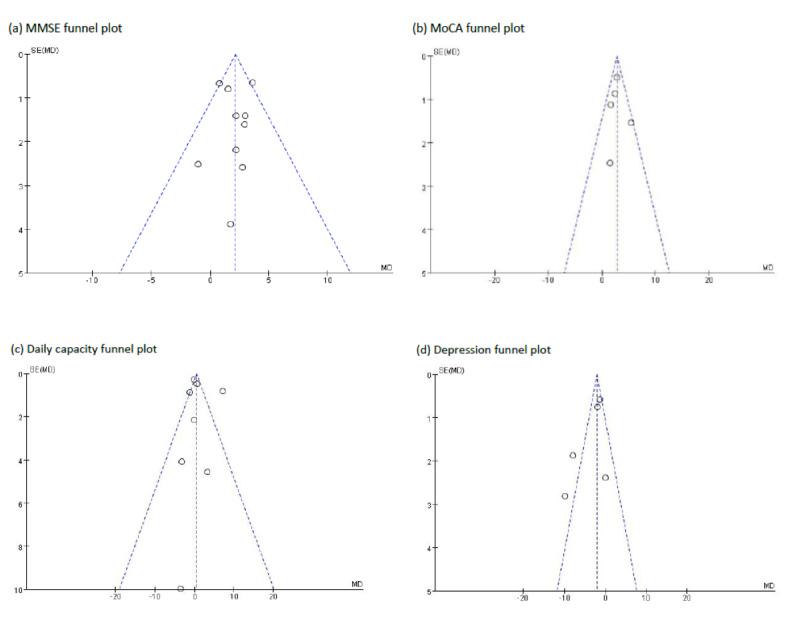
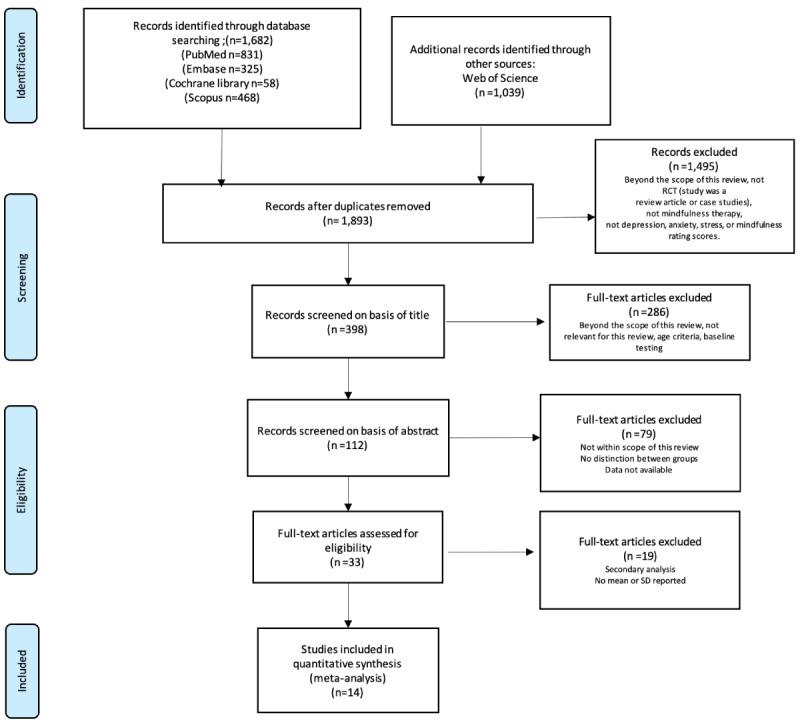
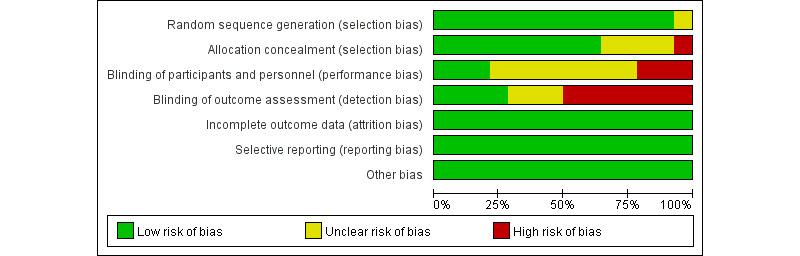
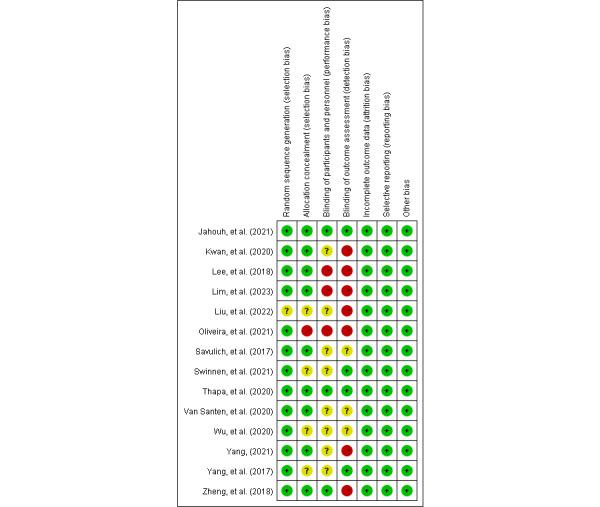
This meta-analysis examined the effectiveness of digital SGs in improving cognitive ability, enhancing daily behavioral capacity, and alleviating depression in older adults with AD and MCI. We searched the following databases up to December 31, 2023, to identify relevant high-quality randomized controlled trials (RCTs): PubMed, Embase, Web of Science, Scopus, and Cochrane Library. Stata 15.1 and Review Manager 5.3 were used to screen the 14 studies, extract data, code the data, and perform meta-analysis. Mean differences and standardized mean differences (SMDs) with 95% CIs were used to calculate continuous variables. The Cochrane risk-of-bias assessment tool was used to evaluate the risk of bias. Eligibility criteria were developed in accordance with the Population, Intervention, Comparison, Outcomes, and Study Design framework: (1) population (older adults with AD and MCI), (2) intervention (digital SG intervention), (3) comparison (digital SG intervention vs routine health care), (4) outcomes (cognitive ability, daily behavioral capacity, and depression), and (5) study or research design (RCT). Sensitivity analysis was performed, and a funnel plot was constructed.
RESULTS
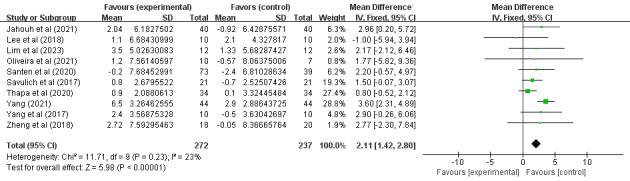
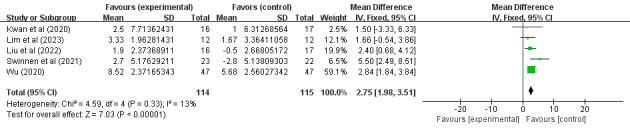
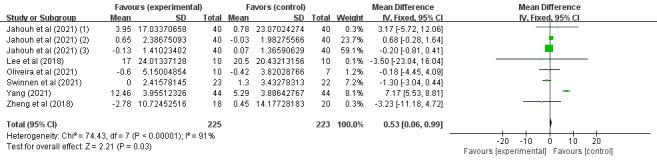
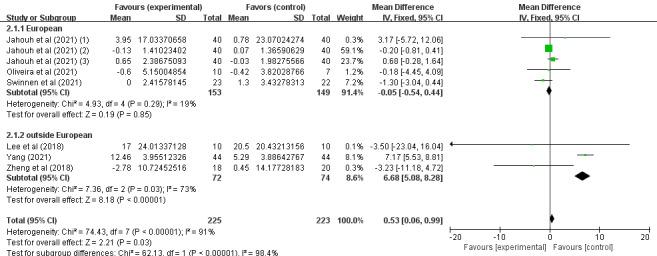
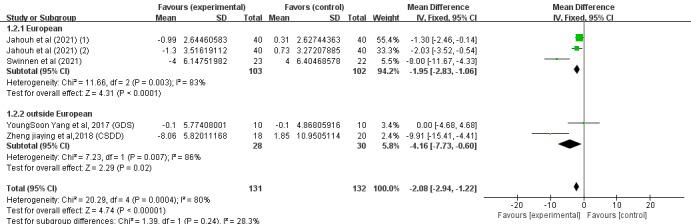
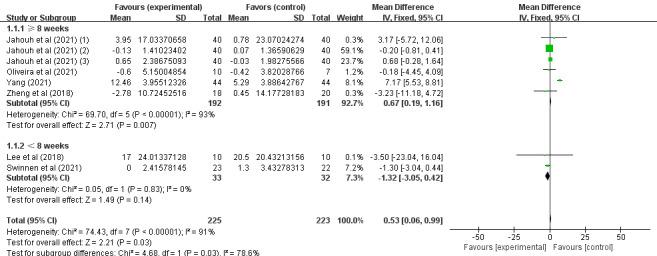
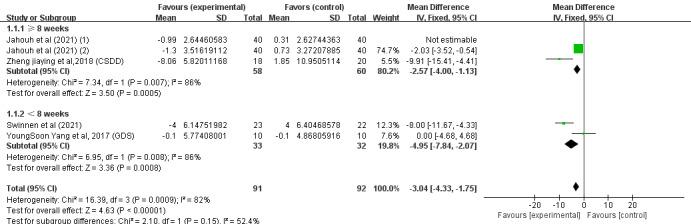
From January 2017 to December 2023, we enrolled 714 individuals across 14 RCTs, with 374 (52.4%) in the severe game group using digital SGs and 340 (47.6%) in the control group using traditional methods. The results of our meta-analysis indicated that using digital SGs in older adults with AD and MCI is more effective than traditional training methods in several key areas. Specifically, digital SG therapy significantly increased cognitive ability, as found in the Mini-Mental State Examination (SMD 2.11, 95% CI 1.42-2.80; P<.001) and the Montreal Cognitive Assessment (SMD 2.75, 95% CI 1.98-3.51; P<.001), significantly increased daily behavioral capacity (SMD 0.53, 95% CI 0.06-0.99; P=.03), and significantly reduced depression (SMD -2.08, 95% CI -2.94 to -1.22; P<.001) in older adults with AD and MCI. No publication bias was detected based on the results of Begg and Egger tests.
CONCLUSIONS
Digital SGs offer a viable and effective nonpharmacological approach for older adults with AD and MCI, yielding better results compared to traditional formats. However, caution is warranted in interpreting these findings due to limited RCTs, small sample sizes, and low-quality meta-analyzed evidence.
TRIAL REGISTRATION
PROSPERO International Prospective Register of Systematic Reviews: CRDCRD42023486090; https://www.crd.york.ac.uk/PROSPERO/display_record.php?RecordID=486090.
背景
严肃游戏(SGs)是非药物干预措施,在老年人中广泛应用。迄今为止,尚未有关于数字严肃游戏对患有阿尔茨海默病(AD)和轻度认知障碍(MCI)的老年人的认知能力、日常行为能力或抑郁影响的证据发表。
目的
本研究旨在通过总结和汇总先前研究的结果,评估严肃游戏对患有AD和MCI的老年人的影响。
方法
本荟萃分析考察了数字严肃游戏在改善患有AD和MCI的老年人的认知能力、增强日常行为能力以及减轻抑郁方面的有效性。我们检索了截至2023年12月31日的以下数据库,以识别相关的高质量随机对照试验(RCTs):PubMed、Embase、Web of Science、Scopus和Cochrane图书馆。使用Stata 15.1和Review Manager 5.3对14项研究进行筛选、提取数据、编码数据并进行荟萃分析。使用95%置信区间的平均差和标准化平均差(SMDs)来计算连续变量。使用Cochrane偏倚风险评估工具来评估偏倚风险。根据人群、干预措施、对照、结局和研究设计框架制定纳入标准:(1)人群(患有AD和MCI的老年人),(2)干预措施(数字严肃游戏干预),(3)对照(数字严肃游戏干预与常规医疗保健),(4)结局(认知能力、日常行为能力和抑郁),以及(5)研究或研究设计(RCT)。进行了敏感性分析,并构建了漏斗图。
结果
从2017年1月至2023年12月,我们纳入了14项RCT中的714名个体,其中374名(52.4%)在使用数字严肃游戏的严肃游戏组,340名(47.6%)在使用传统方法的对照组。我们的荟萃分析结果表明,在患有AD和MCI的老年人中,使用数字严肃游戏在几个关键领域比传统训练方法更有效。具体而言,数字严肃游戏疗法显著提高了认知能力,如在简易精神状态检查表(SMD 2.11,95% CI 1.42 - 2.80;P <.001)和蒙特利尔认知评估(SMD 2.75,95% CI 1.98 - 3.51;P <.001)中所示,显著提高了日常行为能力(SMD 0.53,95% CI 0.06 - 0.99;P =.03),并显著降低了患有AD和MCI的老年人的抑郁(SMD -2.08,95% CI -2.94至 -1.22;P <.001)。根据Begg和Egger检验的结果未检测到发表偏倚。
结论
数字严肃游戏为患有AD和MCI 的老年人提供了一种可行且有效的非药物方法,与传统形式相比产生了更好的效果。然而,由于RCT数量有限、样本量小以及荟萃分析证据质量低,在解释这些发现时应谨慎。
试验注册
PROSPERO国际系统评价前瞻性注册库:CRDCRD编号:42023486090;https://www.crd.york.ac.uk/PROSPERO/display_record.php?RecordID=486090 。

 Zotero 插件