Zhao Yan-Bo, Liu Meng-Xi, Chen Tao-Tao, Ma Xiaomin, Li Ze-Kai, Zheng Zichao, Zheng Si-Ru, Chen Lifei, Li You-Zhi, Tang Li-Rui, Chen Qi, Wang Peiyi, Ouyang Songying
Provincial University Key Laboratory of Cellular Stress Response and Metabolic Regulation, the Key Laboratory of Innate Immune Biology of Fujian Province, Biomedical Research Center of South China, Key Laboratory of OptoElectronic Science and Technology for Medicine of the Ministry of Education, College of Life Sciences, Fujian Normal University, Fuzhou 350117, China.
Cryo-EM Centre, Southern University of Science and Technology, Shenzhen 515055, China.
Sci Adv. 2022 Sep 9;8(36):eabq5108. doi: 10.1126/sciadv.abq5108.
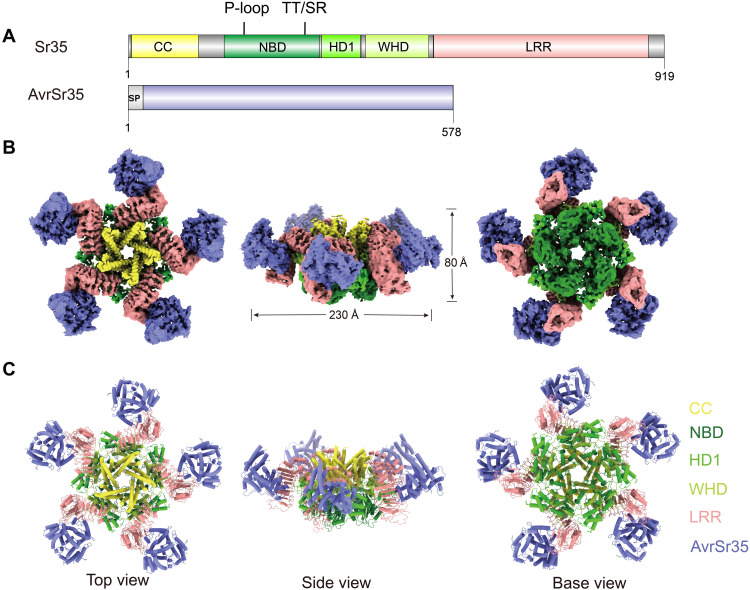
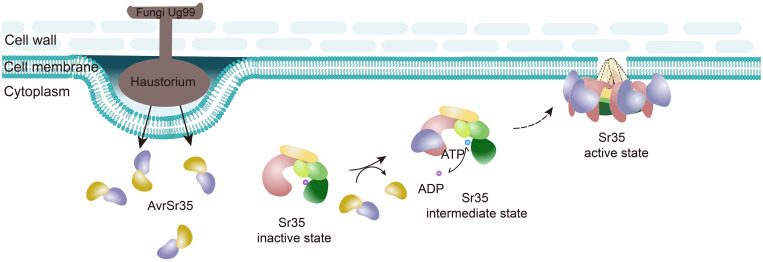
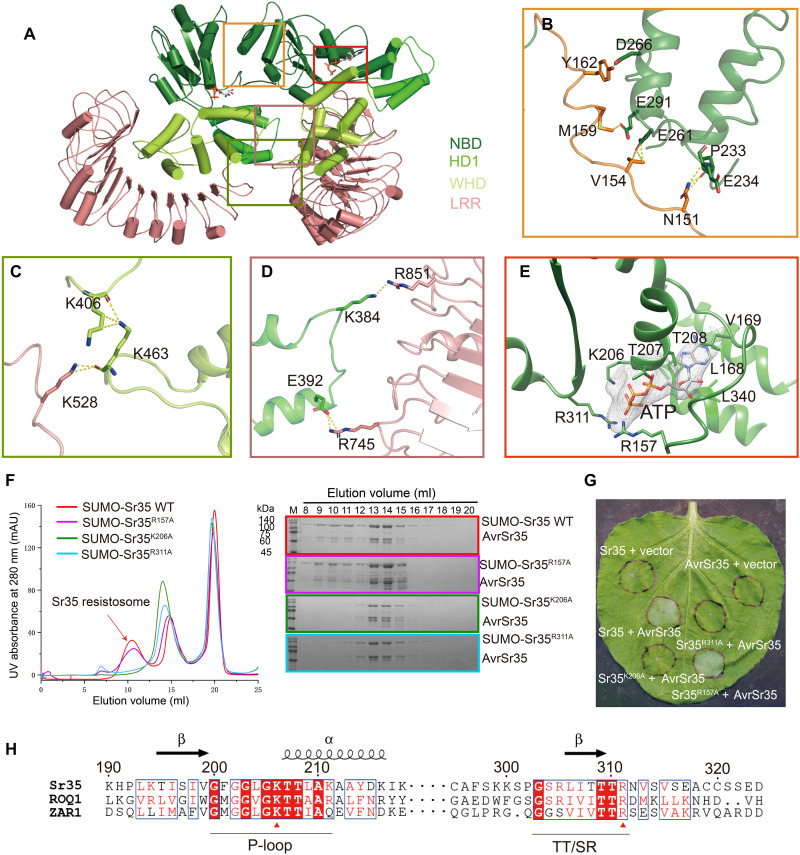
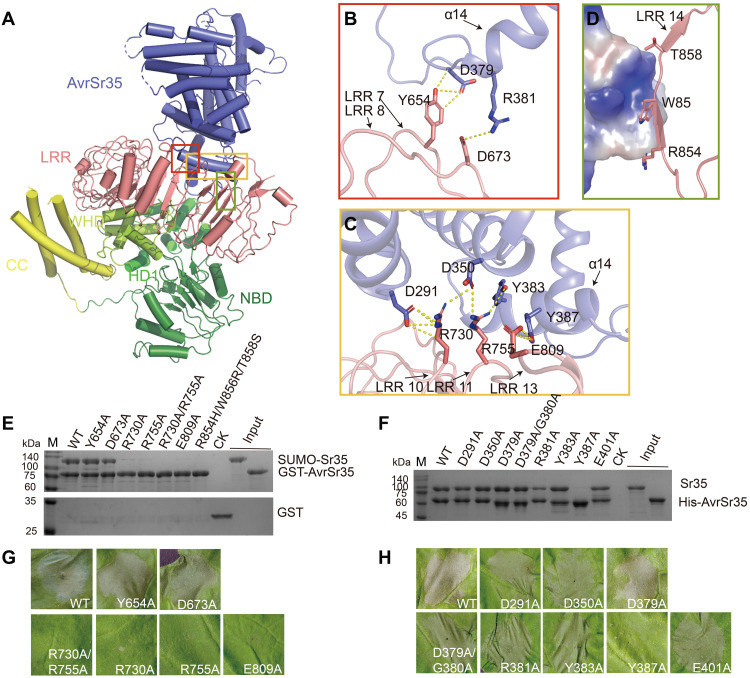
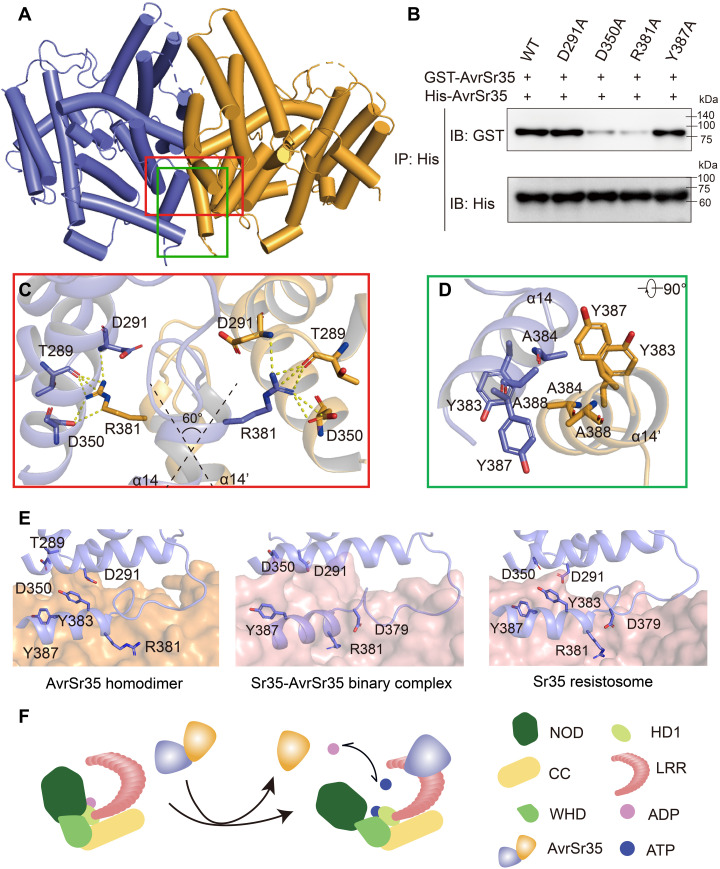
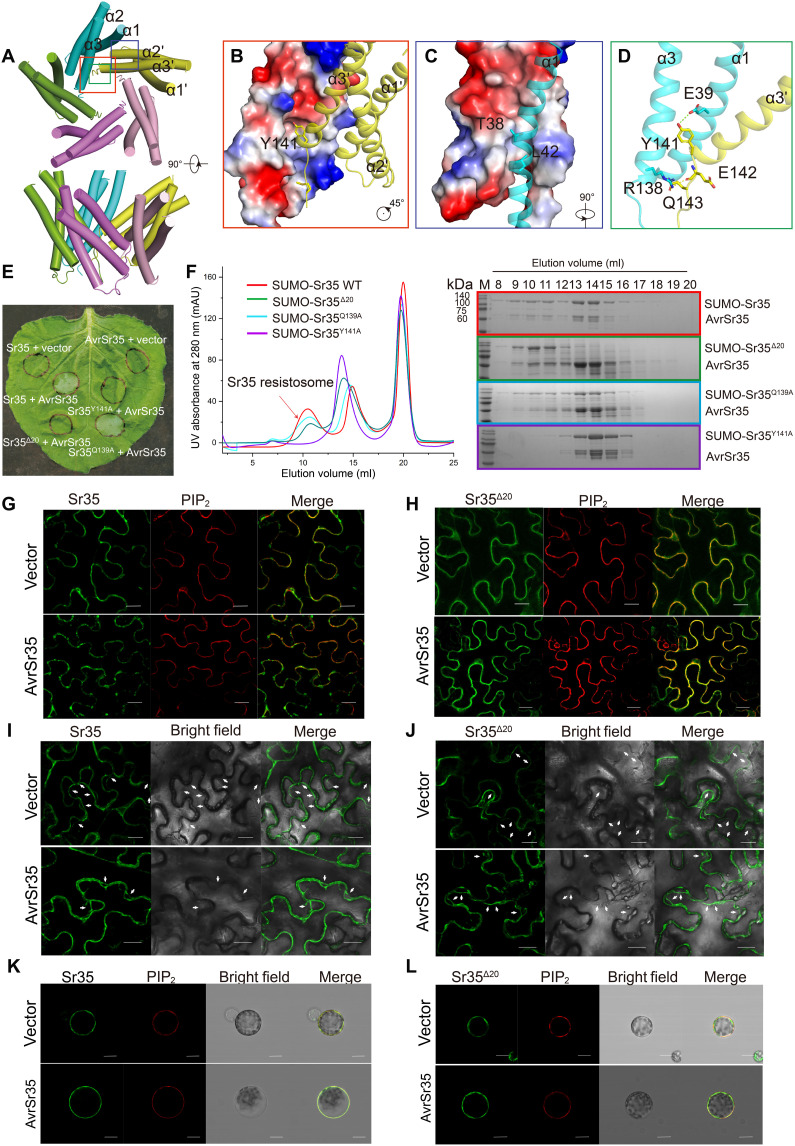
Nucleotide-binding, leucine-rich repeat receptors (NLRs) perceive pathogen effectors to trigger plant immunity. The direct recognition mechanism of pathogen effectors by coiled-coil NLRs (CNLs) remains unclear. We demonstrate that the CNL Sr35 directly recognizes the pathogen effector AvrSr35 from f. sp and report a cryo-electron microscopy structure of Sr35 resistosome and a crystal structure of AvrSr35. We show that AvrSr35 forms homodimers that are disassociated into monomers upon direct recognition by the leucine-rich repeat domain of Sr35, which induces Sr35 resistosome assembly and the subsequent immune response. The first 20 amino-terminal residues of Sr35 are indispensable for immune signaling but not for plasma membrane association. Our findings reveal the direct recognition and activation mechanism of a plant CNL and provide insights into biochemical function of Sr35 resistosome.
核苷酸结合富含亮氨酸重复受体(NLRs)感知病原体效应子以触发植物免疫。卷曲螺旋NLRs(CNLs)对病原体效应子的直接识别机制尚不清楚。我们证明CNL Sr35直接识别来自禾谷镰刀菌的病原体效应子AvrSr35,并报告了Sr35抗病小体的冷冻电子显微镜结构和AvrSr35的晶体结构。我们表明,AvrSr35形成同型二聚体,在被Sr35富含亮氨酸的重复结构域直接识别后解离为单体,这诱导了Sr35抗病小体的组装和随后的免疫反应。Sr35的前20个氨基末端残基对于免疫信号传导是必不可少的,但对于质膜结合不是必需的。我们的发现揭示了植物CNL的直接识别和激活机制,并为Sr35抗病小体的生化功能提供了见解。