Department of Pediatric Dentistry, School of Dentistry, Shiraz University of Medical Sciences, Shiraz, Iran.
Department of Operative Dentistry, School of Dentistry, Shiraz University of Medical Sciences, Shiraz, Iran.
Int Dent J. 2023 Apr;73(2):243-250. doi: 10.1016/j.identj.2022.07.013. Epub 2022 Sep 7.
Various modifications in formulation of glass ionomer cements (GICs) have been made in order to improve the clinical performance of these restorations. The aim of this work was to evaluate the microleakage and microshear bond strength (μSBS) of bacterial cellulose nanocrystal (BCNC)-modified glass ionomer cement (GIC) restorations in primary dentition.
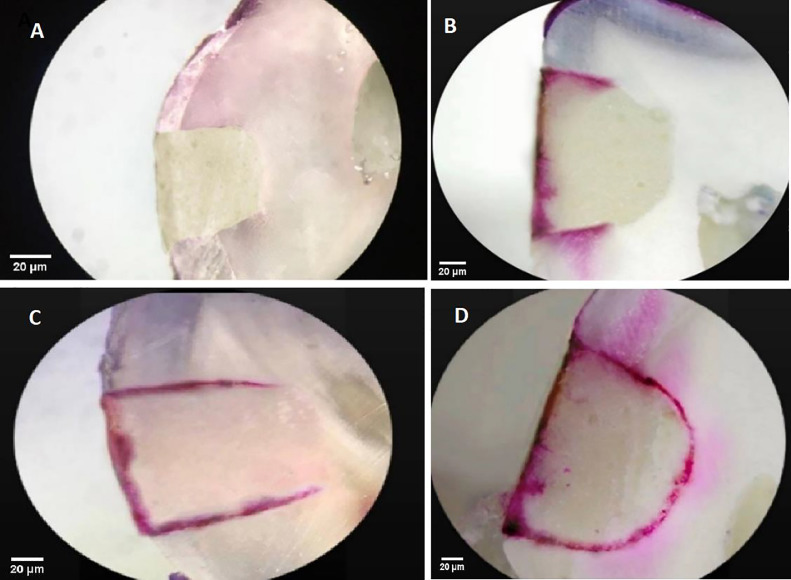
A total number of 60 freshly extracted primary molar teeth were selected. Half of the samples were used for μSBS testing (in 2 groups, n = 15). In group 1, conventional GIC (CGIC) of Fuji IX (GC) was placed in cylindrical molds on dentinal surfaces. In group 2, CGIC of Fuji IX containing 1% wt of BCNCs was used. μSBS was evaluated using a universal testing machine. In another part of the study, microleakage of class V restorations was assessed according to the mentioned groups (n = 15). The sectioned samples were observed under stereomicroscope, and microleakage scores were recorded. SPSS version 16.0 (SPSS), independent samples t test, and Mann-Whitney U test were used for statistical analysis at a significance level of P < .05.
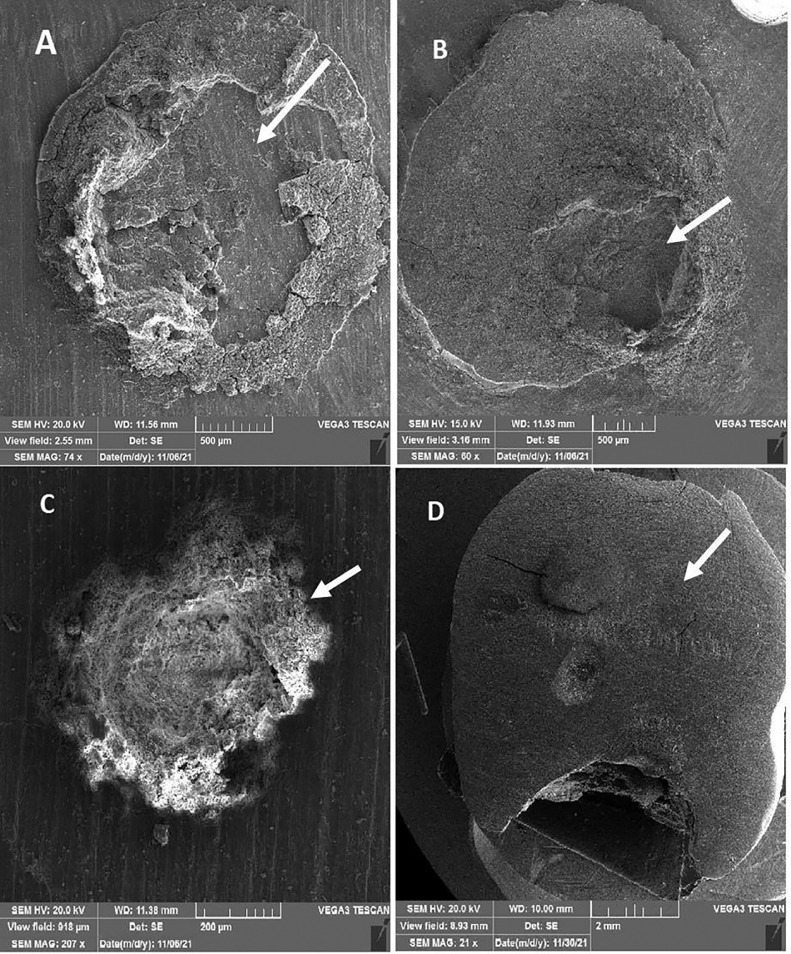
Results showed statistically significant differences between the μSBS of CGIC and modified GIC groups (P < .0001). The BCNC-modified GIC group recorded significantly higher bond strength values (3.51 ± 0.033 vs 1.38 ± 0.034 MPa). Also, microleakage scores of CGIC and BCNC-modified GIC restorations were not significantly different (P = .57).
Based on our findings, it was concluded that incorporating BCNCs (1% wt) into the CGIC of Fuji IX significantly increased the μSBS to the dentin structure of the primary teeth.
为了提高这些修复体的临床性能,对玻璃离子水门汀(GIC)的配方进行了各种改进。本研究的目的是评估纳米细菌纤维素(BCNC)改性玻璃离子水门汀(GIC)修复体在乳牙中的微渗漏和微剪切结合强度(μSBS)。
共选择 60 颗新鲜拔除的乳磨牙。一半的样本用于 μSBS 测试(分为 2 组,n=15)。在第 1 组中,将富士 IX 常规玻璃离子水门汀(CGIC)置于牙本质表面的圆柱形模具中。在第 2 组中,使用含有 1%wt BCNC 的富士 IX CGIC。使用万能试验机评估 μSBS。在研究的另一部分,根据上述组(n=15)评估 V 类修复体的微渗漏。对切片样本进行体视显微镜观察,并记录微渗漏评分。采用 SPSS 版本 16.0(SPSS)、独立样本 t 检验和 Mann-Whitney U 检验进行统计学分析,显著水平为 P<0.05。
结果表明,CGIC 和改性 GIC 组的 μSBS 之间存在统计学显著差异(P<0.0001)。BCNC 改性 GIC 组记录的结合强度值明显更高(3.51±0.033 与 1.38±0.034 MPa)。此外,CGIC 和 BCNC 改性 GIC 修复体的微渗漏评分无显著差异(P=0.57)。
根据我们的发现,结论是将 1%wt 的 BCNC 掺入富士 IX CGIC 中显著提高了乳牙牙本质结构的 μSBS。