Department of Oncology, Guangzhou University of Traditional Chinese Medicine, Guangzhou, China.
Department of Oncology, Fuda Cancer Hospital, Guangzhou, China.
Pharm Biol. 2022 Dec;60(1):1710-1720. doi: 10.1080/13880209.2022.2112963.
polysaccharide (APS) is a new tumour therapeutic drug, that has an inhibitory effect on a variety of solid tumours. Tumour cell immunosuppression is related to the up-regulation of programmed death ligand 1 (PD-L1). However, whether APS exerts its antitumor effect by regulating PD-L1 remains unclear.
To explore whether APS exerts its antineoplastic effect via regulating PD-L1-mediated immunosuppression in hepatocellular carcinoma (HCC).
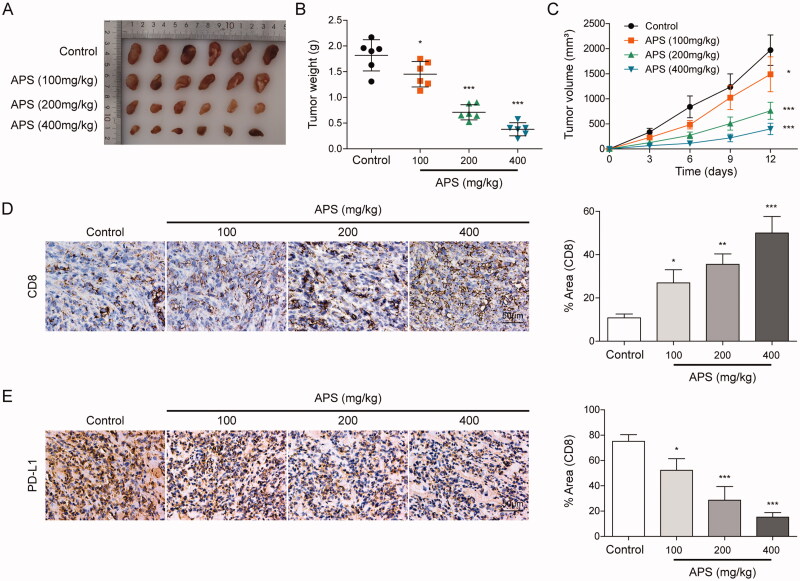
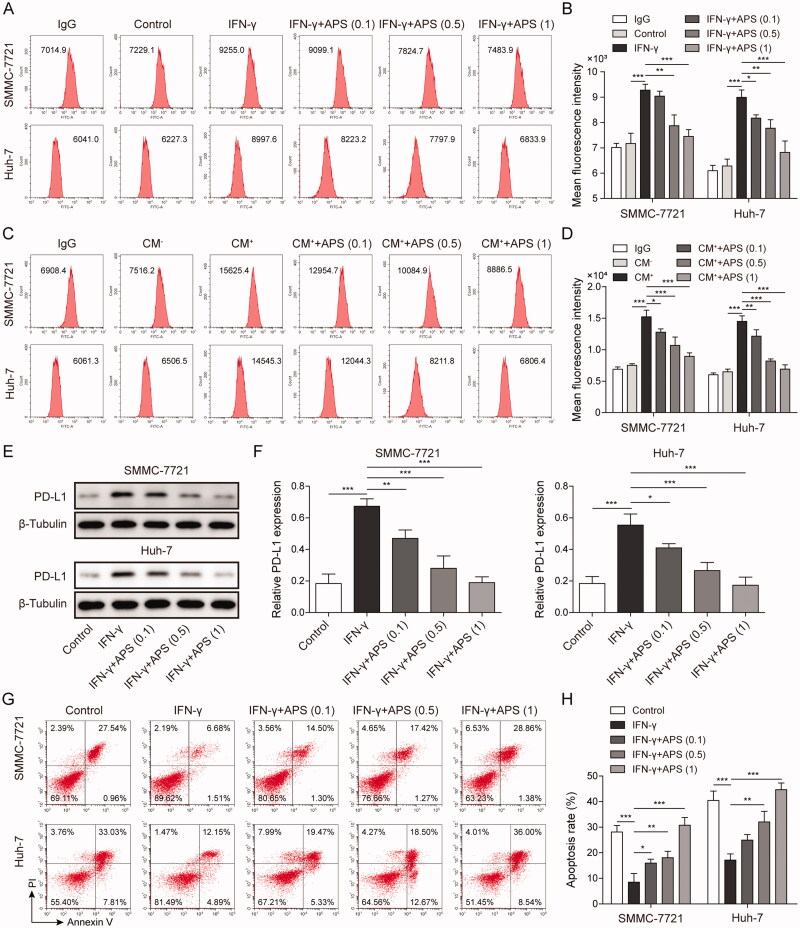
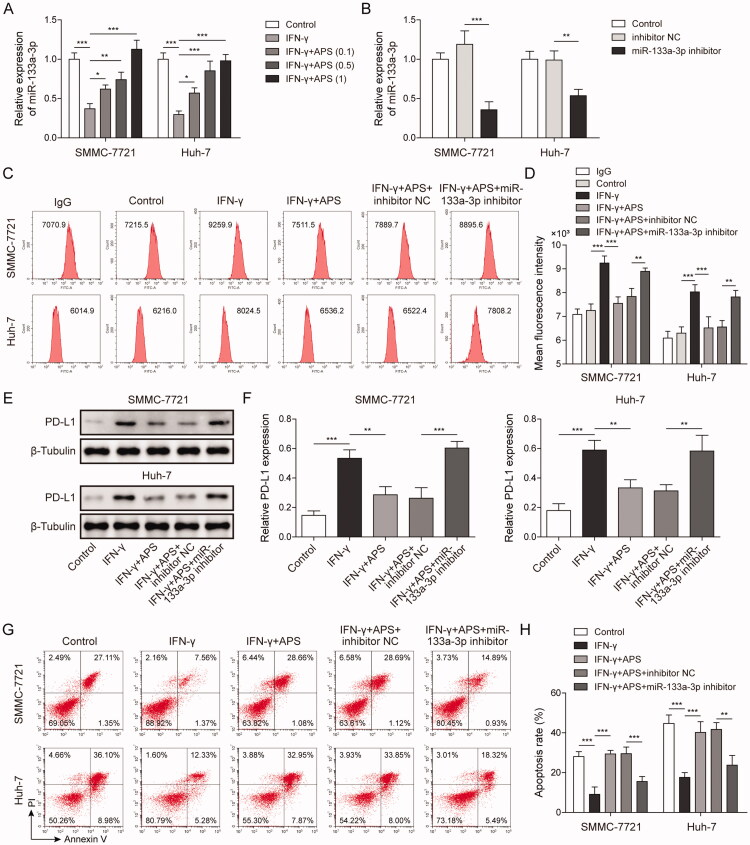
SMMC-7721 cells were subcutaneous injected into BALB/C mice for HCC model establishment. Mice were intraperitoneally injected with 100, 200 and 400 mg/kg APS for 12 days. Immunohistochemistry (IHC) was performed to assess CD8 T cells' rate and PD-L1 level in HCC tissues. HCC cells were pre-treated with 0.1, 0.5 and 1 mg/mL APS for 4 h, then were treated with 10 ng/mL IFN-γ 24 h. PD-L1 level and cell apoptosis was detected by flow cytometry. PD-L1 and Moesin (MSN) proteins were measured by western blot. MiR-133a-3p and MSN mRNA levels were assessed by qRT-PCR. The targets of miR-133a-3p were predicted by starBase, and which was verified by dual-luciferase reporter assay.
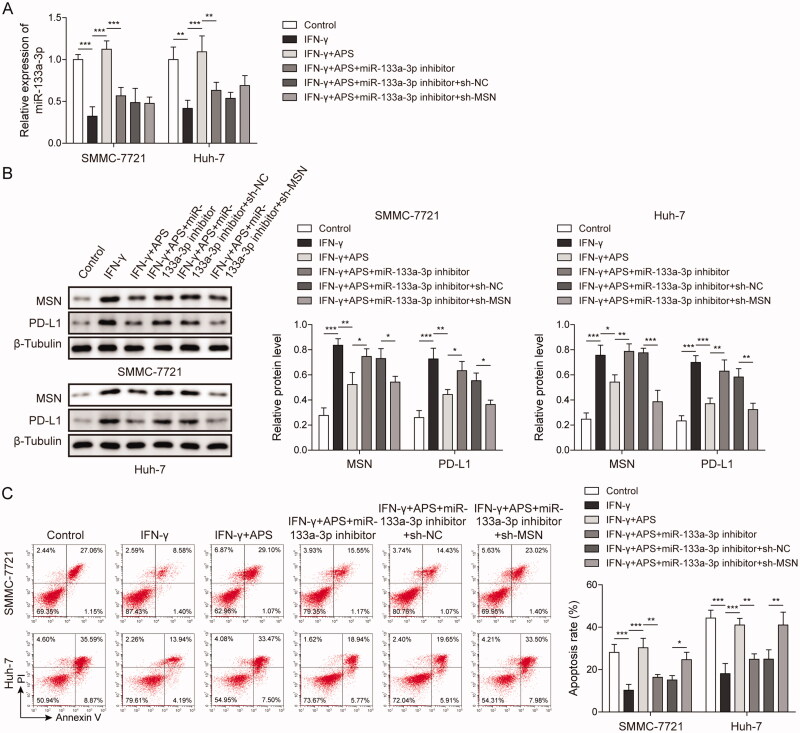
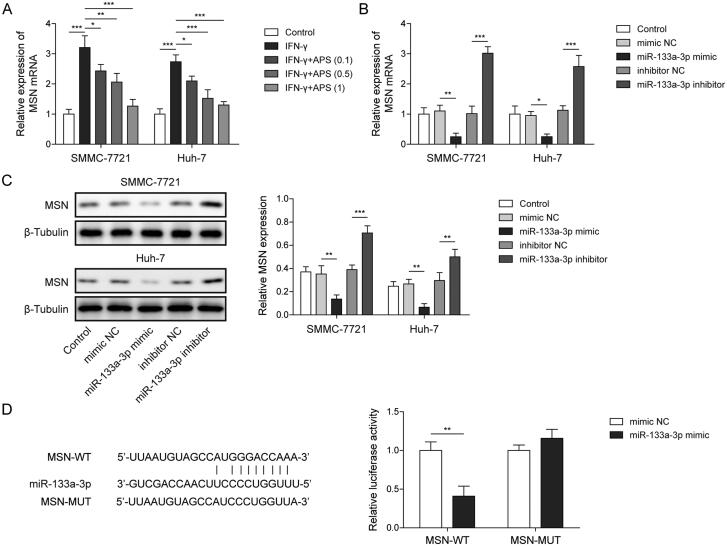
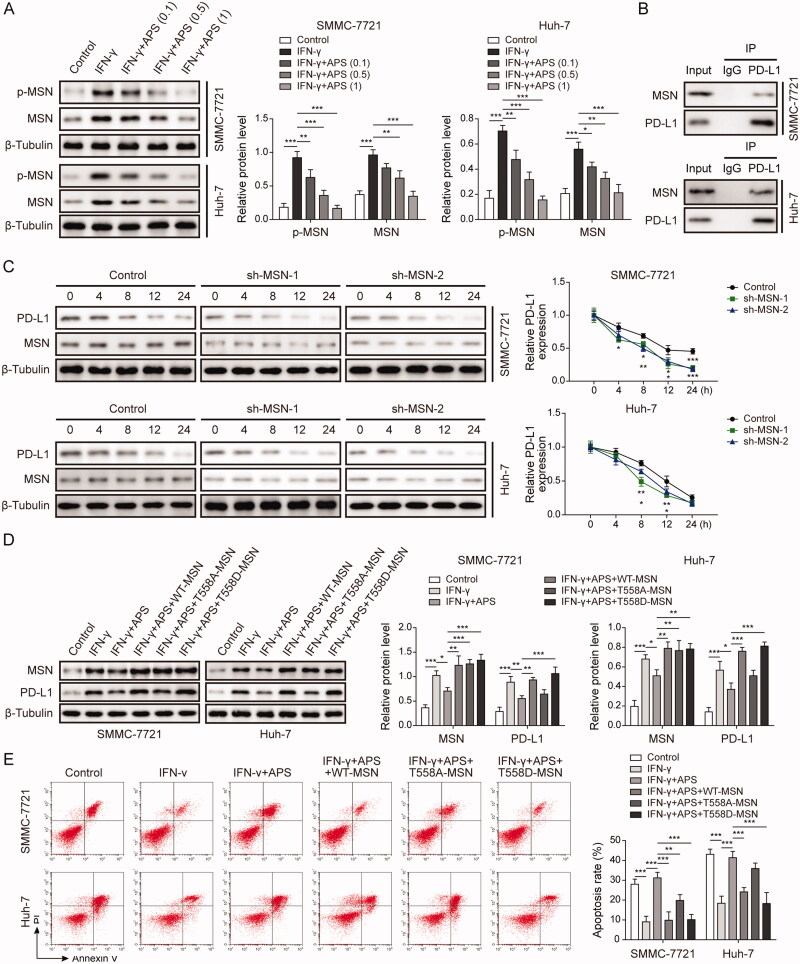
Our findings illustrated that APS dose-dependently inhibited HCC growth tested with IC values of 4.2 mg/mL, and IFN-γ-induced PD-L1 expression and attenuated PD-L1-mediated immunosuppression in HCC cells. APS attenuated PD-L1-mediated immunosuppression via miR-133a-3p in HCC cells. Besides, miR-133a-3p targeted to MSN, and MSN inhibited the antitumor effect of APS by maintaining the stability of PD-L1. Moreover, APS attenuated PD-L1-mediated immunosuppression via the miR-133a-3p/MSN axis.
APS attenuated PD-L1-mediated immunosuppression via miR-133a-3p/MSN axis to develop an antitumor effect. APS may be an effective drug for HCC treatment.
多糖(APS)是一种新型肿瘤治疗药物,对多种实体瘤具有抑制作用。肿瘤细胞免疫抑制与程序性死亡配体 1(PD-L1)的上调有关。然而,APS 是否通过调节 PD-L1 发挥抗肿瘤作用尚不清楚。
探讨 APS 是否通过调节 PD-L1 介导的免疫抑制作用发挥抗肝癌(HCC)作用。
将 SMMC-7721 细胞皮下注射到 BALB/C 小鼠中建立 HCC 模型。小鼠腹腔注射 100、200 和 400mg/kg APS,连续 12 天。免疫组化(IHC)检测 HCC 组织中 CD8 T 细胞的比率和 PD-L1 水平。HCC 细胞用 0.1、0.5 和 1mg/mL APS 预处理 4 小时,然后用 10ng/mL IFN-γ处理 24 小时。用流式细胞术检测 PD-L1 水平和细胞凋亡。用 Western blot 检测 PD-L1 和 Moesin(MSN)蛋白。用 qRT-PCR 检测 miR-133a-3p 和 MSN mRNA 水平。通过 starBase 预测 miR-133a-3p 的靶标,并通过双荧光素酶报告基因实验进行验证。
我们的研究结果表明,APS 呈剂量依赖性抑制 HCC 生长,IC 值为 4.2mg/mL,IFN-γ诱导的 PD-L1 表达和减弱 HCC 细胞中 PD-L1 介导的免疫抑制。APS 通过 HCC 细胞中的 miR-133a-3p 减弱 PD-L1 介导的免疫抑制。此外,miR-133a-3p 靶向 MSN,MSN 通过维持 PD-L1 的稳定性抑制 APS 的抗肿瘤作用。此外,APS 通过 miR-133a-3p/MSN 轴减弱 PD-L1 介导的免疫抑制。
APS 通过 miR-133a-3p/MSN 轴减弱 PD-L1 介导的免疫抑制作用,发挥抗肿瘤作用。APS 可能是治疗 HCC 的有效药物。