Department of Medicine, Alfred Hospital, Melbourne, Australia.
Department of Anesthesiology and Pain Medicine, University of Ottawa, Ottawa, ON, Canada.
Anaesthesia. 2022 Oct;77(10):1129-1136. doi: 10.1111/anae.15813.
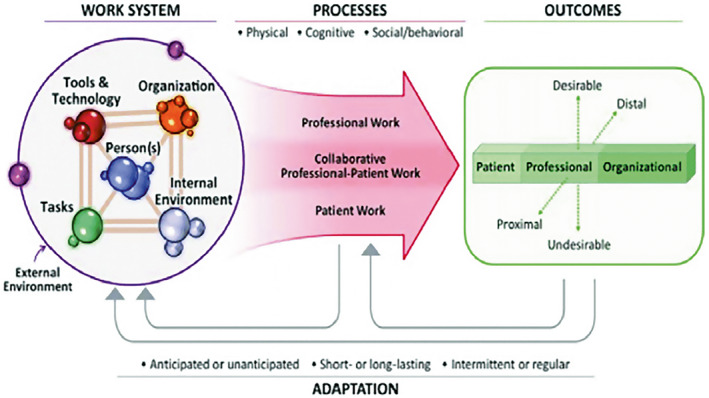
The primary aim of this review was to identify, analyse and codify the prominence and nature of human factors and ergonomics within difficult airway management algorithms. A directed search across OVID Medline and PubMed databases was performed. All articles were screened for relevance to the research aims and according to predetermined exclusion criteria. We identified 26 published airway management algorithms. A coding framework was iteratively developed identifying human factors and ergonomic specific words and phrases based on the Systems Engineering Initiative for Patient Safety model. This framework was applied to the papers to delineate qualitative and quantitative results. Our results show that human factors are well represented within recent airway management guidelines. Human factors associated with work systems and processes featured more prominently than user and patient outcome measurement and adaption. Human factors are an evolving area in airway management and our results highlight that further considerations are necessary in further guideline development.
本次综述的主要目的是识别、分析和编纂困难气道管理算法中的人为因素和工效学的显著程度和性质。通过定向搜索 OVID Medline 和 PubMed 数据库进行检索。根据预定的排除标准,对所有文章进行相关性筛选。我们确定了 26 篇已发表的气道管理算法。根据患者安全系统工程倡议模型,我们开发了一个编码框架,用于识别基于人为因素和工效学的特定单词和短语。该框架应用于论文中,以描述定性和定量结果。我们的研究结果表明,人为因素在最近的气道管理指南中得到了很好的体现。与工作系统和流程相关的人为因素比用户和患者结果测量和适应更突出。人为因素是气道管理中的一个不断发展的领域,我们的研究结果表明,在进一步制定指南时需要进一步考虑。