Vesuna Farhad, Akhrymuk Ivan, Smith Amy, Winnard Paul T, Lin Shih-Chao, Panny Lauren, Scharpf Robert, Kehn-Hall Kylene, Raman Venu
Division of Cancer Imaging Research, Department of Radiology, Johns Hopkins University School of Medicine, Baltimore, MD, United States.
Department of Biomedical Science and Pathobiology, Virginia-Maryland College of Veterinary Medicine, Virginia Polytechnic Institute and State University, Blacksburg, VA, United States.
Front Microbiol. 2022 Aug 25;13:959577. doi: 10.3389/fmicb.2022.959577. eCollection 2022.
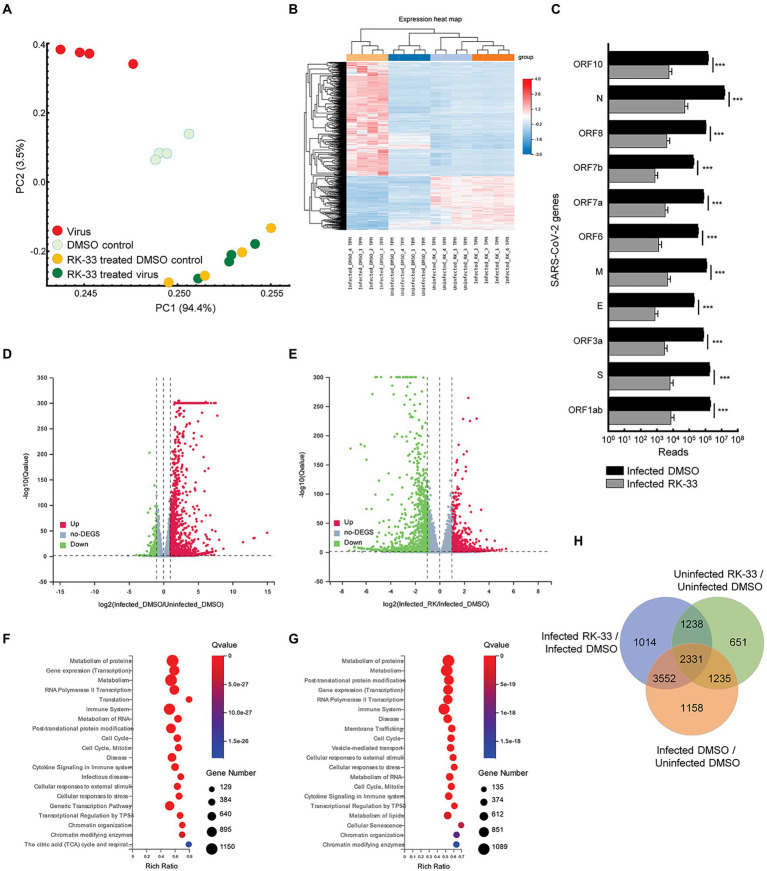
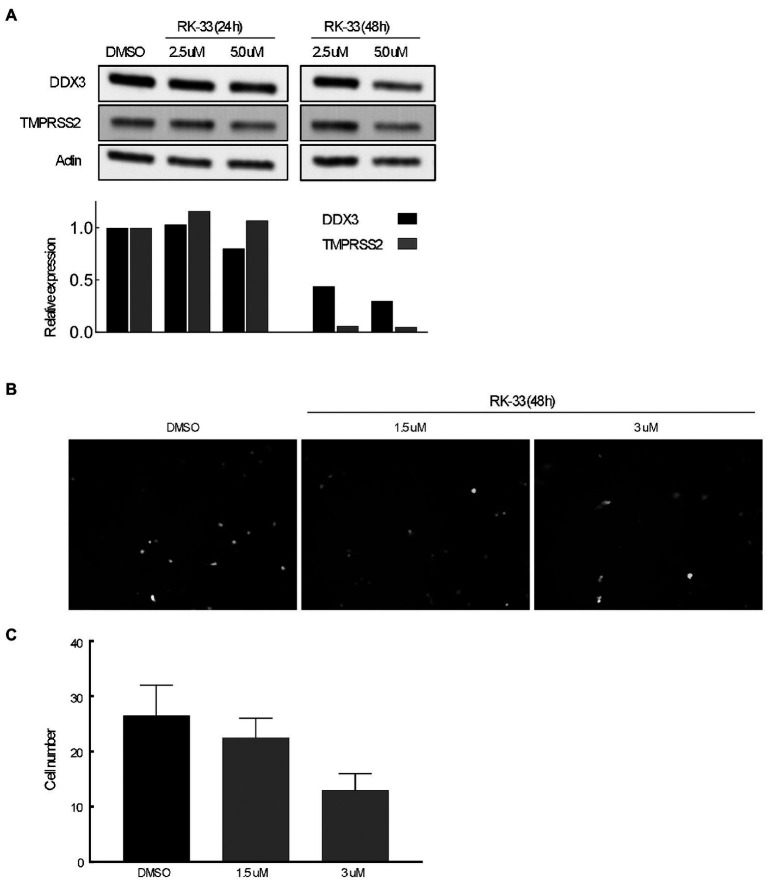
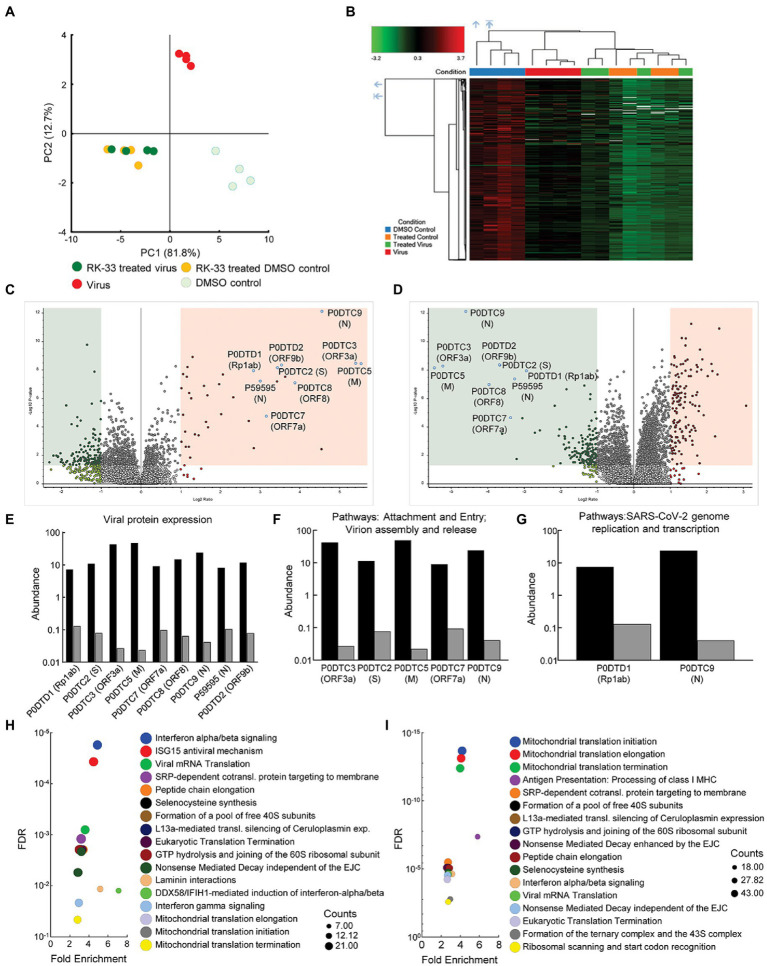
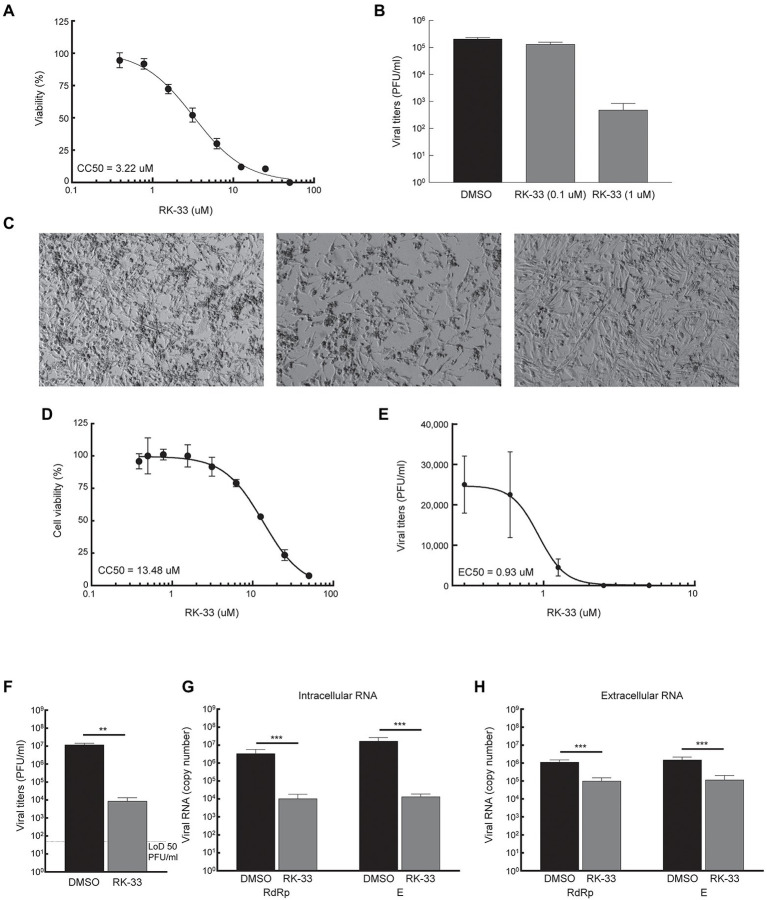
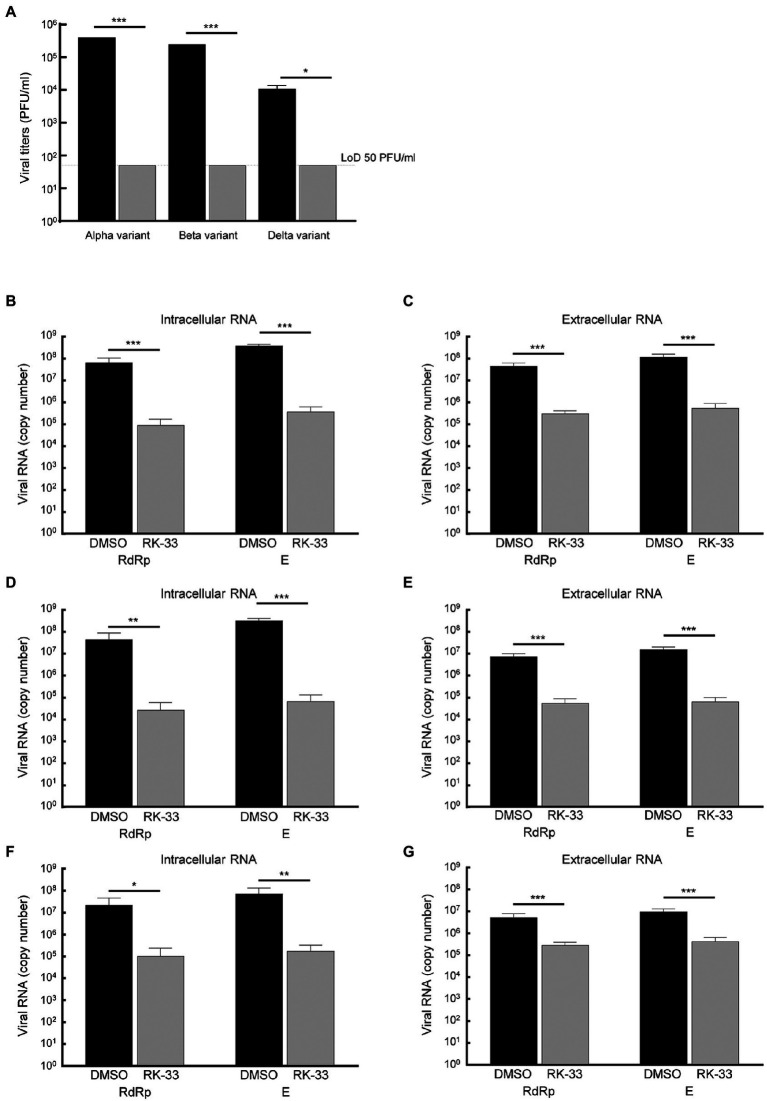
SARS-CoV-2, the virus behind the deadly COVID-19 pandemic, continues to spread globally even as vaccine strategies are proving effective in preventing hospitalizations and deaths. However, evolving variants of the virus appear to be more transmissive and vaccine efficacy toward them is waning. As a result, SARS-CoV-2 will continue to have a deadly impact on public health into the foreseeable future. One strategy to bypass the continuing problem of newer variants is to target host proteins required for viral replication. We have used this host-targeted antiviral (HTA) strategy that targets DDX3X (DDX3), a host DEAD-box RNA helicase that is usurped by SARS-CoV-2 for virus production. We demonstrated that targeting DDX3 with RK-33, a small molecule inhibitor, reduced the viral load in four isolates of SARS-CoV-2 (Lineage A, and Lineage B Alpha, Beta, and Delta variants) by one to three log orders in Calu-3 cells. Furthermore, proteomics and RNA-seq analyses indicated that most SARS-CoV-2 genes were downregulated by RK-33 treatment. Also, we show that the use of RK-33 decreases TMPRSS2 expression, which may be due to DDX3s ability to unwind G-quadraplex structures present in the TMPRSS2 promoter. The data presented support the use of RK-33 as an HTA strategy to control SARS-CoV-2 infection, irrespective of its mutational status, in humans.
严重急性呼吸综合征冠状病毒2(SARS-CoV-2)是致命的新冠疫情背后的病毒,即便疫苗策略已被证明在预防住院和死亡方面有效,但它仍在全球持续传播。然而,该病毒不断演变的变种似乎更具传播性,针对它们的疫苗效力也在减弱。因此,在可预见的未来,SARS-CoV-2将继续对公共卫生造成致命影响。绕过新变种持续出现这一问题的一种策略是靶向病毒复制所需的宿主蛋白。我们采用了这种靶向宿主的抗病毒(HTA)策略,其靶向DDX3X(DDX3),一种宿主DEAD盒RNA解旋酶,SARS-CoV-2会利用它来进行病毒生产。我们证明,用小分子抑制剂RK-33靶向DDX3,可使Calu-3细胞中四种SARS-CoV-2分离株(A谱系以及B谱系的阿尔法、贝塔和德尔塔变种)的病毒载量降低1至3个对数级。此外,蛋白质组学和RNA测序分析表明,RK-33处理可下调大多数SARS-CoV-2基因。同时,我们表明使用RK-33会降低跨膜丝氨酸蛋白酶2(TMPRSS2)的表达,这可能是由于DDX3具有解开TMPRSS2启动子中存在的G-四链体结构的能力。所呈现的数据支持将RK-33用作一种HTA策略,以控制人类中的SARS-CoV-2感染,无论其突变状态如何。