Department of Microbiology and Immunology, University of California, San Francisco, San Francisco, California, United States of America.
Chan Zuckerberg Biohub-San Francisco, San Francisco, California, United States of America.
PLoS Pathog. 2024 Feb 9;20(2):e1011535. doi: 10.1371/journal.ppat.1011535. eCollection 2024 Feb.
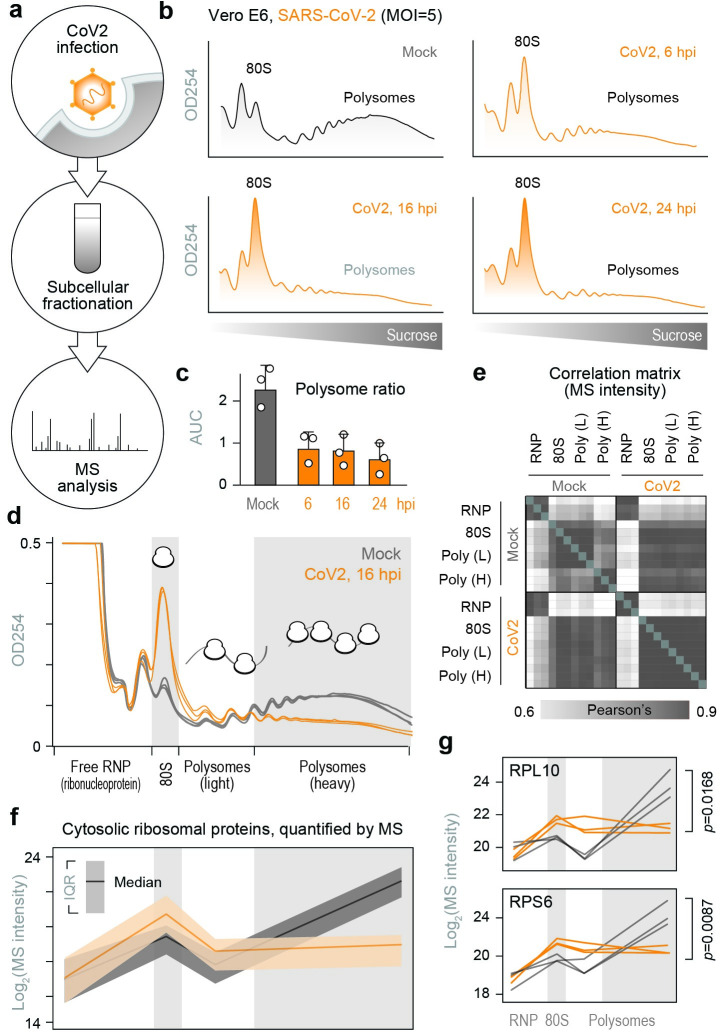
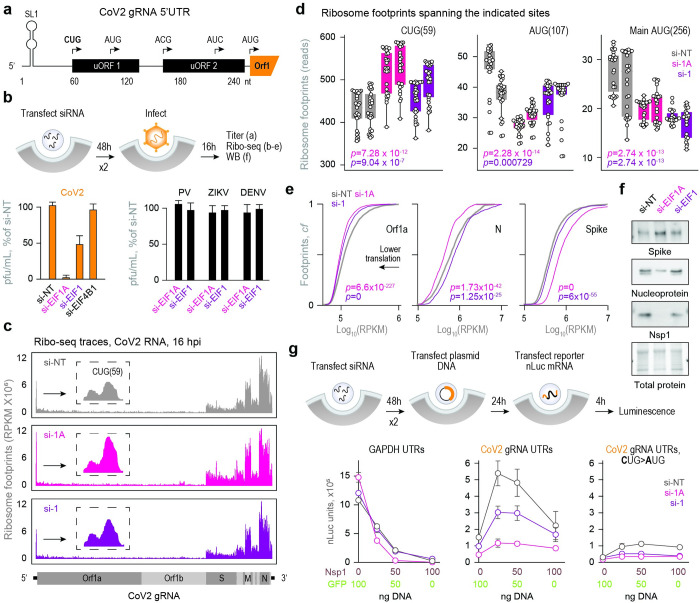
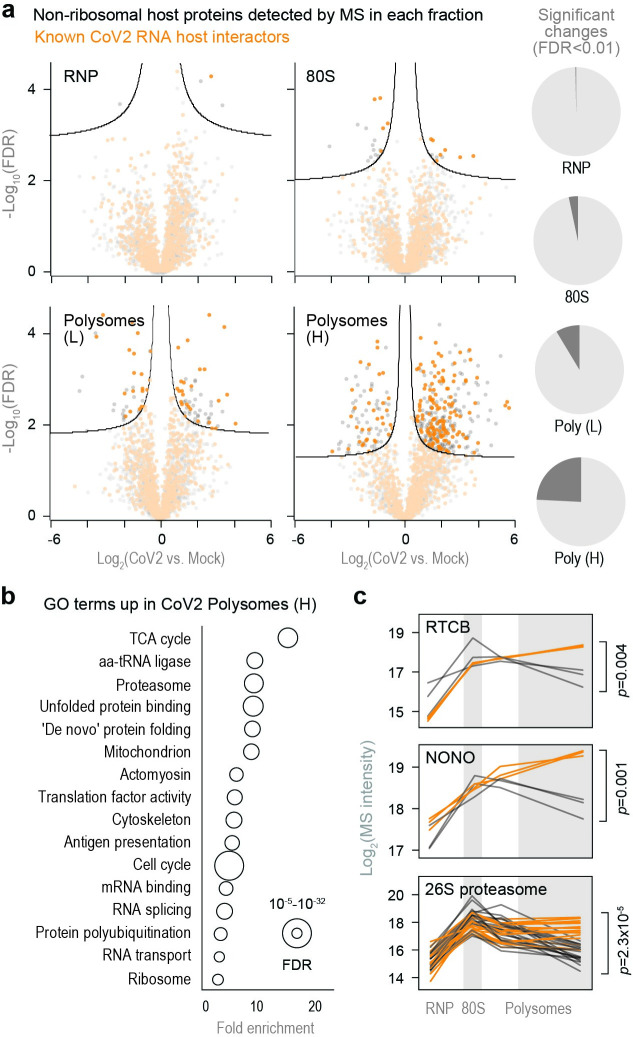
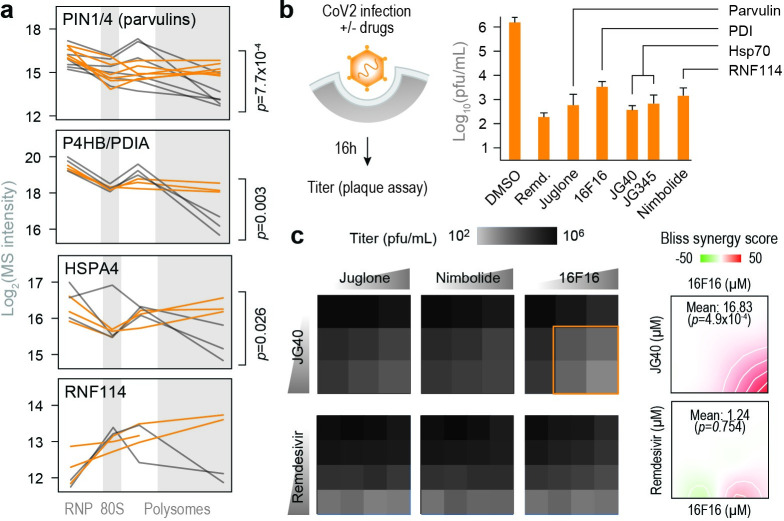
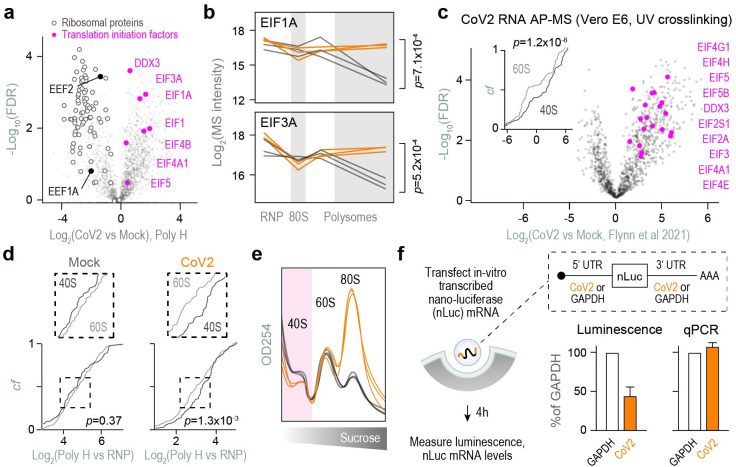
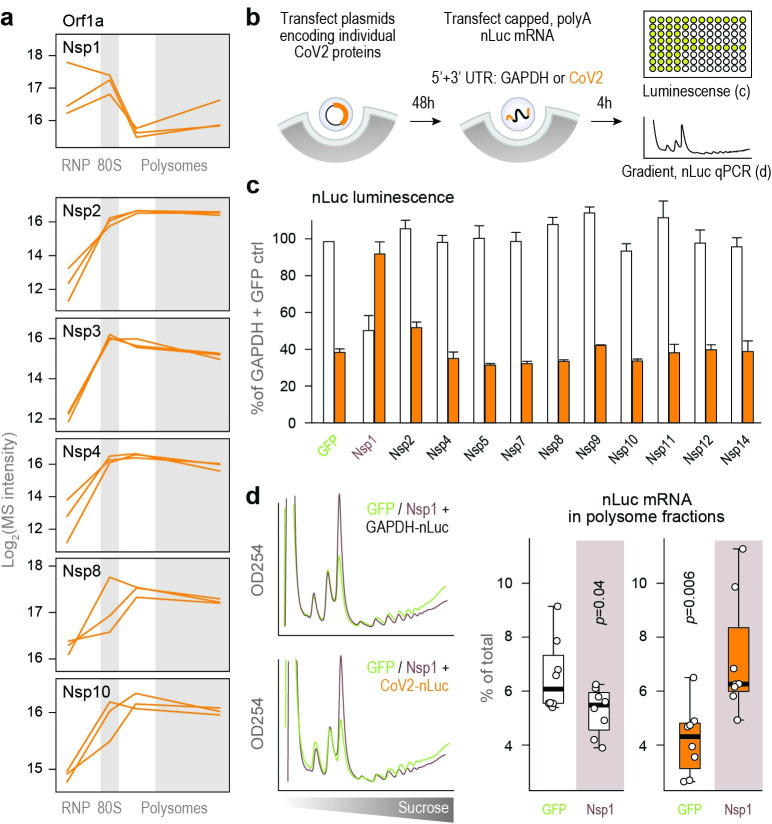
A better mechanistic understanding of virus-host dependencies can help reveal vulnerabilities and identify opportunities for therapeutic intervention. Of particular interest are essential interactions that enable production of viral proteins, as those could target an early step in the virus lifecycle. Here, we use subcellular proteomics, ribosome profiling analyses and reporter assays to detect changes in protein synthesis dynamics during SARS-CoV-2 (CoV2) infection. We identify specific translation factors and molecular chaperones that are used by CoV2 to promote the synthesis and maturation of its own proteins. These can be targeted to inhibit infection, without major toxicity to the host. We also find that CoV2 non-structural protein 1 (Nsp1) cooperates with initiation factors EIF1 and 1A to selectively enhance translation of viral RNA. When EIF1/1A are depleted, more ribosomes initiate translation from a conserved upstream CUG start codon found in all genomic and subgenomic viral RNAs. This results in higher translation of an upstream open reading frame (uORF1) and lower translation of the main ORF, altering the stoichiometry of viral proteins and attenuating infection. Replacing the upstream CUG with AUG strongly inhibits translation of the main ORF independently of Nsp1, EIF1, or EIF1A. Taken together, our work describes multiple dependencies of CoV2 on host biosynthetic networks and proposes a model for dosage control of viral proteins through Nsp1-mediated control of translation start site selection.
更好地了解病毒-宿主的相互依赖关系有助于揭示病毒生命周期中的脆弱环节和治疗干预的机会。特别值得关注的是那些能够产生病毒蛋白的基本相互作用,因为这些相互作用可以针对病毒生命周期的早期步骤。在这里,我们使用亚细胞蛋白质组学、核糖体分析和报告基因分析来检测 SARS-CoV-2(CoV2)感染过程中蛋白质合成动力学的变化。我们发现了特定的翻译因子和分子伴侣,CoV2 利用这些因子和伴侣来促进自身蛋白的合成和成熟。这些因子和伴侣可以作为靶点来抑制感染,而不会对宿主造成严重毒性。我们还发现,CoV2 的非结构蛋白 1(Nsp1)与起始因子 EIF1 和 EIF1A 合作,选择性地增强病毒 RNA 的翻译。当 EIF1/1A 被耗尽时,更多的核糖体从所有基因组和亚基因组病毒 RNA 中保守的上游 CUG 起始密码子开始翻译。这导致上游开放阅读框(uORF1)的翻译增加,主要 ORF 的翻译减少,从而改变病毒蛋白的比例,并减弱感染。用 AUG 替换上游的 CUG 会强烈抑制主要 ORF 的翻译,这独立于 Nsp1、EIF1 或 EIF1A。总之,我们的工作描述了 CoV2 对宿主生物合成网络的多种依赖性,并提出了一种通过 Nsp1 介导的翻译起始位点选择来控制病毒蛋白剂量的模型。