Department of Pain Medicine, The First Affiliated Hospital of Zhengzhou University, Zhengzhou, China.
Medical Genomics Unit, National Human Genome Research Institute, Bethesda, MD, United States.
Front Immunol. 2022 Aug 25;13:917141. doi: 10.3389/fimmu.2022.917141. eCollection 2022.
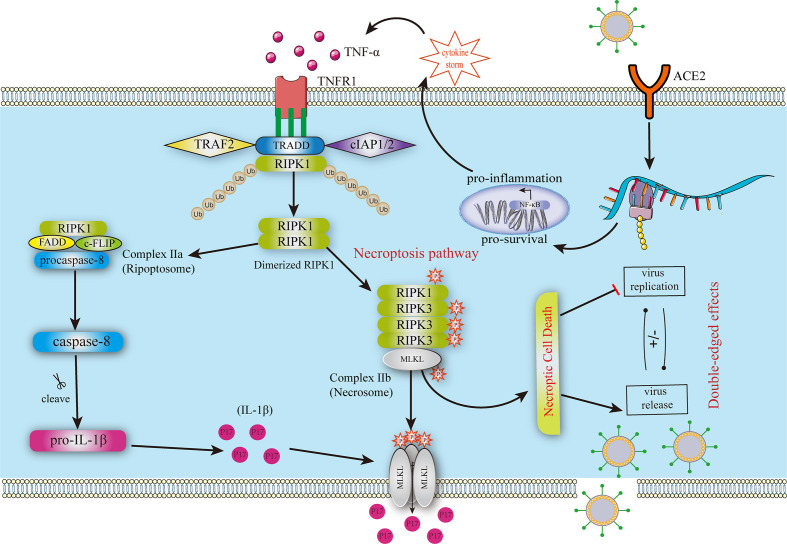
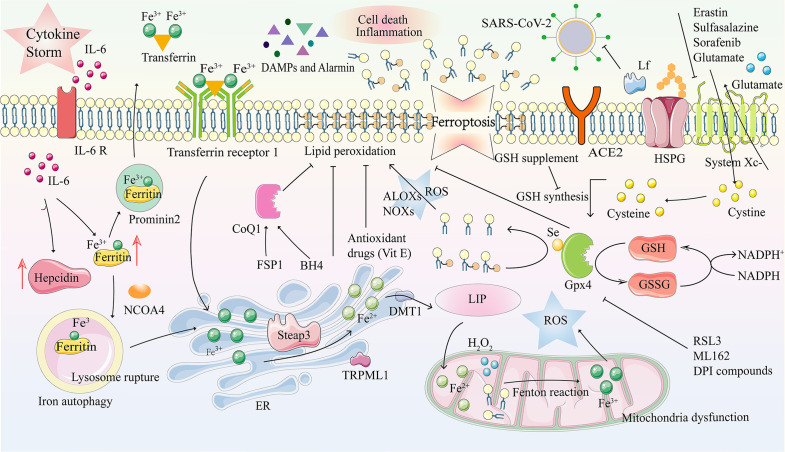
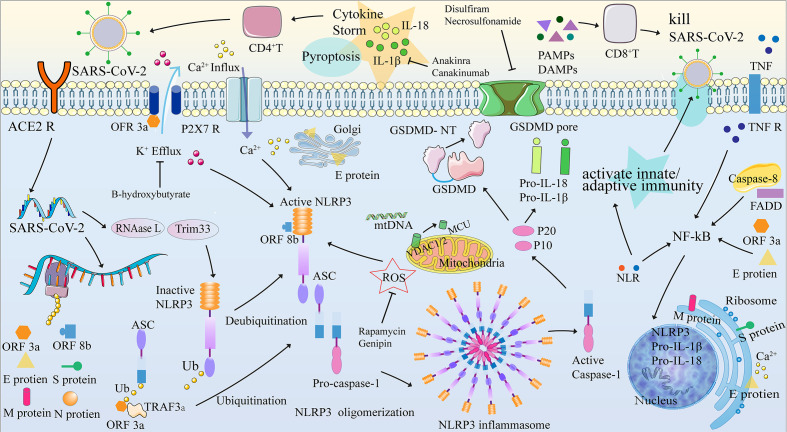
COVID-19 caused by SARS-CoV-2 can cause various systemic diseases such as acute pneumonia with cytokine storm. Constituted of necroptosis, pyroptosis, and ferroptosis, regulated necrosis constitutes the cell death patterns under the low apoptosis condition commonly observed in COVID-19. Regulated necrosis is involved in the release of cytokines like TNF-α, IL-1 β, and IL-6 and cell contents such as alarmins, PAMPs, and DAMPs, leading to more severe inflammation. Uncontrolled regulated necrosis may explain the poor prognosis and cytokine storm observed in COVID-19. In this review, the pathophysiology and mechanism of regulated necrosis with the double-edged sword effect in COVID-19 are thoroughly discussed in detail. Furthermore, this review also focuses on the biomarkers and potential therapeutic targets of the regulated necrosis pathway in COVID-19, providing practical guidance to judge the severity, prognosis, and clinical treatment of COVID-19 and guiding the development of clinical anti-SARS-CoV-2 drugs.
由 SARS-CoV-2 引起的 COVID-19 可引起多种全身疾病,如伴有细胞因子风暴的急性肺炎。在 COVID-19 中常见的低凋亡条件下,由坏死性凋亡、细胞焦亡和铁死亡组成的调控性细胞坏死构成了细胞死亡模式。调控性细胞坏死涉及细胞因子(如 TNF-α、IL-1β和 IL-6)和警报素、PAMPs 和 DAMPs 等细胞内容物的释放,导致更严重的炎症。失控的调控性细胞坏死可能解释了 COVID-19 中观察到的不良预后和细胞因子风暴。在这篇综述中,详细讨论了 COVID-19 中具有双刃剑效应的调控性细胞坏死的病理生理学和机制。此外,本综述还重点介绍了 COVID-19 中调控性细胞坏死途径的生物标志物和潜在治疗靶点,为判断 COVID-19 的严重程度、预后和临床治疗提供了实用指导,并指导了抗 SARS-CoV-2 药物的临床开发。