Lian Marianne, Hueffer Karsten, Weltzin Maegan M
University of Alaska Fairbanks, Department of Veterinary Medicine, 2141 Koyukuk Drive, Fairbanks, AK, 99775, USA.
Inland Norway University of Applied Sciences, Department of Forestry and Wildlife Management, Koppang, NO-2480, Norway.
Heliyon. 2022 Aug 28;8(9):e10434. doi: 10.1016/j.heliyon.2022.e10434. eCollection 2022 Sep.
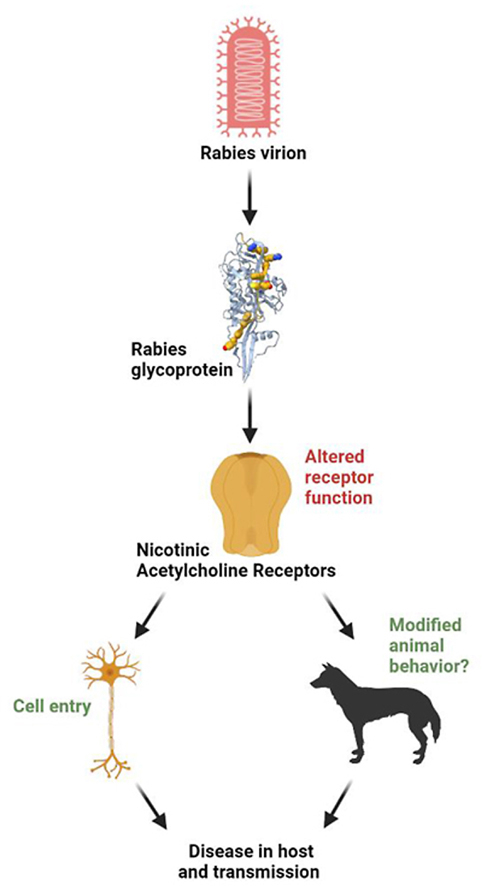
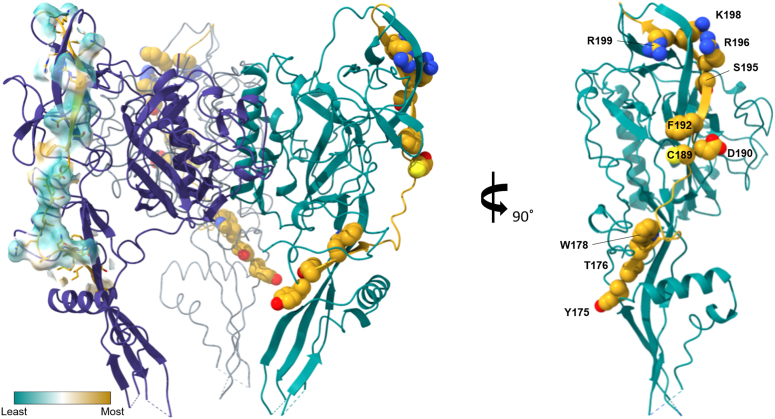
Rabies causes approximately 60,000 casualties annually and has a case fatality rate approaching 100% once clinical signs occur. The glycoprotein on the surface of the virion is important for the host immune response and facilitates interaction of the virion with host cell receptors. Nicotinic acetylcholine receptors were the first receptors identified as a molecular target for the rabies virus. Additional targets, including neural cell adhesion molecule, p75 neurotrophin receptor, metabotropic glutamate receptor subtype 2, and integrin β1, have been added to the list, all of which can mediate viral entry into the cell. Multiple receptors and different subtypes of nicotinic acetylcholine receptors result in a complex picture of virus-receptor interactions. In addition, some data suggest that the rabies virus glycoprotein inhibits cell signaling events mediated by various nicotinic receptor subtypes that have been implicated in altering behavior in unaffected animals. This review focuses on interactions between the rabies virus glycoprotein and nicotinic receptors and proposes possible functional consequences, including behavioral modifications and therapeutic approaches for future research.
狂犬病每年导致约6万人死亡,一旦出现临床症状,病死率接近100%。病毒粒子表面的糖蛋白对宿主免疫反应很重要,并促进病毒粒子与宿主细胞受体的相互作用。烟碱型乙酰胆碱受体是首个被确定为狂犬病病毒分子靶点的受体。其他靶点,包括神经细胞黏附分子、p75神经营养因子受体、代谢型谷氨酸受体2亚型和整合素β1,也被列入其中,所有这些靶点都可介导病毒进入细胞。多种受体以及烟碱型乙酰胆碱受体的不同亚型导致了病毒与受体相互作用的复杂情况。此外,一些数据表明,狂犬病病毒糖蛋白会抑制由各种烟碱型受体亚型介导的细胞信号事件,这些受体亚型与未受感染动物的行为改变有关。本综述重点关注狂犬病病毒糖蛋白与烟碱型受体之间的相互作用,并提出可能的功能后果,包括行为改变以及未来研究的治疗方法。