Wang Feiran, Song Jian, Yan Yingying, Zhou Qian, Li Xiaojing, Wang Ping, Yang Zongtong, Zhang Qiuhong, Zhang Huimin
Shandong University of Traditional Chinese Medicine, Jinan 250355, P. R. China.
Shandong Academy of Chinese Medicine, Jinan 250014, P. R. China.
ACS Omega. 2022 Aug 24;7(35):31482-31494. doi: 10.1021/acsomega.2c04157. eCollection 2022 Sep 6.
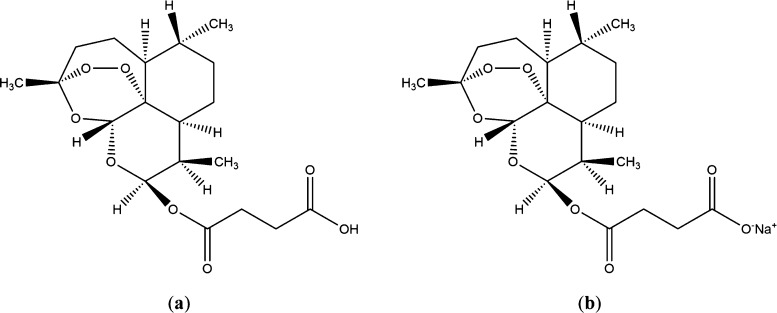
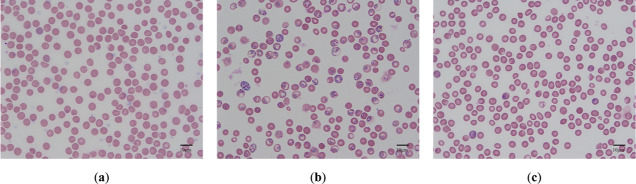
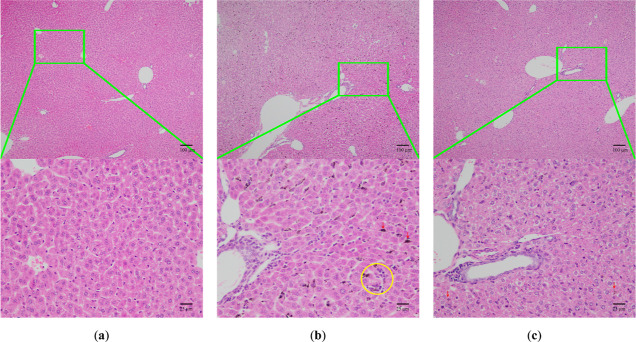
Artesunate is a widely used drug in clinical treatment of malaria. The aim of this study was to investigate the therapeutic mechanism of artesunate on malaria using an integrated strategy of network pharmacology and serum metabolomics. The mice models of malaria were established using 2 × 10 red blood cells infected with ANKA injection. Giemsa and hematoxylin-eosin (HE) staining were used to evaluate the efficacy of artesunate on malaria. Next, network pharmacology analysis was applied to identify target genes. Then, a metabolomics strategy has been developed to find the possible significant serum metabolites and metabolic pathways induced by artesunate. Additionally, two parts of the results were integrated to confirm each other. Giemsa and HE staining results showed that artesunate significantly inhibited the proliferation of and reduced liver and spleen inflammation. Based on metabolomics, 18 differential endogenous metabolites were identified as potential biomarkers related to the artesunate for treating malaria. These metabolites were mainly involved in the relevant pathways of biosynthesis of unsaturated fatty acids; aminoacyl-tRNA biosynthesis; valine, leucine, and isoleucine biosynthesis; and phenylalanine, tyrosine, and tryptophan biosynthesis. The results of the network pharmacology analysis showed 125 potential target genes related to the treatment of malaria with artesunate. The functional enrichment was mainly associated with lipid and atherosclerosis; pathways of prostate cancer and proteoglycans in cancer; and PI3K-Akt, apoptosis, NF-κB, Th17 cell, and AGE-RAGE signaling pathways. These findings were partly consistent with the findings of the metabolism. Our results further suggested that artesunate could correct the inflammatory response caused by malaria through Th17 cell and NF-κB pathways. Meanwhile, our work revealed that cholesterol needed by came directly from serum. Cholesterol and palmitic acid may be essential in the growth and reproduction of . In summary, artesunate may have an effect on anti-malarial properties through multiple targets.
青蒿琥酯是临床治疗疟疾中广泛使用的药物。本研究旨在采用网络药理学和血清代谢组学的综合策略,研究青蒿琥酯治疗疟疾的作用机制。通过注射感染ANKA的2×10个红细胞建立疟疾小鼠模型。采用吉姆萨染色和苏木精-伊红(HE)染色评估青蒿琥酯对疟疾的疗效。接下来,应用网络药理学分析来鉴定靶基因。然后,开发了一种代谢组学策略,以寻找青蒿琥酯诱导的可能的显著血清代谢物和代谢途径。此外,将两部分结果整合以相互印证。吉姆萨染色和HE染色结果表明,青蒿琥酯显著抑制疟原虫增殖,并减轻肝脏和脾脏炎症。基于代谢组学,鉴定出18种差异内源性代谢物作为与青蒿琥酯治疗疟疾相关的潜在生物标志物。这些代谢物主要参与不饱和脂肪酸生物合成、氨酰-tRNA生物合成、缬氨酸、亮氨酸和异亮氨酸生物合成以及苯丙氨酸、酪氨酸和色氨酸生物合成的相关途径。网络药理学分析结果显示有125个与青蒿琥酯治疗疟疾相关的潜在靶基因。功能富集主要与脂质和动脉粥样硬化、前列腺癌和癌症中的蛋白聚糖途径以及PI3K-Akt、凋亡、NF-κB、Th17细胞和AGE-RAGE信号通路相关。这些发现与代谢研究结果部分一致。我们的结果进一步表明,青蒿琥酯可通过Th17细胞和NF-κB途径纠正疟疾引起的炎症反应。同时,我们的研究表明疟原虫所需的胆固醇直接来自血清。胆固醇和棕榈酸可能对疟原虫的生长和繁殖至关重要。总之,青蒿琥酯可能通过多个靶点发挥抗疟作用。