University Center for Gastrointestinal and Liver Diseases, St. Clara Hospital and University Hospital, Basel, Switzerland.
Division of Endocrinology, Diabetes, and Metabolism, University Hospital Basel, Basel, Switzerland.
Front Endocrinol (Lausanne). 2022 Aug 24;13:940990. doi: 10.3389/fendo.2022.940990. eCollection 2022.
Diabetic ketoacidosis (DKA) is a life-threatening complication of both type 1 and type 2 diabetes. We aimed to assess population-based rates, trends and outcomes of patients with DKA.
This is a nationwide cohort study using hospital discharge claims data from 2010 to 2018 in Switzerland. Incidence rates and in-hospital outcomes of DKA were analyzed throughout lifetime for children (0-9 years), adolescents (10-19 years), and adults (20-29, 30-59, and 60-90 years). Analyses were stratified for type of diabetes mellitus and sex.
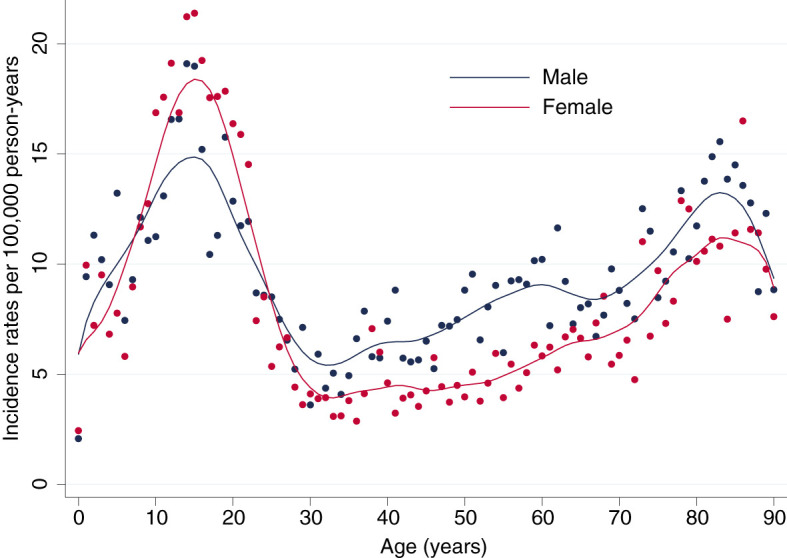
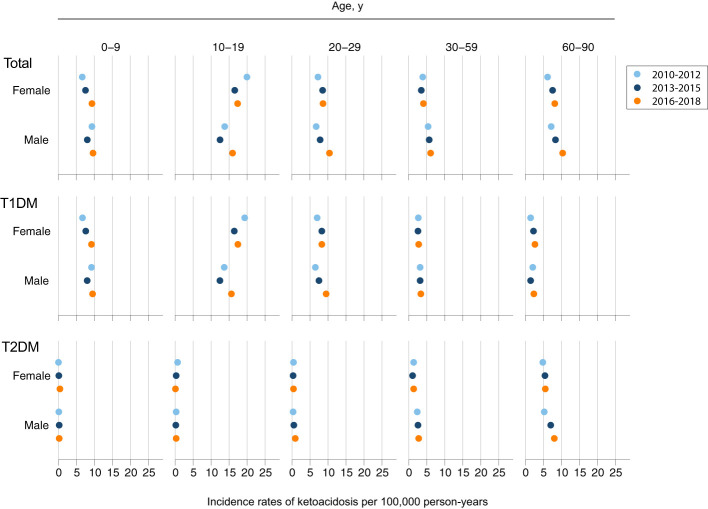
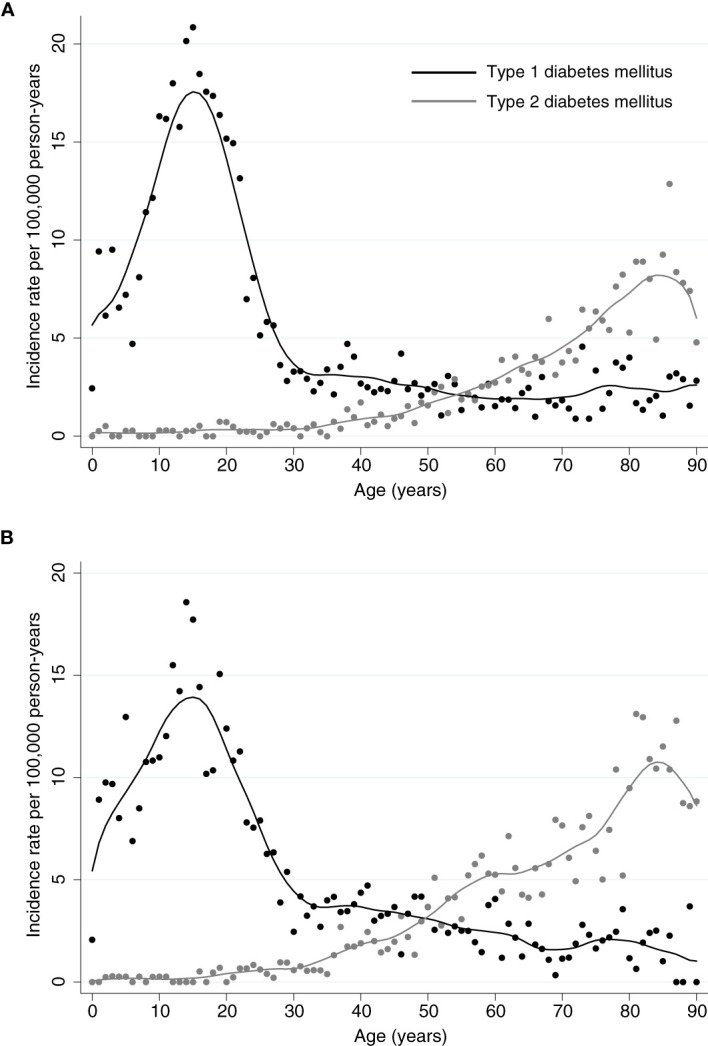
In total, 5,544 hospitalizations with DKA were identified, of whom 3,847 were seen in patients with type 1 diabetes and 1,697 in type 2 diabetes. Incidence rates of DKA among patients with type 1 diabetes were highest during adolescence with 17.67 (girls) and 13.87 (boys) events per 100,000 person-years (incidence rate difference [IRD]: -3.80 [95% CI, -5.59 to -2.02]) and decreased with age in both sexes thereafter. Incidence rates of DKA in patients with type 2 diabetes were low up to an age of 40 years and rose to 5.26 (females) and 6.82 (males) per 100,000 person-years in adults aged 60-90 years. Diabetic ketoacidosis was associated with relevant health-care burden independent of age, sex, or type of diabetes. The population-based incidence rate of DKA increased over time from 7.22 per 100,000 person-years in 2010 to 9.49 per 100,000 person-years in 2018.
In type 1 diabetes highest incidence rates of DKA hospitalizations were observed among adolescent females. In comparison, in patients with type 2 diabetes the risk for DKA steadily increased with age with higher rates in adult males. Over the 9 year study period, incidence rates of DKA were increasing irrespective of type of diabetes. DKA was associated with a high burden of disease reflected by high rates of intensive care unit admission, prolonged hospital stay and high mortality rates, especially in elderly.
糖尿病酮症酸中毒(DKA)是 1 型和 2 型糖尿病的一种危及生命的并发症。本研究旨在评估 DKA 患者的人群发生率、趋势和结局。
这是一项基于全国的队列研究,使用了瑞士 2010 年至 2018 年的住院记录数据。对儿童(0-9 岁)、青少年(10-19 岁)和成年(20-29、30-59 和 60-90 岁)一生中 DKA 的发生率和院内结局进行了分析。分析按糖尿病类型和性别分层。
共发现 5544 例 DKA 住院患者,其中 3847 例为 1 型糖尿病患者,1697 例为 2 型糖尿病患者。1 型糖尿病患者中 DKA 的发生率在青春期最高,女孩为 17.67 例/100,000 人年,男孩为 13.87 例/100,000 人年(发病率差异[IRD]:-3.80 [95%CI,-5.59 至-2.02]),此后男女发病率均随年龄增长而下降。2 型糖尿病患者 DKA 的发生率在 40 岁之前较低,60-90 岁成年人中女性为 5.26 例/100,000 人年,男性为 6.82 例/100,000 人年。无论年龄、性别或糖尿病类型如何,糖尿病酮症酸中毒都与相关的医疗保健负担有关。基于人群的 DKA 发病率从 2010 年的 7.22 例/100,000 人年增加到 2018 年的 9.49 例/100,000 人年。
在 1 型糖尿病中,青春期女性 DKA 住院的发生率最高。相比之下,2 型糖尿病患者的 DKA 风险随着年龄的增长而稳步上升,成年男性的发生率更高。在 9 年的研究期间,DKA 的发病率呈上升趋势,与糖尿病类型无关。DKA 与高疾病负担相关,反映在重症监护病房入院率、住院时间延长和高死亡率高,尤其是在老年人中。