Department of Rehabilitation Center, The First Affiliated Hospital of Henan University of Chinese Medicine, Zhengzhou, China.
Department of Rehabilitation Medicine, Henan University of Chinese Medicine, Zhengzhou, China.
Front Endocrinol (Lausanne). 2022 Aug 24;13:921119. doi: 10.3389/fendo.2022.921119. eCollection 2022.
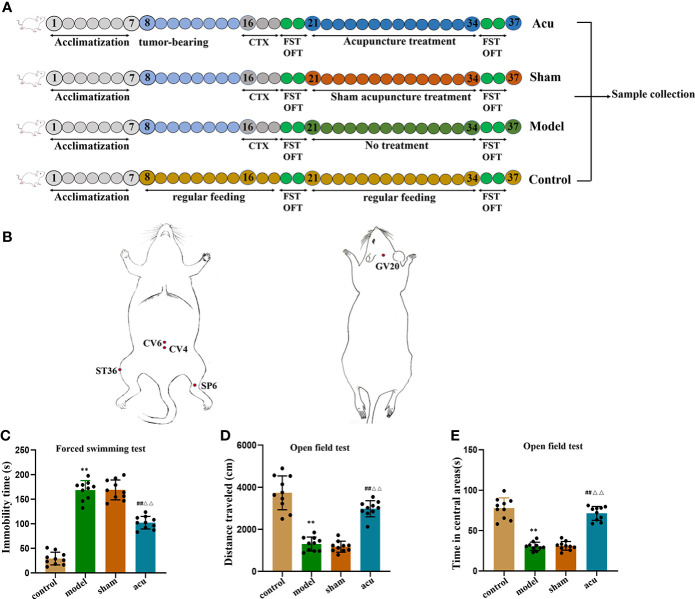
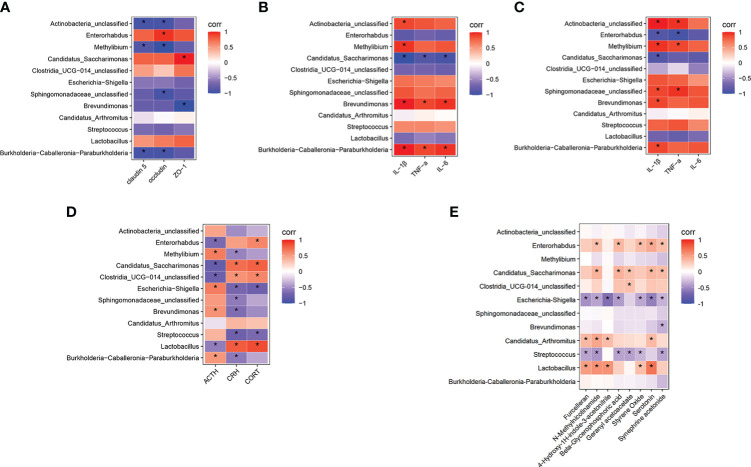
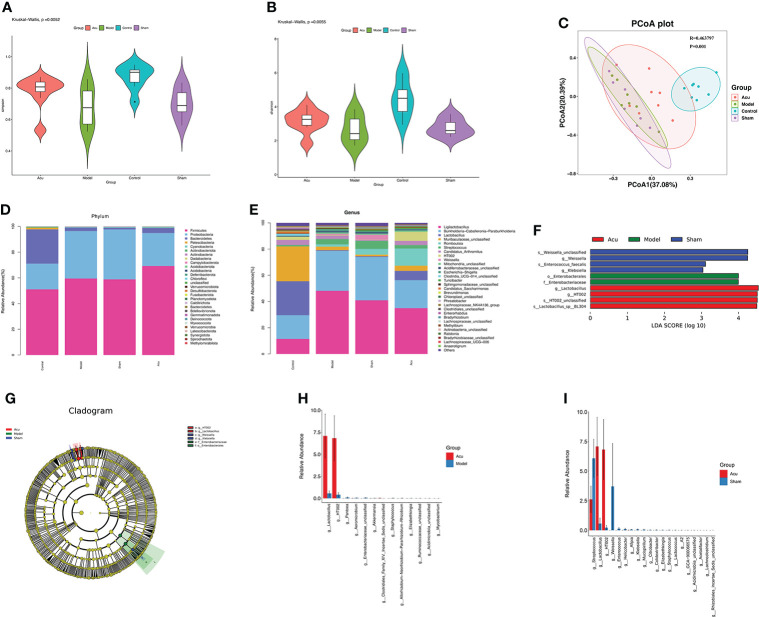
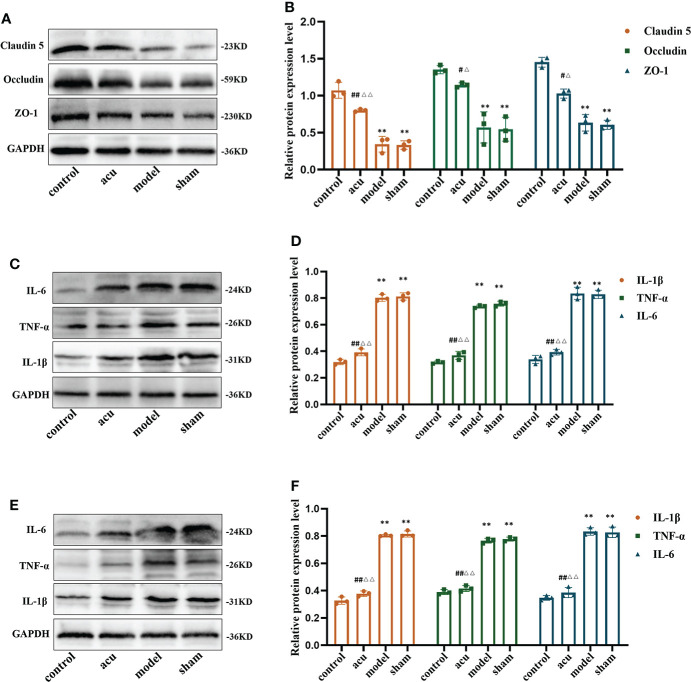
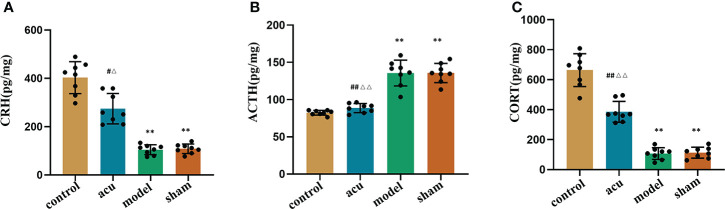
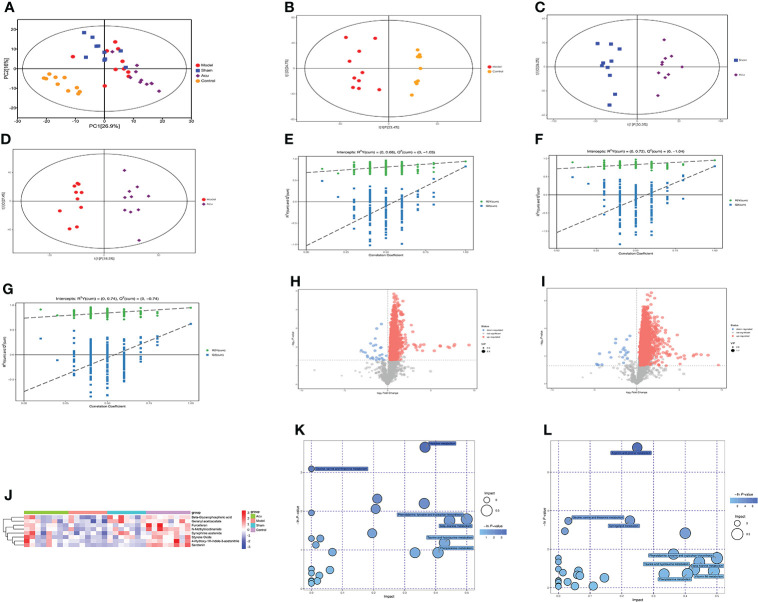
Cancer-related fatigue (CRF) is the most common side effect of chemotherapy for breast cancer (BC). Acupuncture treatment has an anti-fatigue effect and can regulate gut microbiota disturbance in fatigue patients. Related studies have shown that the gut microbiota-gut-brain axis is closely related to the occurrence of CRF. In this study, we first investigated the alterations of acupuncture on fatigue-like behavior, gut microbiota, gut inflammation and neuroinflammation response, gut barriers, HPA axis, and serum metabolomics in CRF mice after BC chemotherapy. Then, the correlation analysis of gut microbiota and other indicators was discussed. Our results showed that acupuncture treatment could exert an anti-fatigue effect and ameliorate the gut barrier, gut inflammation, neuroinflammation, and dysfunction of the HPA axis in CRF mice after chemotherapy for BC. 16S rRNA sequencing showed that acupuncture treatment could enhance the abundance of , , and and decrease the abundances of , , and . Serum metabolomics analysis showed that acupuncture treatment could regulate the differential metabolites N-methylnicotinamide, beta-glycerophosphoric acid, geranyl acetoacetate, serotonin and phenylalanine, tyrosine and tryptophan biosynthesis, taurine and hypotaurine, and beta-alanine metabolic pathways. Correlation analysis indicated that there are certain correlations between gut microbiota and gut inflammation, neuroinflammation, gut barrier, HPA axis function and serum metabolites. In conclusion, our findings revealed that the anti-fatigue mechanism of acupuncture treatment may be closely related to the gut microbiota-gut-brain axis. This study also provided a new reference for basic and clinical research on CRF after breast cancer chemotherapy.
癌症相关性疲劳(CRF)是乳腺癌(BC)化疗最常见的副作用。针刺治疗具有抗疲劳作用,并能调节疲劳患者的肠道微生物群失调。相关研究表明,肠道微生物群-肠道-大脑轴与 CRF 的发生密切相关。在这项研究中,我们首先研究了针刺对 BC 化疗后 CRF 小鼠疲劳样行为、肠道微生物群、肠道炎症和神经炎症反应、肠道屏障、HPA 轴和血清代谢组学的影响,然后讨论了肠道微生物群与其他指标的相关性。我们的结果表明,针刺治疗可在 BC 化疗后 CRF 小鼠中发挥抗疲劳作用,并改善肠道屏障、肠道炎症、神经炎症和 HPA 轴功能障碍。16S rRNA 测序显示,针刺治疗可增加 、 、 和 的丰度,降低 、 、 和 的丰度。血清代谢组学分析表明,针刺治疗可调节差异代谢物 N-甲基烟酰胺、β-甘油磷酸、香叶基乙酰乙酸、血清素和苯丙氨酸、酪氨酸和色氨酸生物合成、牛磺酸和次牛磺酸以及β-丙氨酸代谢途径。相关性分析表明,肠道微生物群与肠道炎症、神经炎症、肠道屏障、HPA 轴功能和血清代谢物之间存在一定的相关性。总之,我们的研究结果表明,针刺治疗的抗疲劳机制可能与肠道微生物群-肠道-大脑轴密切相关。本研究还为乳腺癌化疗后 CRF 的基础和临床研究提供了新的参考。