Division of Biochemistry, Mannheim Institute for Innate Immunoscience (MI3) and Mannheim Cancer Center (MCC), Medical Faculty Mannheim, Heidelberg University, Ludolf-Krehl-Str. 13-17, 68167, Mannheim, Germany.
Center for Molecular Biology of Heidelberg University (ZMBH), 69120, Heidelberg, Germany.
Genome Biol. 2022 Sep 12;23(1):193. doi: 10.1186/s13059-022-02760-5.
Cytoplasmic polyadenylation element-binding protein 4 (CPEB4) is known to associate with cytoplasmic polyadenylation elements (CPEs) located in the 3' untranslated region (UTR) of specific mRNAs and assemble an activator complex promoting the translation of target mRNAs through cytoplasmic polyadenylation.
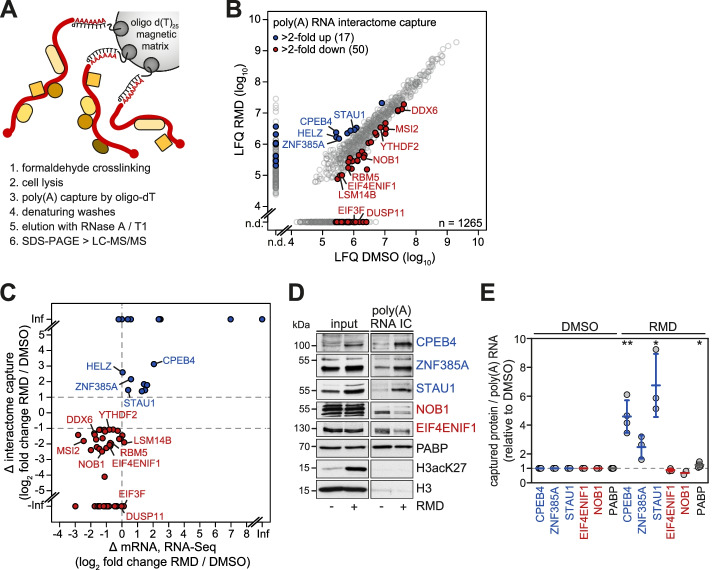
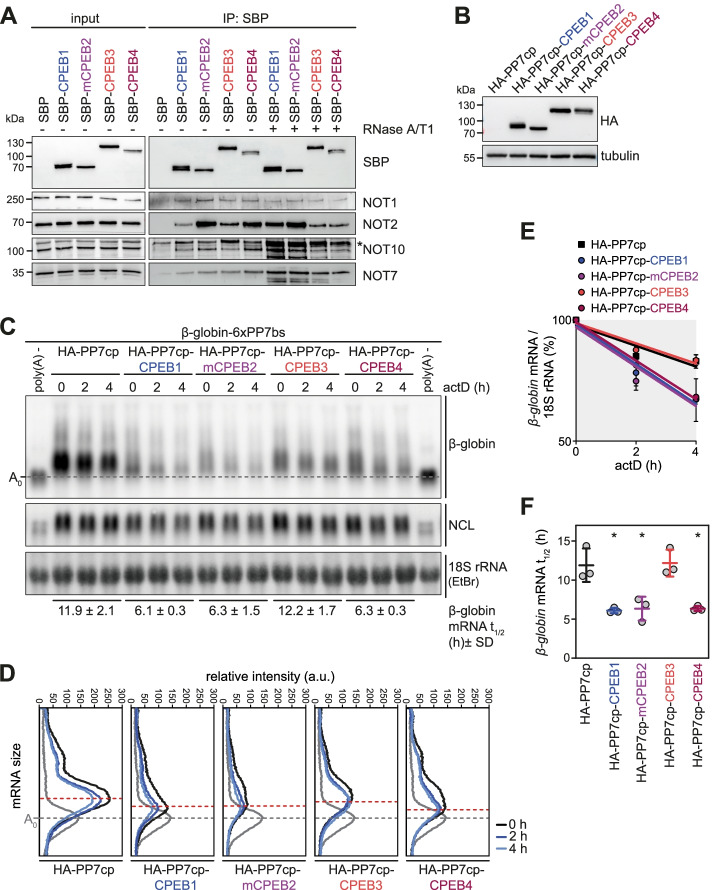
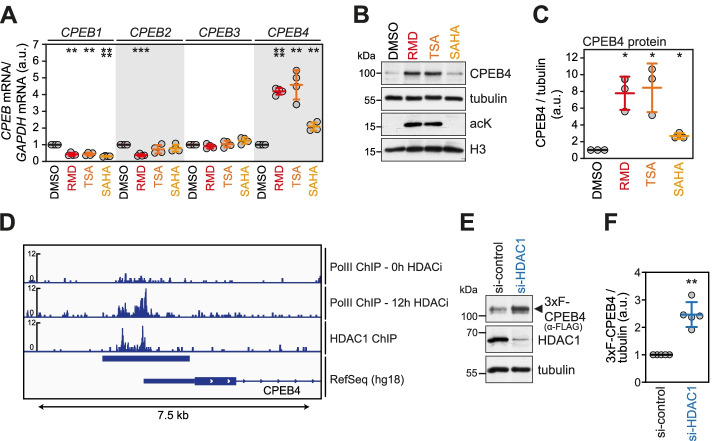
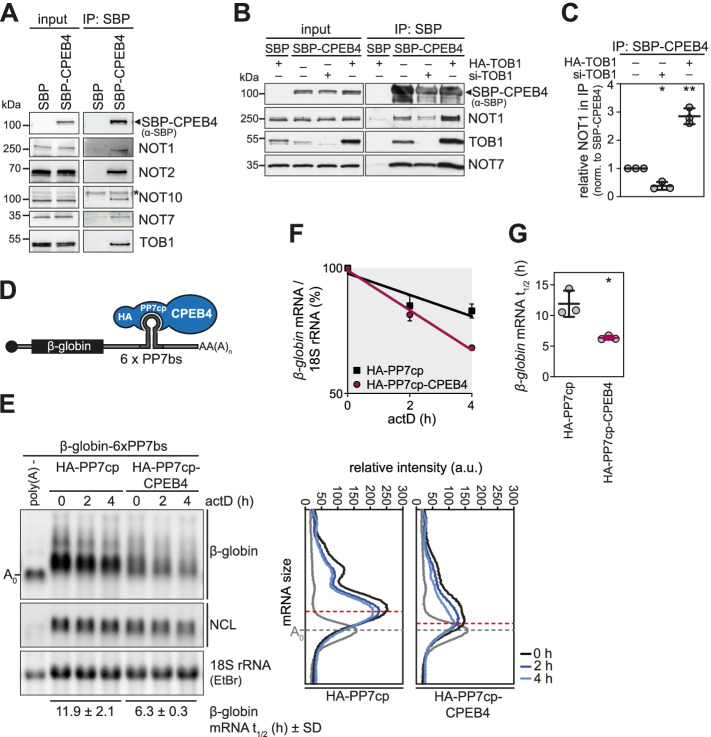
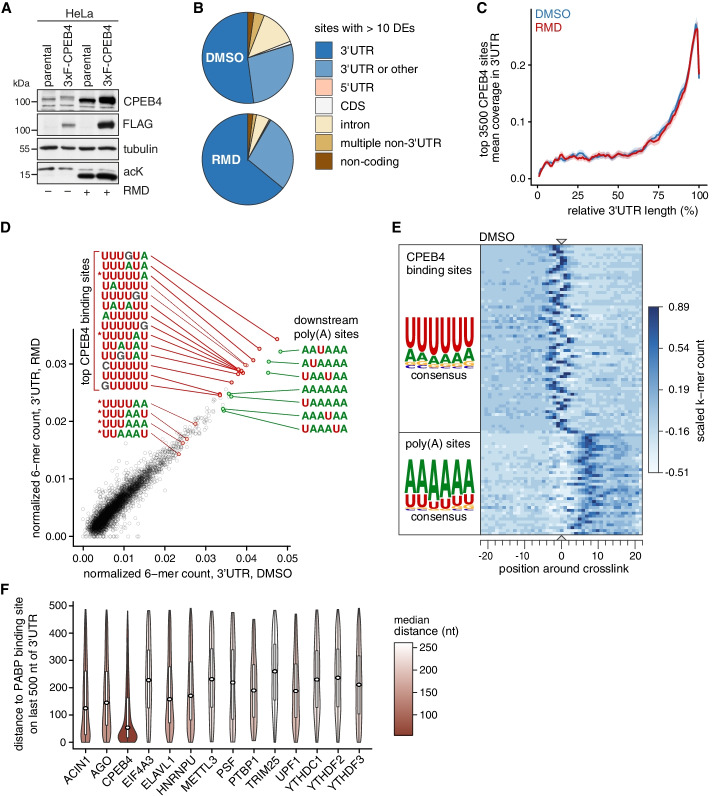
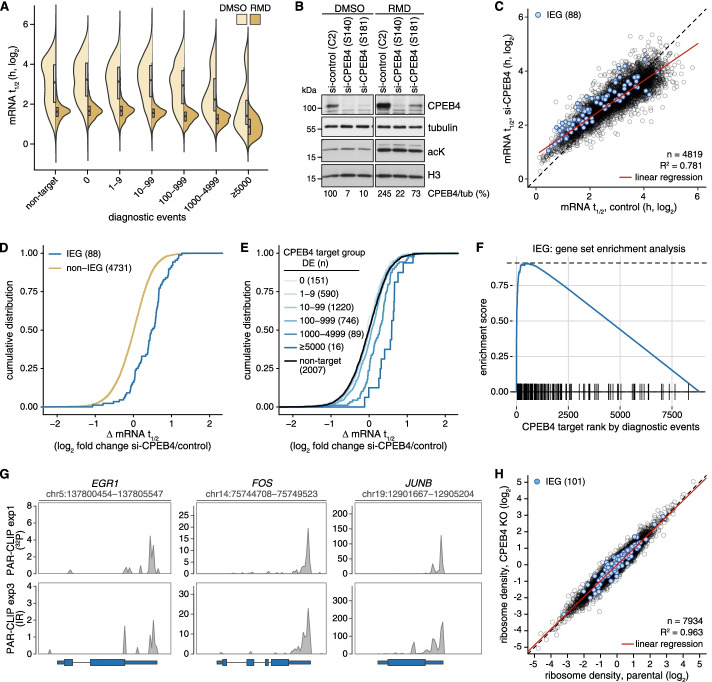
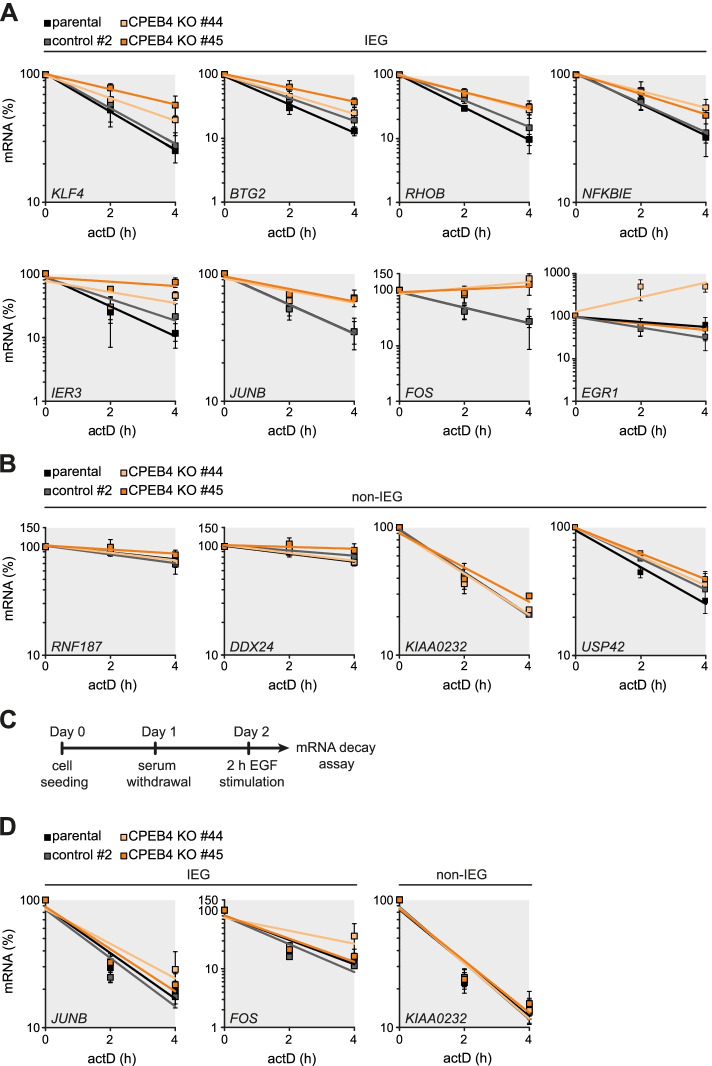
Here, we find that CPEB4 is part of an alternative repressor complex that mediates mRNA degradation by associating with the evolutionarily conserved CCR4-NOT deadenylase complex. We identify human CPEB4 as an RNA-binding protein (RBP) with enhanced association to poly(A) RNA upon inhibition of class I histone deacetylases (HDACs), a condition known to cause widespread degradation of poly(A)-containing mRNA. Photoactivatable ribonucleoside-enhanced crosslinking and immunoprecipitation (PAR-CLIP) analysis using endogenously tagged CPEB4 in HeLa cells reveals that CPEB4 preferentially binds to the 3'UTR of immediate early gene mRNAs, at G-containing variants of the canonical U- and A-rich CPE located in close proximity to poly(A) sites. By transcriptome-wide mRNA decay measurements, we find that the strength of CPEB4 binding correlates with short mRNA half-lives and that loss of CPEB4 expression leads to the stabilization of immediate early gene mRNAs. Akin to CPEB4, we demonstrate that CPEB1 and CPEB2 also confer mRNA instability by recruitment of the CCR4-NOT complex.
While CPEB4 was previously known for its ability to stimulate cytoplasmic polyadenylation, our findings establish an additional function for CPEB4 as the RNA adaptor of a repressor complex that enhances the degradation of short-lived immediate early gene mRNAs.
细胞质多聚腺苷酸化元件结合蛋白 4(CPEB4)已知与位于特定 mRNA 的 3'非翻译区(UTR)中的细胞质多聚腺苷酸化元件(CPE)结合,并组装一个激活复合物,通过细胞质多聚腺苷酸化促进靶 mRNA 的翻译。
在这里,我们发现 CPEB4 是一种替代的抑制剂复合物的一部分,通过与进化上保守的 CCR4-NOT 脱腺苷酸酶复合物结合,介导 mRNA 降解。我们鉴定出人 CPEB4 是一种 RNA 结合蛋白(RBP),在抑制 I 类组蛋白去乙酰化酶(HDACs)时,与 poly(A) RNA 的结合增强,这种情况已知会导致广泛降解含有 poly(A)的 mRNA。使用 HeLa 细胞中内源性标记的 CPEB4 的光活化核碱基增强交联和免疫沉淀(PAR-CLIP)分析表明,CPEB4 优先结合到早期基因 mRNA 的 3'UTR 上,在靠近 poly(A) 位点的、含有 G 的、经典的 U 和富含 A 的 CPE 的变体上。通过全转录组 mRNA 衰减测量,我们发现 CPEB4 结合的强度与短 mRNA 半衰期相关,并且 CPEB4 表达的丧失导致早期基因 mRNA 的稳定。与 CPEB4 类似,我们证明 CPEB1 和 CPEB2 也通过募集 CCR4-NOT 复合物赋予 mRNA 不稳定性。
虽然 CPEB4 以前因其刺激细胞质多聚腺苷酸化的能力而闻名,但我们的研究结果确立了 CPEB4 的另一个功能,即作为一个抑制剂复合物的 RNA 接头,增强短寿命早期基因 mRNA 的降解。