Department of Chemistry, State University of New York, Potsdam, New York 13676, United States.
Department of Materials Science and Engineering, University of Pennsylvania, Philadelphia, Pennsylvania 19104, United States.
Biochemistry. 2022 Oct 4;61(19):2106-2117. doi: 10.1021/acs.biochem.2c00354. Epub 2022 Sep 13.
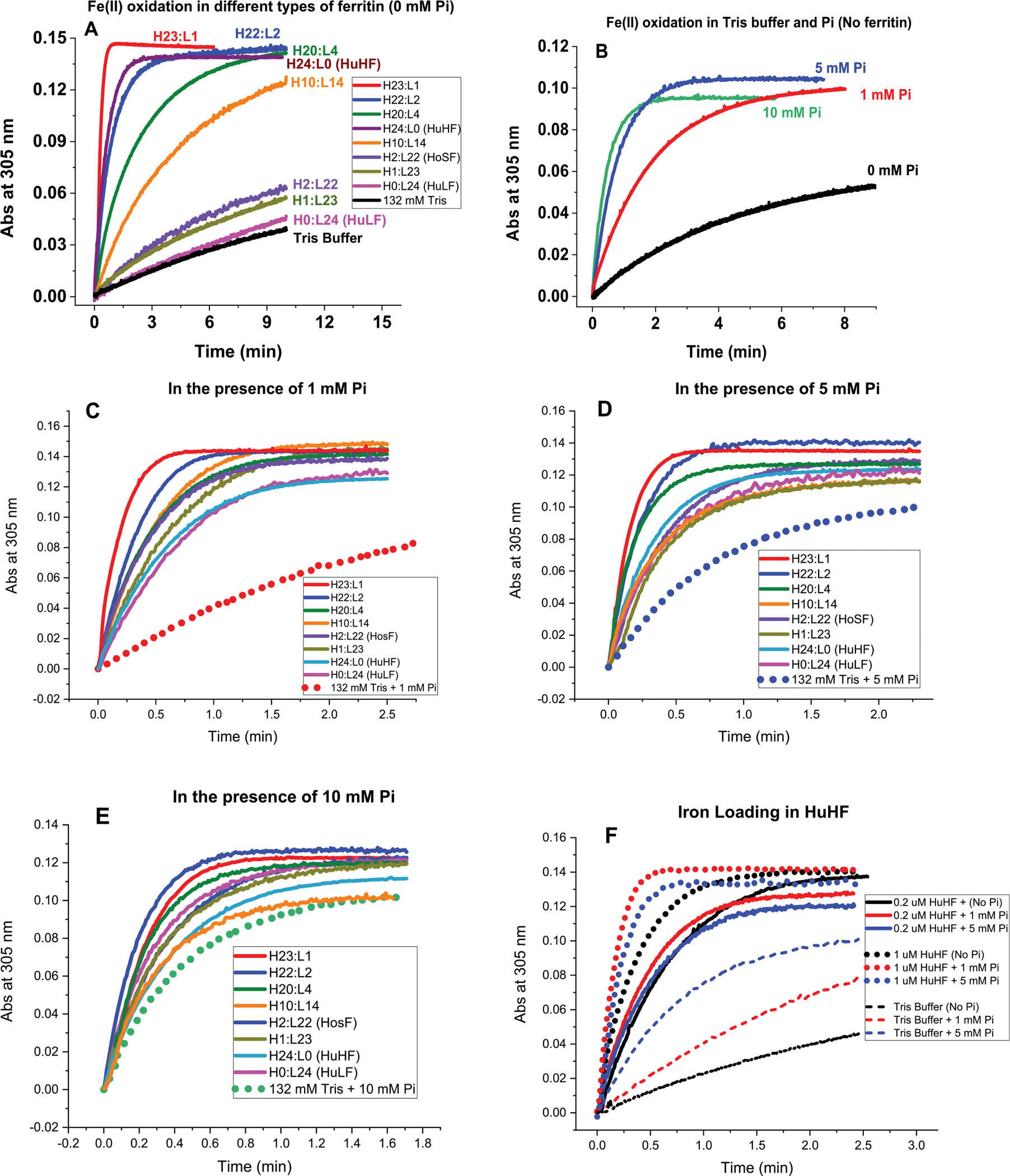
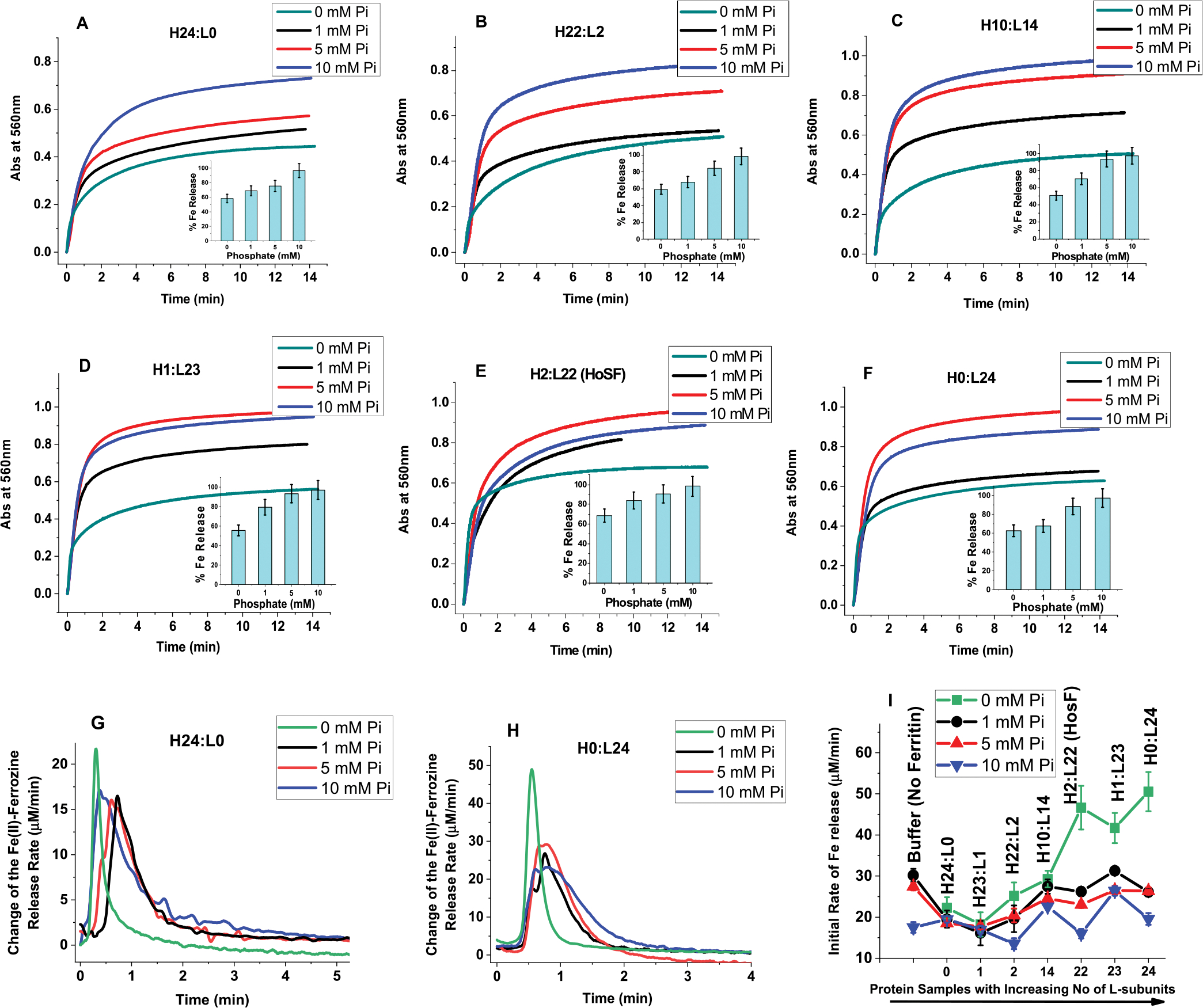
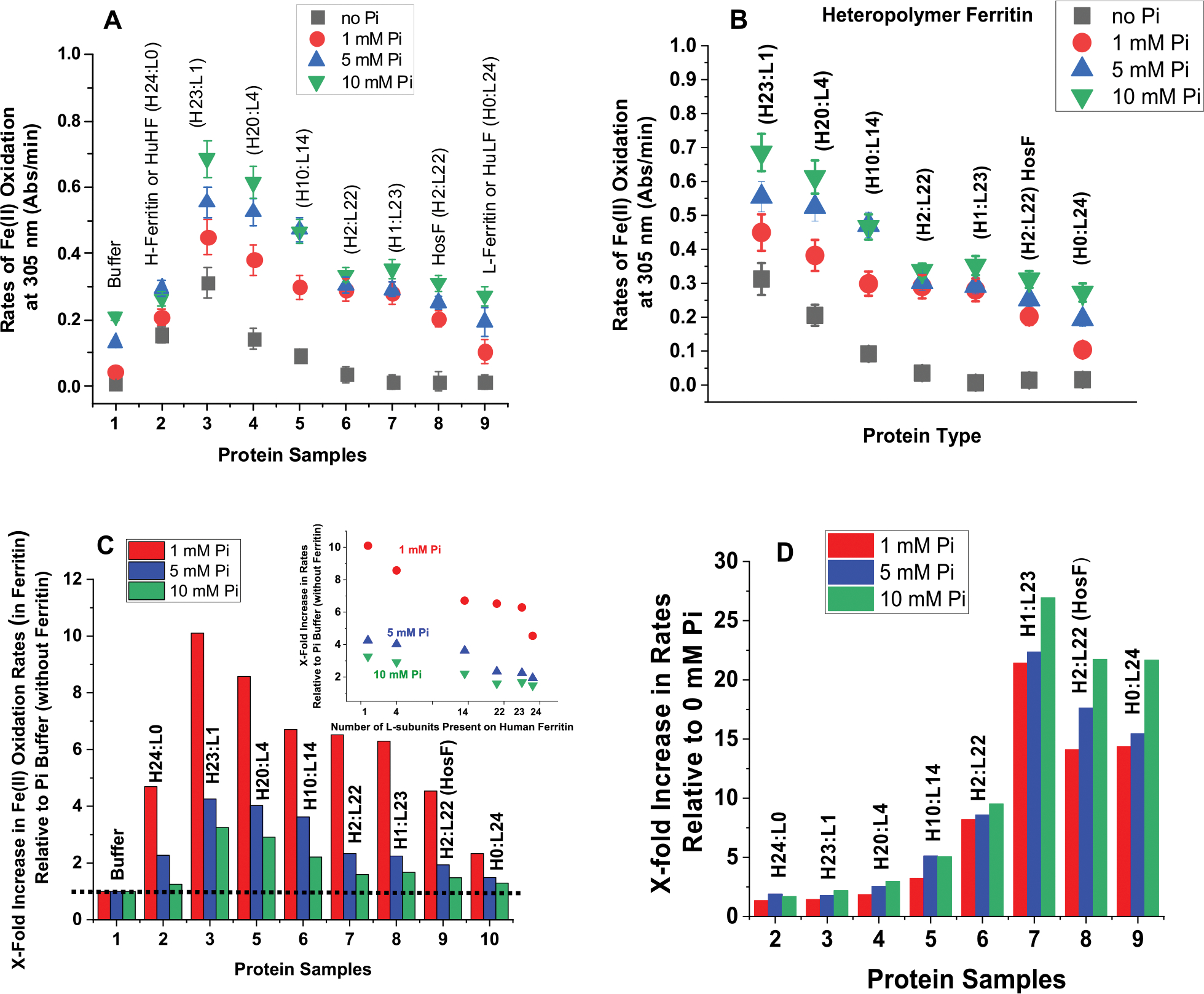
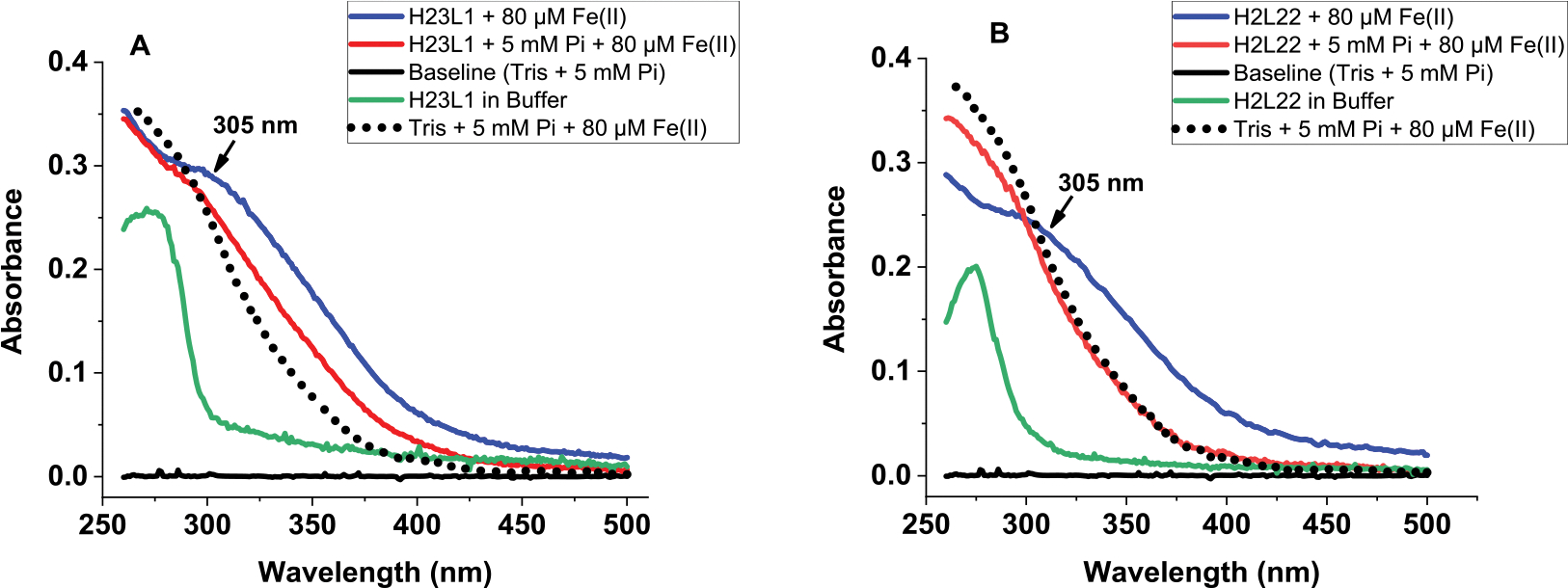
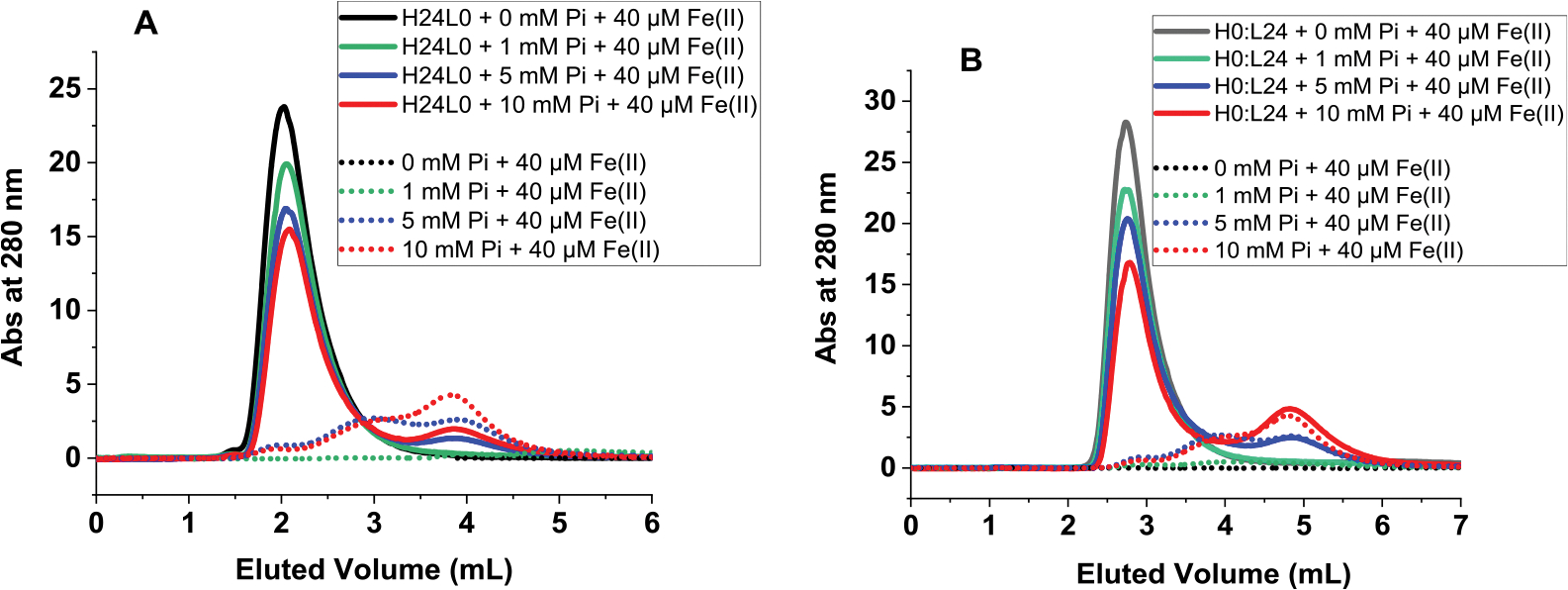
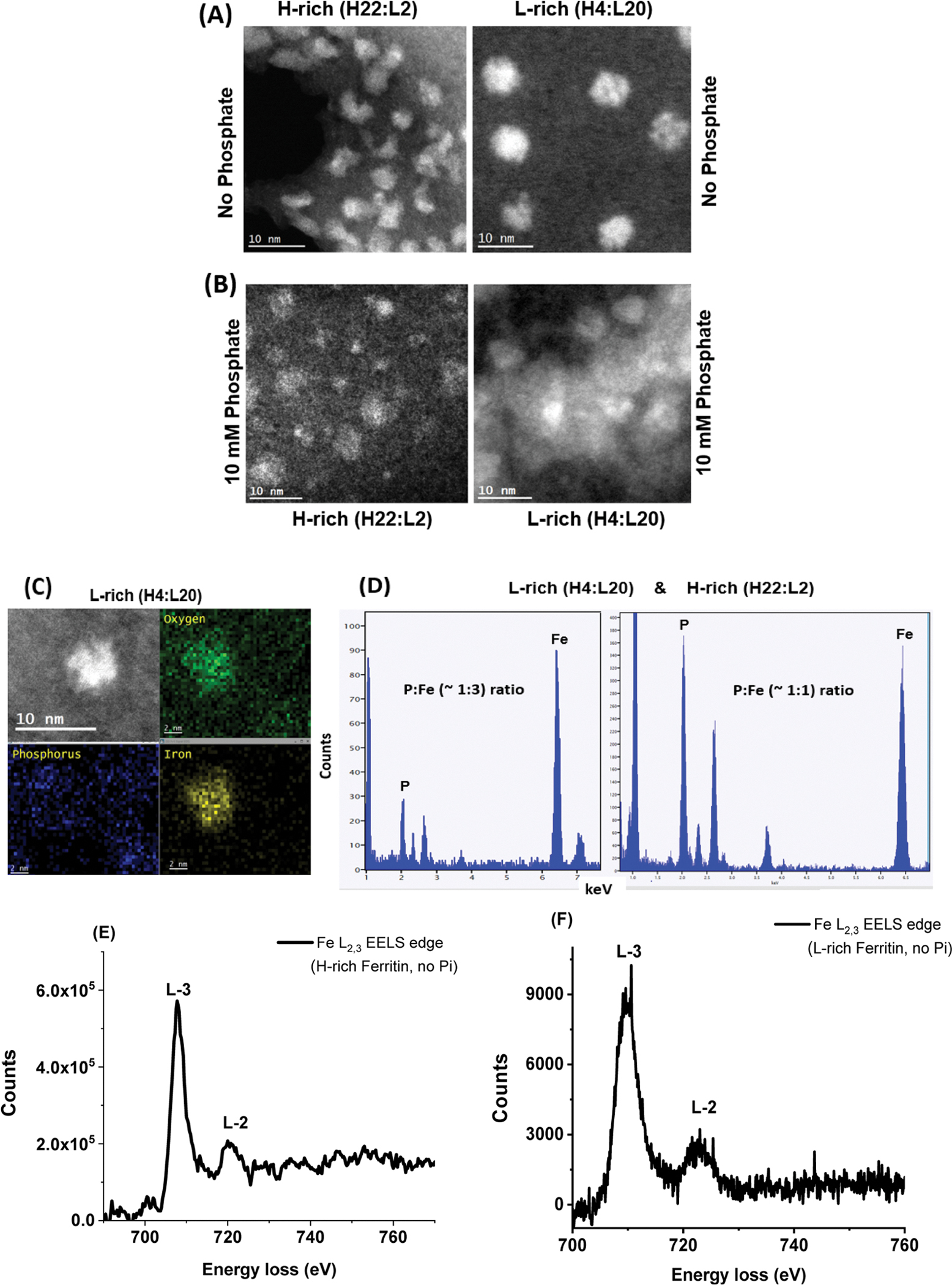
Ferritins are highly conserved supramolecular protein nanostructures that play a key role in iron homeostasis. Thousands of iron atoms can be stored inside their hollow cavity as a hydrated ferric oxyhydroxide mineral. Although phosphate associates with the ferritin iron nanoparticles, the effect of physiological concentrations on the kinetics, structure, and reactivity of ferritin iron cores has not yet been explored. Here, the iron loading and mobilization kinetics were studied in the presence of 1-10 mM phosphate using homopolymer and heteropolymer ferritins having different H to L subunit ratios. In the absence of ferritin, phosphate enhances the rate of ferrous ion oxidation and forms large and soluble polymeric Fe(III)-phosphate species. In the presence of phosphate, Fe(II) oxidation and core formation in ferritin is significantly accelerated with oxidation rates several-fold higher than with phosphate alone. High-angle annular dark-field scanning transmission electron microscopy measurements revealed a strong phosphate effect on both the size and morphology of the iron mineral in H-rich (but not L-rich) ferritins. While iron nanoparticles in L-rich ferritins have spherical shape in the absence and presence of phosphate, iron nanoparticles in H-rich ferritins change from irregular shapes in the absence of phosphate to spherical particles in the presence of phosphate with larger size distribution and smaller particle size. In the presence of phosphate, the kinetics of iron-reductive mobilization from ferritin releases twice as much iron than in its absence. Altogether, our results demonstrate an important role for phosphate, and the ferritin H and L subunit composition toward the kinetics of iron oxidation and removal from ferritin, as well as the structure and reactivity of the iron mineral, and may have an important implication on ferritin iron management .
铁蛋白是高度保守的超分子蛋白质纳米结构,在铁稳态中起着关键作用。数千个铁原子可以作为水合三价铁氢氧化物矿物储存在其空心腔中。尽管磷酸盐与铁蛋白的铁纳米颗粒结合,但生理浓度对铁蛋白铁核心的动力学、结构和反应性的影响尚未得到探索。在这里,使用具有不同 H 到 L 亚基比的均聚物和杂聚物铁蛋白研究了在 1-10 mM 磷酸盐存在下的铁加载和动员动力学。在没有铁蛋白的情况下,磷酸盐会加速亚铁离子的氧化速率,并形成大而可溶的聚合 Fe(III)-磷酸盐物质。在磷酸盐存在下,铁蛋白中铁的氧化和核心形成明显加快,氧化速率比单独使用磷酸盐高几倍。高角度环形暗场扫描透射电子显微镜测量结果表明,磷酸盐对 H 丰富(但不是 L 丰富)铁蛋白中铁矿物质的大小和形态都有强烈的影响。虽然在没有和有磷酸盐的情况下,L 丰富铁蛋白中的铁纳米颗粒呈球形,但在没有磷酸盐的情况下,H 丰富铁蛋白中的铁纳米颗粒从不规则形状变为球形颗粒,具有更大的粒径分布和更小的粒径。在磷酸盐存在下,从铁蛋白中还原动员铁的动力学释放的铁是没有磷酸盐存在时的两倍。总之,我们的结果表明磷酸盐以及铁蛋白的 H 和 L 亚基组成在铁的氧化和从铁蛋白中去除的动力学、铁矿物质的结构和反应性方面起着重要作用,并且可能对铁蛋白中铁的管理具有重要意义。