Cammarisano Laura, Körner Oliver
Leibniz-Institute of Vegetable and Ornamental Crops (IGZ), Theodor-Echtermeyer-Weg 1, 14979 Großbeeren, Germany.
Biology (Basel). 2022 Jun 24;11(7):959. doi: 10.3390/biology11070959.
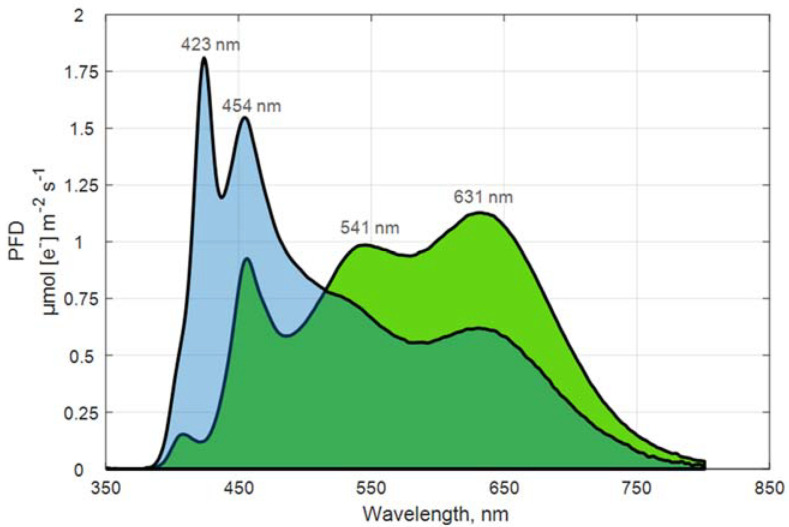
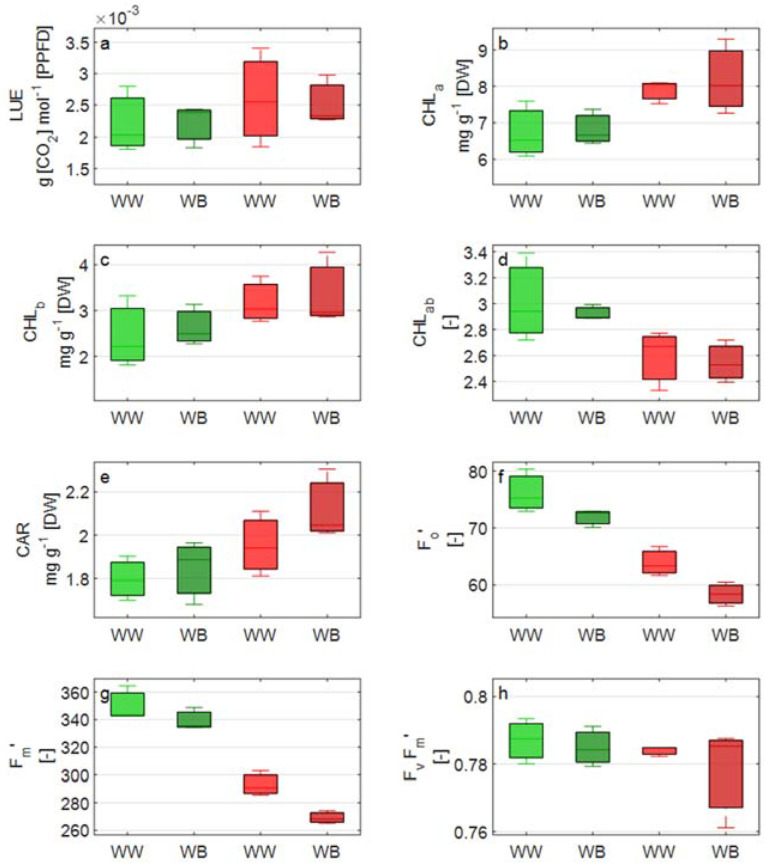
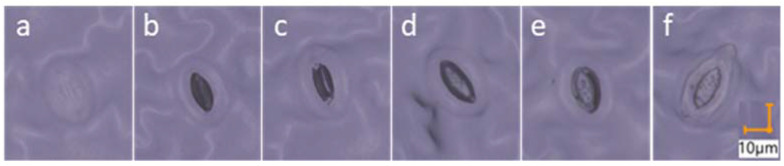
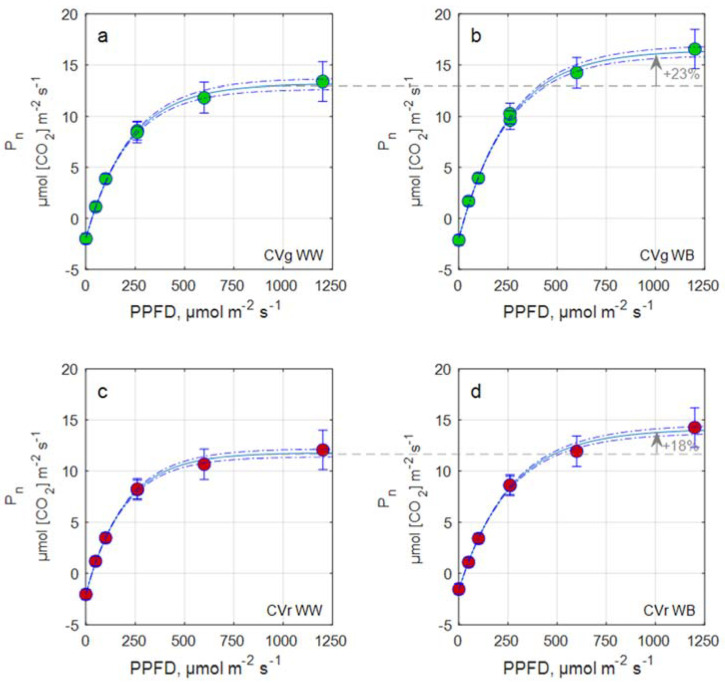
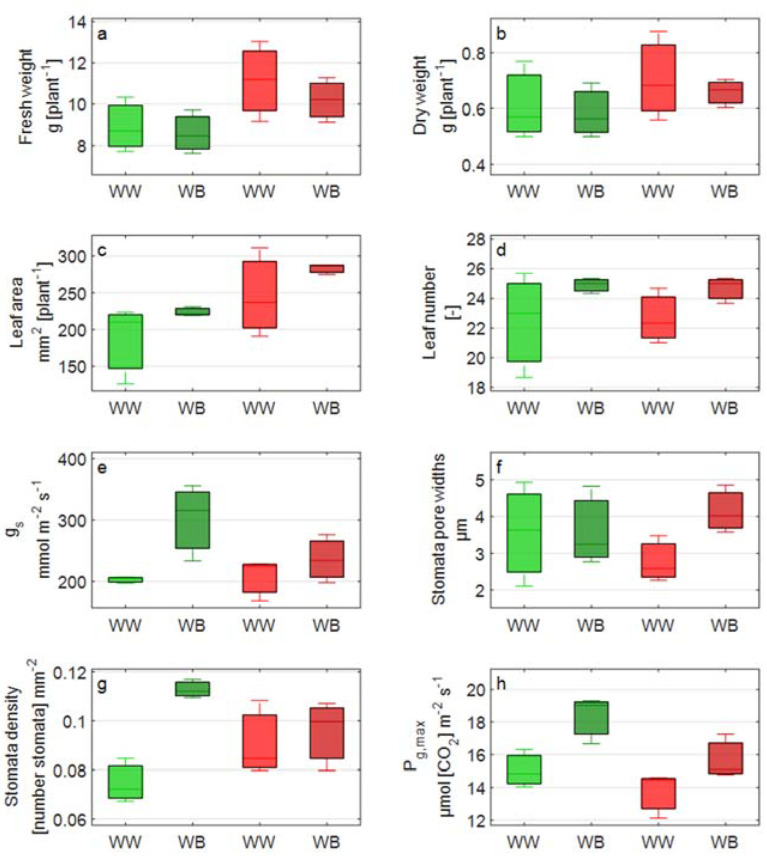
Indoor crop cultivation systems such as vertical farms or plant factories necessitate artificial lighting. Light spectral quality can affect plant growth and metabolism and, consequently, the amount of biomass produced and the value of the produce. Conflicting results on the effects of the light spectrum in different plant species and cultivars make it critical to implement a singular lighting solution. In this study we investigated the response of cyanic and acyanic lettuce cultivars to an increased proportion of blue light. For that, we selected a green and a red leaf lettuce cultivar (i.e., 'Aquino', CVg, and 'Barlach', CVr, respectively). The response of both cultivars to long-term blue-enriched light application compared to a white spectrum was analyzed. Plants were grown for 30 days in a growth chamber with optimal environmental conditions (temperature: 20 °C, relative humidity: 60%, ambient CO, photon flux density (PFD) of 260 µmol m s over an 18 h photoperiod). At 15 days after sowing (DAS), white spectrum LEDs (WW) were compared to blue-enriched light (WB; λ = 423 nm) maintaining the same PFD of 260 µmol m s. At 30 DAS, both lettuce cultivars adapted to the blue light variant, though the adaptive response was specific to the variety. The rosette weight, light use efficiency, and maximum operating efficiency of PSII photochemistry in the light, F/F', were comparable between the two light treatments. A significant light quality effect was detected on stomatal density and conductance (20% and 17% increase under WB, respectively, in CVg) and on the modified anthocyanin reflectance index (mARI) (40% increase under WB, in CVr). Net photosynthesis response was generally stronger in CVg compared to CVr; e.g., net photosynthetic rate, P, at 1000 µmol m s PPFD increased from WW to WB by 23% in CVg, compared to 18% in CVr. The results obtained suggest the occurrence of distinct physiological adaptive strategies in green and red pigmented lettuce cultivars to adapt to the higher proportion of blue light environment.
垂直农场或植物工厂等室内作物种植系统需要人工照明。光的光谱质量会影响植物的生长和新陈代谢,进而影响生物量的产量和农产品的价值。不同植物物种和品种对光谱的影响存在相互矛盾的结果,这使得实施单一的照明解决方案至关重要。在本研究中,我们调查了有花青素和无花青素生菜品种对蓝光比例增加的反应。为此,我们选择了一个绿色和一个红色叶生菜品种(即分别为“Aquino”,CVg,和“Barlach”,CVr)。分析了与白色光谱相比,两个品种对长期应用富含蓝光的光的反应。将植物在生长室中培养30天,生长室具有最佳环境条件(温度:20°C,相对湿度:60%,环境CO₂,在18小时光周期内光子通量密度(PFD)为260 μmol m⁻² s⁻¹)。在播种后15天(DAS),将白色光谱发光二极管(WW)与保持相同PFD为260 μmol m⁻² s⁻¹的富含蓝光的光(WB;λ = 423 nm)进行比较。在30 DAS时,两个生菜品种都适应了蓝光变体,尽管适应性反应因品种而异。两种光照处理之间的莲座叶重量、光利用效率和光下PSII光化学的最大运行效率Fv/Fm相当。在气孔密度和导度上检测到显著的光质效应(CVg中WB处理下分别增加20%和17%)以及在改良花青素反射指数(mARI)上(CVr中WB处理下增加40%)。与CVr相比,CVg的净光合作用反应通常更强;例如,在1000 μmol m⁻² s⁻¹光合有效辐射下,CVg的净光合速率P从WW增加到WB增加了23%,而CVr为18%。获得的结果表明,绿色和红色色素生菜品种存在不同的生理适应策略以适应更高比例的蓝光环境。