Miao Chen, Yang Shaojun, Xu Jing, Wang Hong, Zhang Yongxue, Cui Jiawei, Zhang Hongmei, Jin Haijun, Lu Panling, He Lizhong, Yu Jizhu, Zhou Qiang, Ding Xiaotao
Shanghai Key Laboratory of Protected Horticultural Technology, Horticulture Research Institute, Shanghai Academy of Agricultural Sciences, Jinqi Road No. 1000, Fengxian District, Shanghai 201403, China.
Shanghai Youyou Agricultural Technology Co., Ltd., Yuanqu South Road No. 1000, Chongming District, Shanghai 202150, China.
Plants (Basel). 2023 Sep 21;12(18):3337. doi: 10.3390/plants12183337.
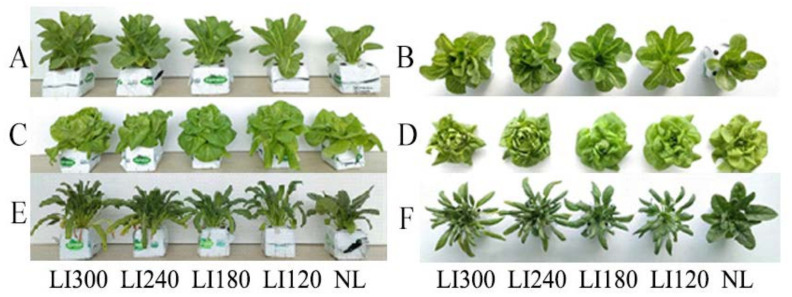
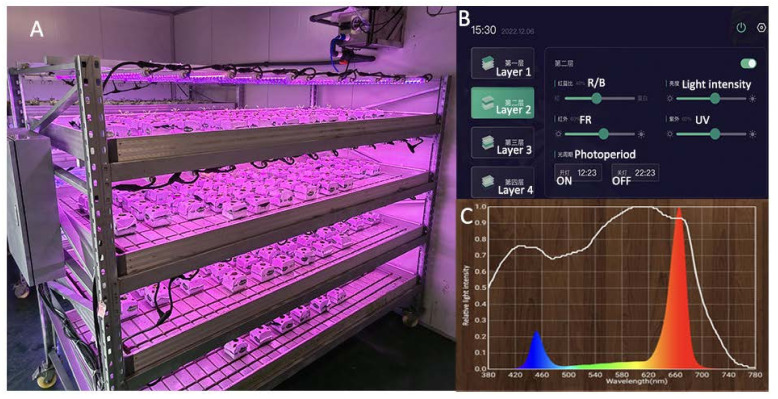
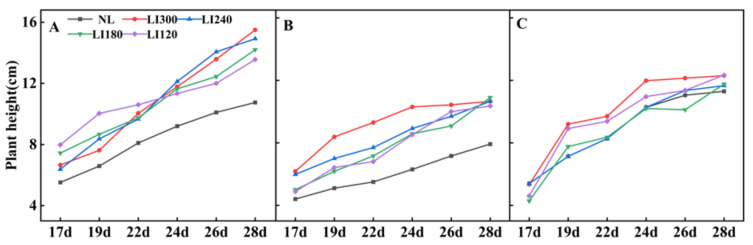
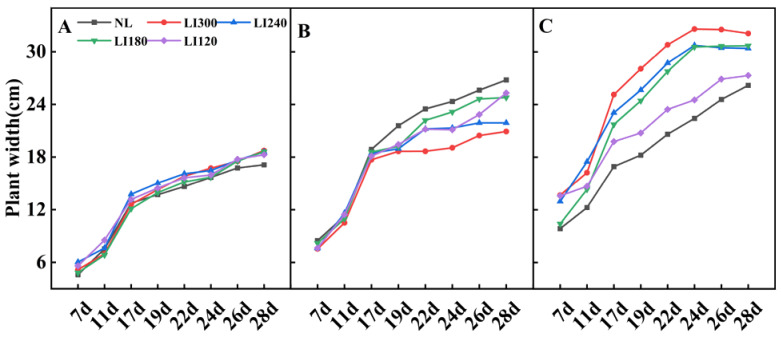
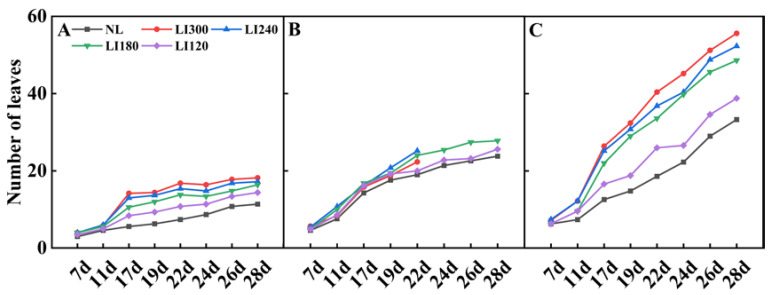
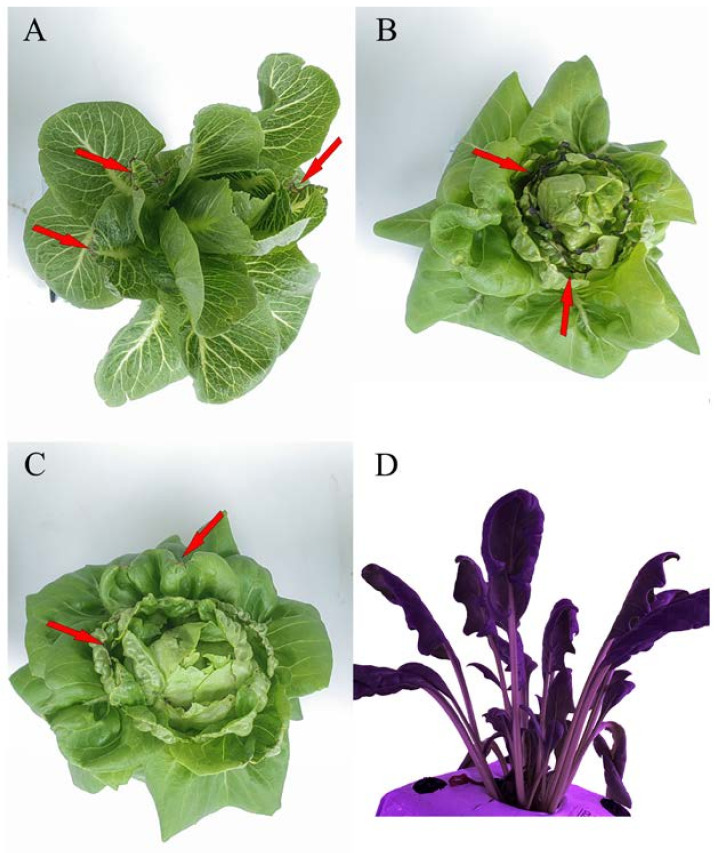
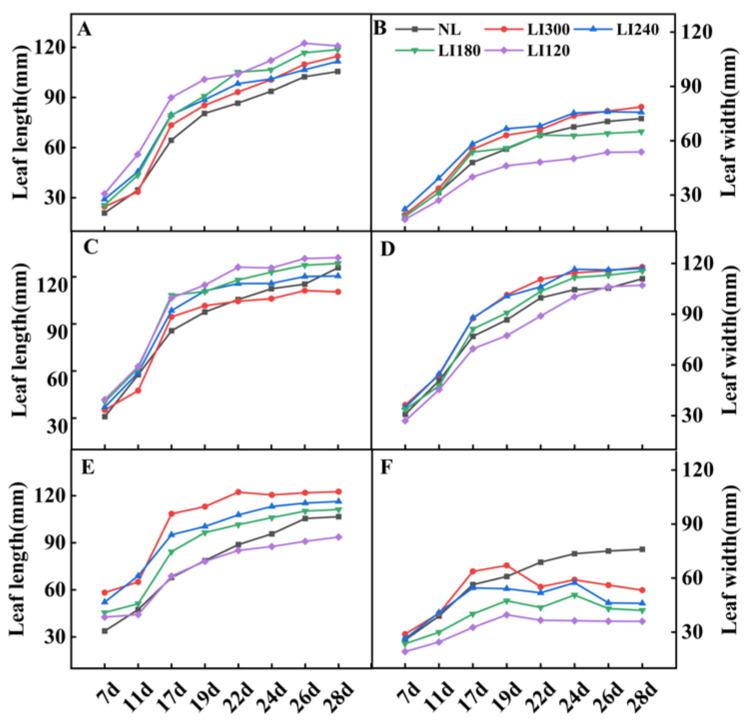
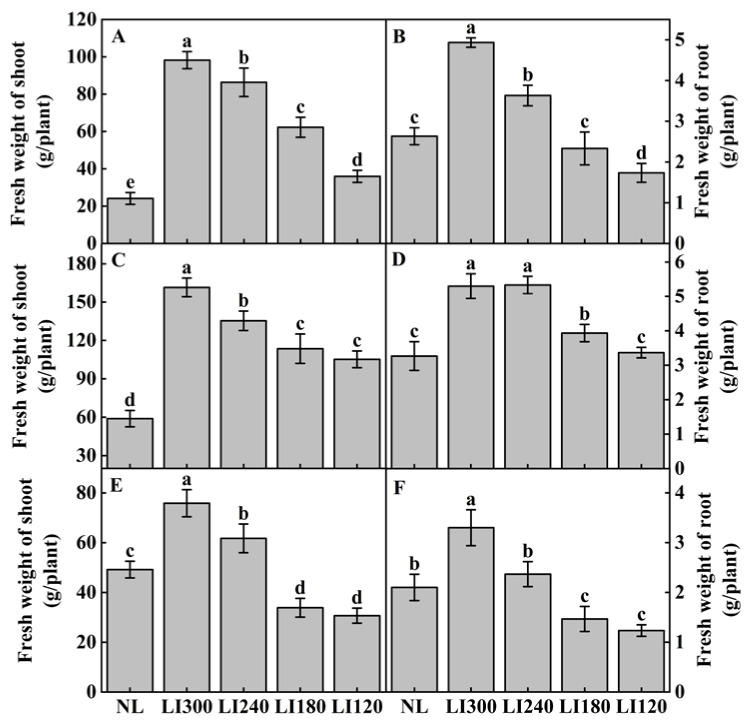
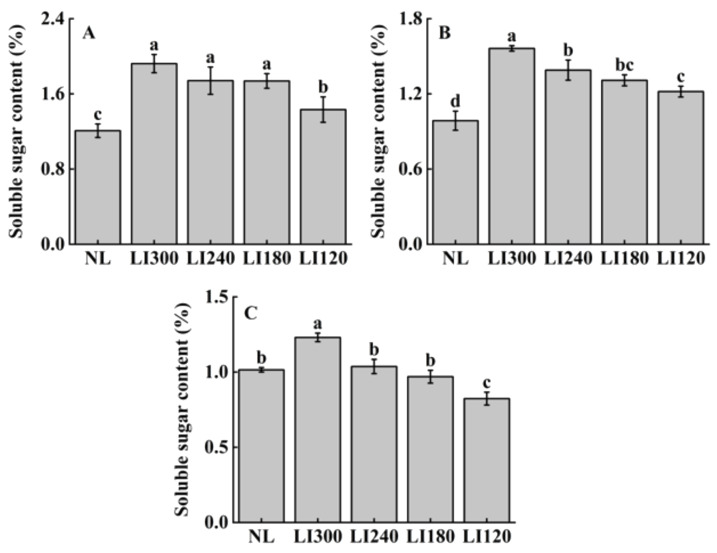
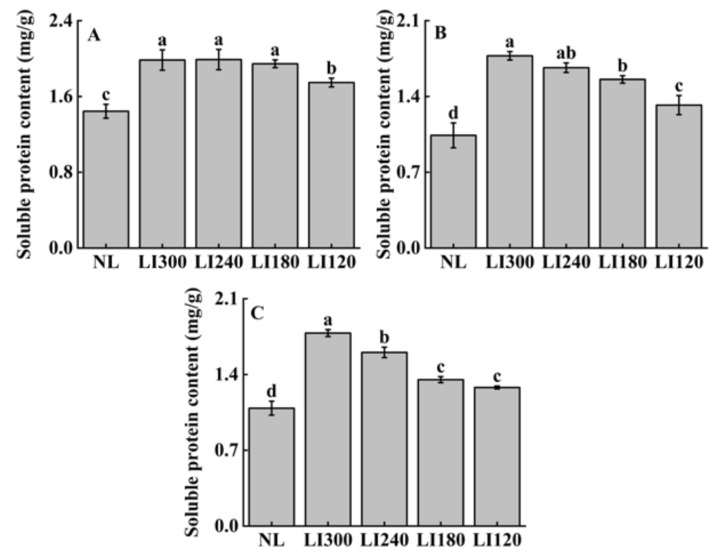
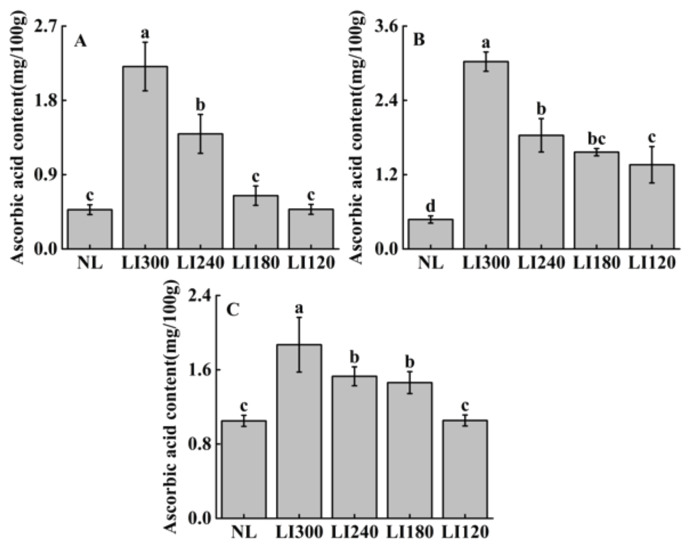
The decreased quality of leafy vegetables and tipburn caused by inappropriate light intensity are serious problems faced in plant factories, greatly reducing the economic benefits. The purpose of this study was to comprehensively understand the impact of light intensity on the growth and quality of different crops and to develop precise lighting schemes for specific cultivars. Two lettuce ( L.) cultivars-Crunchy and Deangelia-and one spinach ( L.) cultivar-Shawen-were grown in a plant factory using a light-emitting diode (LED) under intensities of 300, 240, 180, and 120 μmol m s, respectively. Cultivation in a solar greenhouse using only natural light (NL) served as the control. The plant height, number of leaves, and leaf width exhibited the highest values under a light intensity of 300 μmol m s for Crunchy. The plant width and leaf length of Deangelia exhibited the smallest values under a light intensity of 300 μmol m s. The fresh weight of shoot and root, soluble sugar, soluble protein, and ascorbic acid contents in the three cultivars increased with the increasing light intensity. However, tipburn was observed in Crunchy under 300 μmol m s light intensity, and in Deangelia under both 300 and 240 μmol m s light intensities. Shawen spinach exhibited leaf curling under all four light intensities. The light intensities of 240 and 180 μmol m s were observed to be the most optimum for Crunchy and Deangelia (semi-heading lettuce variety), respectively, which would exhibit relative balance growth and morphogenesis. The lack of healthy leaves in Shawen spinach under all light intensities indicated the need to comprehensively optimize cultivation for Shawen in plant factories to achieve successful cultivation. The results indicated that light intensity is an important factor and should be optimized for specific crop species and cultivars to achieve healthy growth in plant factories.
光照强度不当导致叶菜类蔬菜品质下降和尖端灼伤是植物工厂面临的严重问题,极大地降低了经济效益。本研究的目的是全面了解光照强度对不同作物生长和品质的影响,并为特定品种制定精确的光照方案。两种生菜品种——脆生和德安吉莉亚,以及一种菠菜品种——沙文,分别在植物工厂中使用发光二极管(LED),在300、240、180和120 μmol m⁻² s⁻¹的光照强度下种植。以仅使用自然光(NL)的日光温室栽培作为对照。脆生品种在300 μmol m⁻² s⁻¹的光照强度下,株高、叶片数和叶宽呈现最高值。德安吉莉亚的株幅和叶长在300 μmol m⁻² s⁻¹的光照强度下呈现最小值。三个品种地上部和根部的鲜重、可溶性糖、可溶性蛋白和抗坏血酸含量均随着光照强度的增加而增加。然而,脆生在300 μmol m⁻² s⁻¹光照强度下出现尖端灼伤,德安吉莉亚在300和240 μmol m⁻² s⁻¹光照强度下均出现尖端灼伤。沙文菠菜在所有四种光照强度下均出现叶片卷曲。240和180 μmol m⁻² s⁻¹的光照强度分别被认为是脆生和德安吉莉亚(半结球生菜品种)最适宜的光照强度,此时它们将呈现相对平衡的生长和形态建成。沙文菠菜在所有光照强度下均缺乏健康叶片,这表明需要在植物工厂中对沙文进行全面的栽培优化以实现成功种植。结果表明,光照强度是一个重要因素,应针对特定的作物种类和品种进行优化,以在植物工厂中实现健康生长。