Department of Nursing Teaching and Research, Hunan Cancer Hospital/Affiliated Cancer Hospital of Xiangya nursing school of Central South University, Changsha, China/Xiangya Center for Evidence-Based Practice & Healthcare Innovation: A Joanna Briggs Institute Affiliated Group, Changsha, China.
Xiangya Nursing school of Central South University, Changsha, China/Xiangya Center for Evidence-Based Practice & Healthcare Innovation: A Joanna Briggs Institute Affiliated Group, Changsha, China.
BMJ Open. 2022 Sep 14;12(9):e060912. doi: 10.1136/bmjopen-2022-060912.
This study systematically reviewed the effect of melatonin (MLT) on quality of life (QoL) and symptoms among patients with cancer.
Systematic review and meta-analysis.
Cochrane Library, PubMed, Embase, Web of Science, Medline, CINAHL, Scopus, ClinicalTrials.gov, China Biology Medicine (CBM), ProQuest and Open Grey were searched from inception to November 2021.
We included randomised controlled trials (RCTs) assessing the effects of MLT on QoL, sleep quality, fatigue, depression, pain, stomatitis rate and stomatitis severity in adult patients with cancer, without language restrictions. Studies that reported the effects of MLT along with other interventions and had incomplete or absent outcome data were excluded.
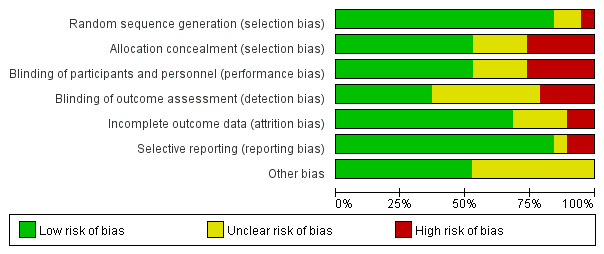
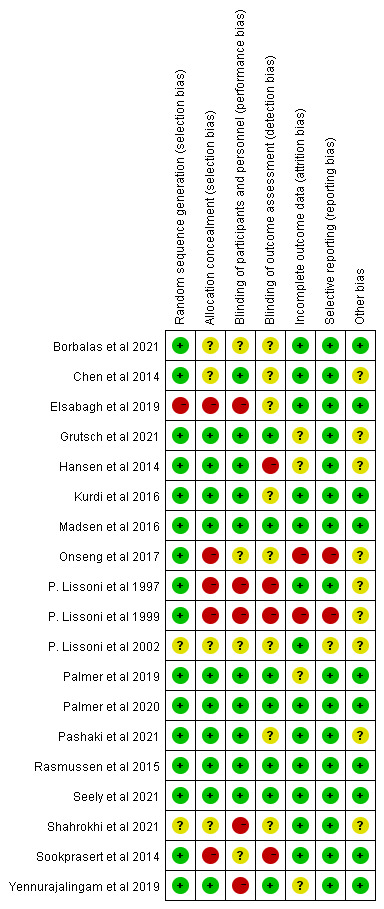
Two independent reviewers extracted data, and another two reviewers assessed the risk of bias. The risk of bias for each eligible study was assessed using the Cochrane assessment tool. The mean difference or standard mean difference (SMD) with 95% CIs was used in the computation of continuous variables to synthesise data. The relative risk was used for dichotomous outcomes. Heterogeneity was assessed and quantified (I statistic).
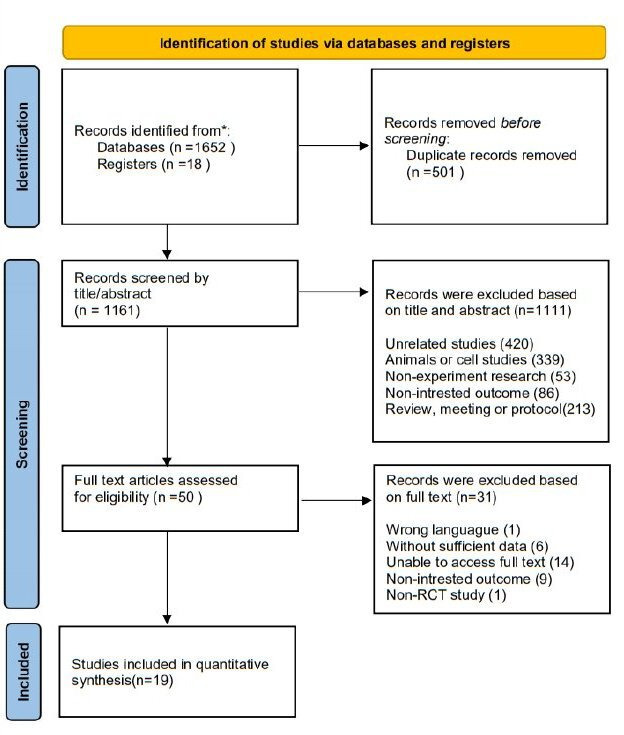
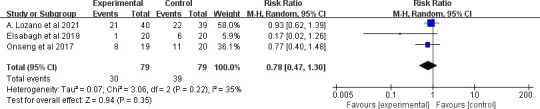
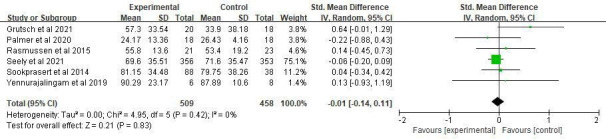
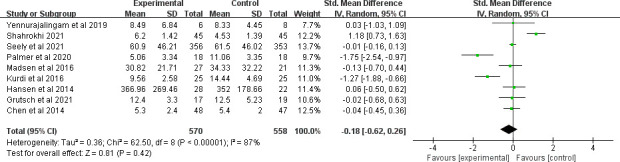
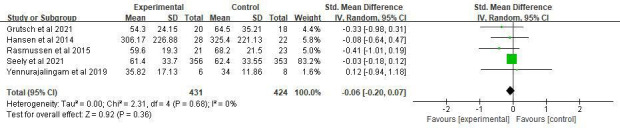
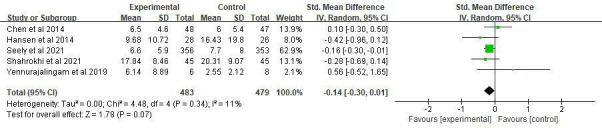
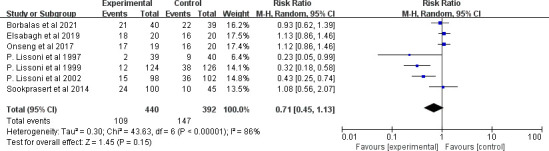
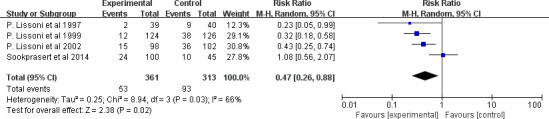
A total of 19 qualified studies that included 2101 patients with cancer (MLT: 1078, control: 1023) were included in the meta-analysis. The results indicated that MLT had no significant effect on QoL (SMD=-0.01, 95% CI (-0.14 to 0.11), p=0.83), sleep quality (SMD=-0.18, 95% CI (-0.62 to 0.26), p=0.42), fatigue (SMD=-0.34, 95% CI (-0.73 to 0.06), p=0.10), pain (SMD=-0.34, 95% CI (-0.7 to 0.02), p=0.06) or stomatitis severity (RR=0.78, 95% CI (0.47 to 1.30), p=0.35). MLT reduced stomatitis rate among patients with cancer (RR=0.47, 95% CI (0.26 to 0.88), p=0.02), except those with head and neck cancer (RR=1.09, 95% CI (0.92 to 1.29), p=0.35). MLT eased depression in patients who received administration for more than 14 days (SMD=-0.14, 95% CI (-0.27 to -0.01), p=0.03) and those who underwent surgery (SMD=-0.17, 95% CI (-0.32 to -0.03), p=0.02).
The findings showed that MLT did not improve the QoL, sleep quality, fatigue, pain or stomatitis severity among patients with cancer. It had a limited effect on decreasing the stomatitis rate and easing depression. Different treatments, durations and cancer types were the main sources of heterogeneity. Further large-scale RCTs are urgently needed. In addition, the effects of different combinations of MLT dosage and duration, administration types and joint measures are worthy of further study.
CRD42021292855.
本研究系统评价了褪黑素(MLT)对癌症患者生活质量(QoL)和症状的影响。
系统评价和荟萃分析。
Cochrane 图书馆、PubMed、Embase、Web of Science、Medline、CINAHL、Scopus、ClinicalTrials.gov、中国生物医学文献数据库(CBM)、ProQuest 和 Open Grey 从成立到 2021 年 11 月进行了检索。
我们纳入了评估 MLT 对成年癌症患者 QoL、睡眠质量、疲劳、抑郁、疼痛、口腔炎发生率和口腔炎严重程度影响的随机对照试验(RCT),无语言限制。报告 MLT 与其他干预措施联合应用且结局数据不完整或缺失的研究被排除。
两位独立的评审员提取数据,另外两位评审员评估偏倚风险。使用 Cochrane 评估工具评估每个合格研究的偏倚风险。使用均数差或标准均数差(SMD)和 95%置信区间(CI)计算连续变量以综合数据。使用相对风险评估二分类结局。评估并量化了异质性(I 统计量)。
共有 19 项符合条件的研究,包括 2101 例癌症患者(MLT:1078 例,对照组:1023 例)纳入荟萃分析。结果表明,MLT 对 QoL 无显著影响(SMD=-0.01,95%CI(-0.14 至 0.11),p=0.83),对睡眠质量(SMD=-0.18,95%CI(-0.62 至 0.26),p=0.42)、疲劳(SMD=-0.34,95%CI(-0.73 至 0.06),p=0.10)、疼痛(SMD=-0.34,95%CI(-0.7 至 0.02),p=0.06)或口腔炎严重程度(RR=0.78,95%CI(0.47 至 1.30),p=0.35)也无显著影响。MLT 降低了癌症患者口腔炎发生率(RR=0.47,95%CI(0.26 至 0.88),p=0.02),但头颈部癌症患者除外(RR=1.09,95%CI(0.92 至 1.29),p=0.35)。MLT 缓解了接受治疗超过 14 天的患者(SMD=-0.14,95%CI(-0.27 至 -0.01),p=0.03)和接受手术的患者(SMD=-0.17,95%CI(-0.32 至 -0.03),p=0.02)的抑郁情况。
研究结果表明,MLT 不能改善癌症患者的 QoL、睡眠质量、疲劳、疼痛或口腔炎严重程度。它对降低口腔炎发生率和缓解抑郁有一定的作用。不同的治疗方法、持续时间和癌症类型是异质性的主要来源。需要进一步开展大规模 RCT。此外,MLT 剂量和持续时间、给药类型和联合措施的不同组合的效果值得进一步研究。
PROSPERO 注册号:CRD42021292855。