State Key Laboratory of Chemical Resource Engineering, Beijing University of Chemical Technology, 100029, Beijing, China.
School of Chemical, Materials and Biomedical Engineering, College of Engineering, The University of Georgia, Athens, GA, 30602, USA.
Nat Commun. 2022 Sep 19;13(1):5492. doi: 10.1038/s41467-022-33255-3.
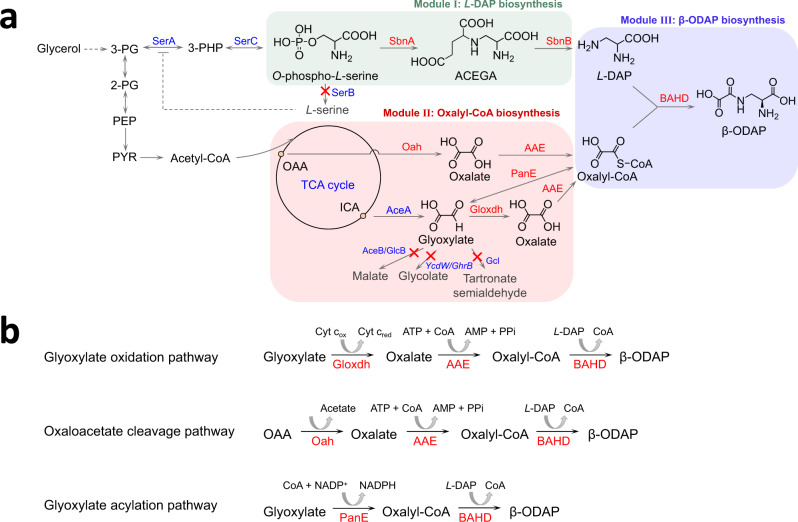
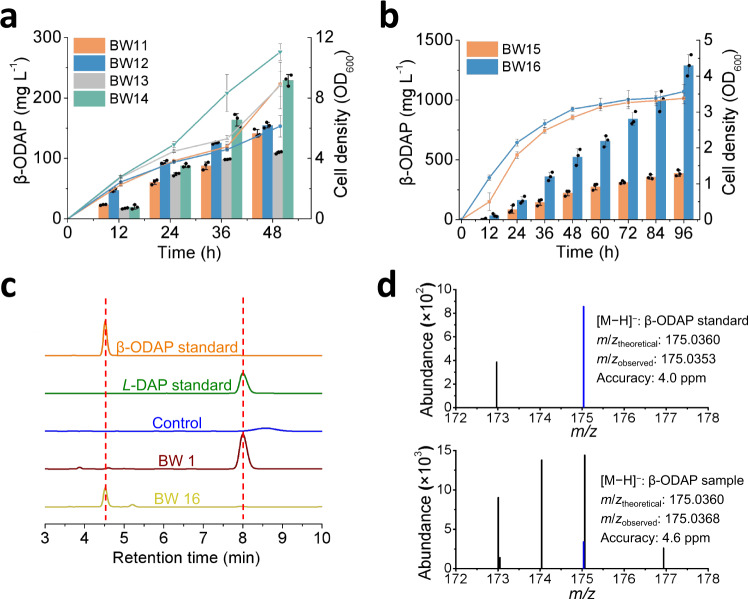
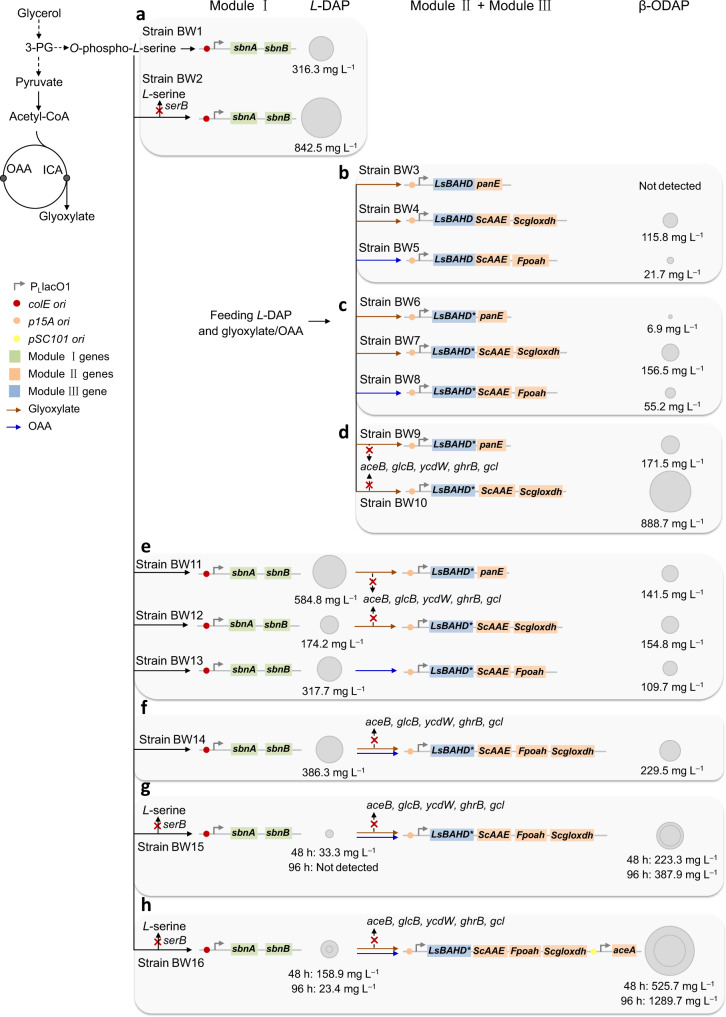
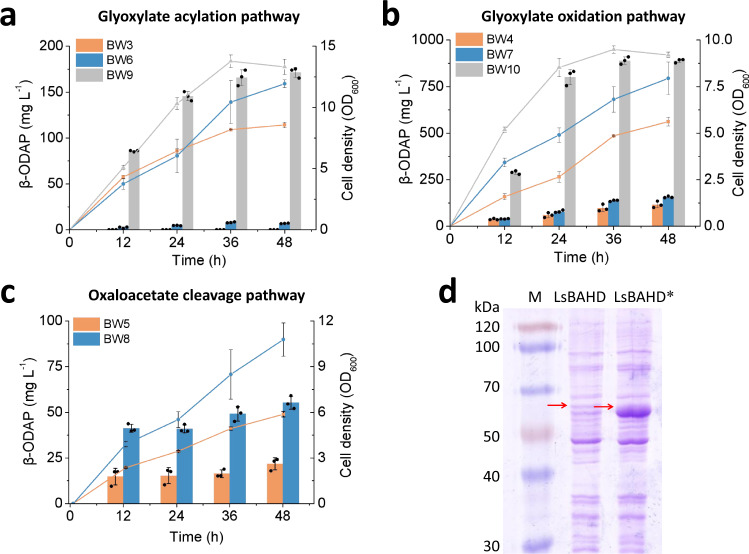
Dencichine is a plant-derived nature product that has found various pharmacological applications. Currently, its natural biosynthetic pathway is still elusive, posing challenge to its heterologous biosynthesis. In this work, we design artificial pathways through retro-biosynthesis approaches and achieve de novo production of dencichine. First, biosynthesis of the two direct precursors L-2, 3-diaminopropionate and oxalyl-CoA is achieved by screening and integrating microbial enzymes. Second, the solubility of dencichine synthase, which is the last and only plant-derived pathway enzyme, is significantly improved by introducing 28 synonymous rare codons into the codon-optimized gene to slow down its translation rate. Last, the metabolic network is systematically engineered to direct the carbon flux to dencichine production, and the final titer reaches 1.29 g L with a yield of 0.28 g g glycerol. This work lays the foundation for sustainable production of dencichine and represents an example of how synthetic biology can be harnessed to generate unnatural pathways to produce a desired molecule.
地棘虫素是一种植物来源的天然产物,具有多种药理学应用。目前,其天然生物合成途径仍难以捉摸,这对其异源生物合成构成了挑战。在这项工作中,我们通过反合成途径设计了人工途径,并实现了地棘虫素的从头生产。首先,通过筛选和整合微生物酶,实现了两种直接前体 L-2,3-二氨基丙酸和草酰辅酶 A 的生物合成。其次,通过在优化后的基因中引入 28 个同义稀有密码子来显著提高地棘虫素合酶的溶解度,地棘虫素合酶是最后一个也是唯一的植物来源途径酶,从而降低其翻译速度。最后,系统地工程化代谢网络,将碳通量导向地棘虫素的生产,最终产量达到 1.29 g/L,甘油得率为 0.28 g/g。这项工作为地棘虫素的可持续生产奠定了基础,代表了合成生物学如何被利用来产生非天然途径以生产所需分子的一个例子。