Laboratory of Computational Systems Biotechnology, Swiss Federal Institute of Technology (EPFL), Lausanne, Switzerland.
Department of Bioengineering, Stanford University, Stanford, CA, USA.
Nat Commun. 2021 Mar 19;12(1):1760. doi: 10.1038/s41467-021-22022-5.
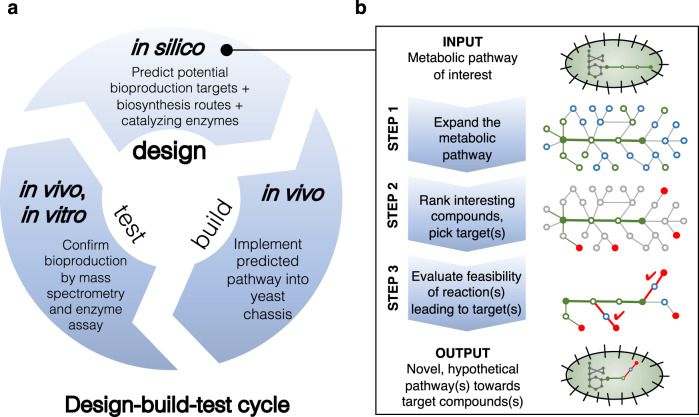
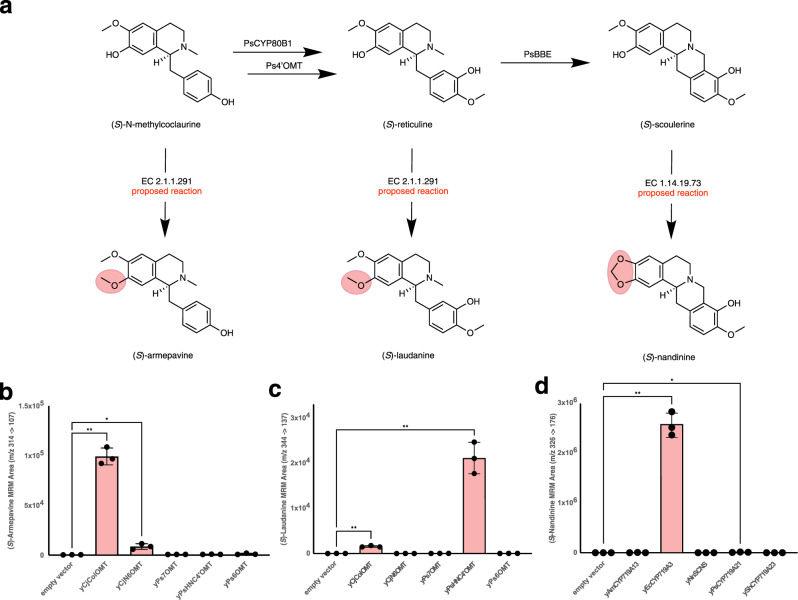
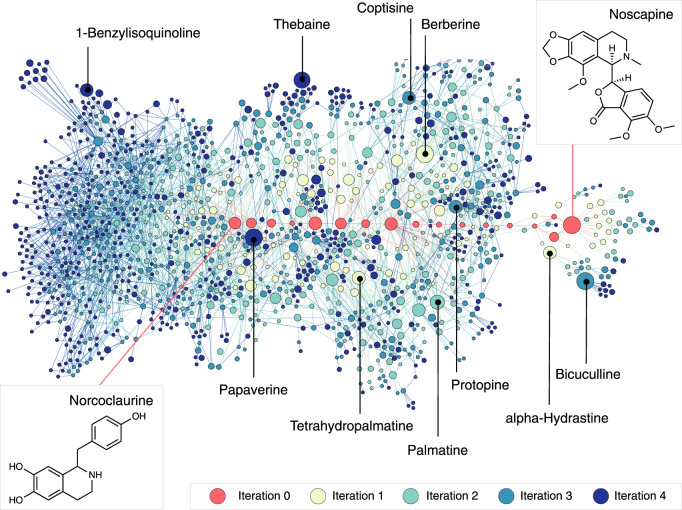
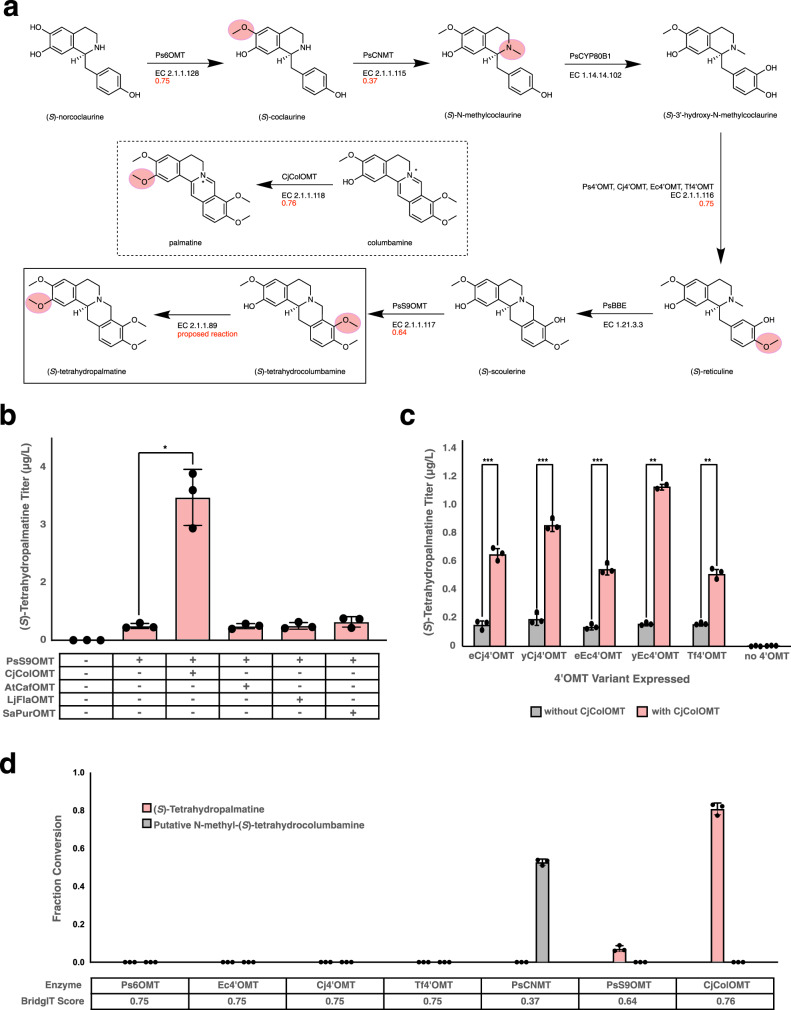
Plant natural products (PNPs) and their derivatives are important but underexplored sources of pharmaceutical molecules. To access this untapped potential, the reconstitution of heterologous PNP biosynthesis pathways in engineered microbes provides a valuable starting point to explore and produce novel PNP derivatives. Here, we introduce a computational workflow to systematically screen the biochemical vicinity of a biosynthetic pathway for pharmaceutical compounds that could be produced by derivatizing pathway intermediates. We apply our workflow to the biosynthetic pathway of noscapine, a benzylisoquinoline alkaloid (BIA) with a long history of medicinal use. Our workflow identifies pathways and enzyme candidates for the production of (S)-tetrahydropalmatine, a known analgesic and anxiolytic, and three additional derivatives. We then construct pathways for these compounds in yeast, resulting in platforms for de novo biosynthesis of BIA derivatives and demonstrating the value of cheminformatic tools to predict reactions, pathways, and enzymes in synthetic biology and metabolic engineering.
植物天然产物(PNPs)及其衍生物是重要但尚未充分开发的药物分子来源。为了利用这一未开发的潜力,在工程微生物中重建异源 PNP 生物合成途径为探索和生产新型 PNP 衍生物提供了一个有价值的起点。在这里,我们引入了一种计算工作流程,系统地筛选生物合成途径的生化邻近区域,以寻找可以通过衍生途径中间体生产的药物化合物。我们将我们的工作流程应用于具有长期药用历史的苯并异喹啉生物碱(BIA)北美黄连碱的生物合成途径。我们的工作流程确定了产生(S)-四氢巴马汀的途径和酶候选物,(S)-四氢巴马汀是一种已知的镇痛药和抗焦虑药,以及另外三种衍生物。然后,我们在酵母中构建这些化合物的途径,为 BIA 衍生物的从头生物合成提供了平台,并展示了化学信息学工具在合成生物学和代谢工程中预测反应、途径和酶的价值。