
溶剂组成可调控从硫醇 - 胺混合溶剂中沉积的硒化锑纳米线中的硒:锑比例。
Solvent composition regulates the Se : Sb ratio in antimony selenide nanowires deposited from thiol-amine solvent mixtures.
作者信息
Vashishtha A, Vana O, Edri E
机构信息
Department of Chemical Engineering, Ben-Gurion University of the Negev Be'er-Sheva 8410501 Israel
Ilse Katz Institute for Nanoscale Science and Technology Be'er-Sheva 8410501 Israel.
出版信息
Nanoscale Adv. 2021 Dec 20;4(3):772-781. doi: 10.1039/d1na00814e. eCollection 2022 Feb 1.
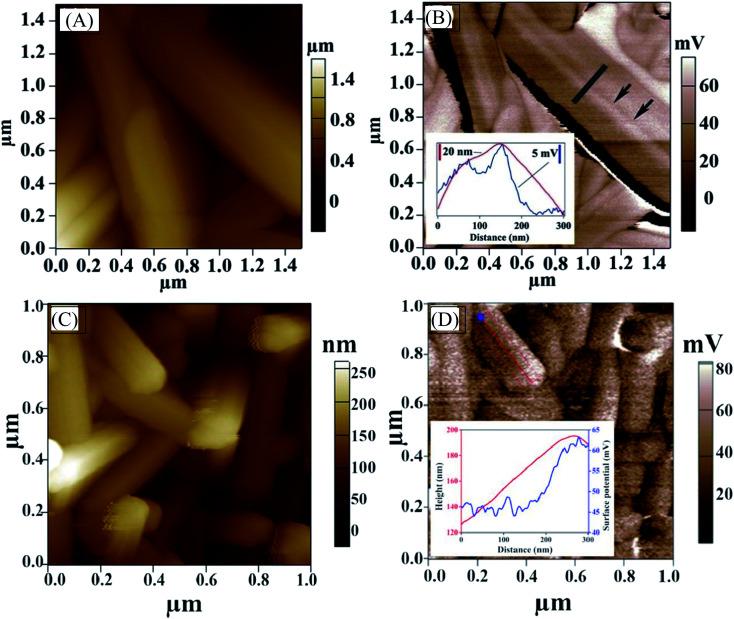
Antimony selenide (SbSe), a VVI semiconductor with an intriguing crystal structure, has demonstrated improved power conversion and solar-to-hydrogen efficiencies in recent years. Depositing antimony selenide nanowires (NWs) from a solution such as a thiol : amine "alkahest" ink is a low-cost and facile route to deposit high surface area photocathodes. However, little is known about the correlations between the solvent composition and the crystallites' structure and optoelectronic properties, which are crucial for photovoltaic and photoelectrochemical applications. We found that the Se : Sb ratio in the NWs decreases from 3 : 2 to less than 1 : 1 with decreasing thiol : amine ratio in the ink used for deposition but not in the solvent mixture used for dissolving the metals. The reduced Se : Sb ratio in the solid NWS correlates with an optical bandgap wider by ∼0.3 eV in comparison to stoichiometric NWs, a decrease of the NWs diameter from 180 to 30 nanometers, and a ∼0.2 eV larger work function. In addition, we found that the Se : Sb ratio is not uniform along the NWs, which causes a surface potential increase near the tips of the NWs due to a lower Se : Sb ratio near the NWs tips. The increased surface potential near the tips corresponds to a driving force, due to doping or graded bandgap broadening, that facilitates the migration of photoexcited electrons towards the NW tips. Our findings unlock a path for fine-tuning the optoelectronic properties of antimony selenide towards improving the performance of antimony selenide solar cells and photocathodes.
硒化锑(SbSe)是一种具有有趣晶体结构的VVI半导体,近年来已展现出提高的功率转换效率和太阳能制氢效率。从诸如硫醇:胺“万能溶剂”油墨之类的溶液中沉积硒化锑纳米线(NWs)是一种低成本且简便的方法,可用于沉积高表面积光阴极。然而,对于溶剂组成与微晶结构及光电性能之间的相关性却知之甚少,而这些相关性对于光伏和光电化学应用至关重要。我们发现,用于沉积的油墨中硫醇:胺比例降低时,NWs中的Se:Sb比例从3:2降至小于1:1,但用于溶解金属的溶剂混合物中该比例却未降低。与化学计量的NWs相比,固体NWs中降低的Se:Sb比例与光学带隙变宽约0.3 eV、NWs直径从180纳米减小到30纳米以及功函数增大约0.2 eV相关。此外,我们发现沿NWs的Se:Sb比例并不均匀,这导致NWs尖端附近的表面电势增加,因为NWs尖端附近的Se:Sb比例较低。尖端附近增加的表面电势对应于一种驱动力,由于掺杂或渐变带隙展宽,该驱动力促进光激发电子向NWs尖端迁移。我们的发现为微调硒化锑的光电性能以提高硒化锑太阳能电池和光阴极的性能开辟了一条道路。


 Zotero 插件