Maiorano Gabriele, Ramires Francesca Anna, Durante Miriana, Palamà Ilaria Elena, Blando Federica, De Rinaldis Gianluca, Perbellini Ezio, Patruno Valeria, Gadaleta Caldarola Carlo, Vitucci Santa, Mita Giovanni, Bleve Gianluca
Istituto di Nanotecnologie, Consiglio Nazionale delle Ricerche, 73100 Lecce, Italy.
Unità Operativa di Lecce, Istituto di Scienze delle Produzioni Alimentari, Consiglio Nazionale delle Ricerche, 73100 Lecce, Italy.
Foods. 2022 Sep 12;11(18):2811. doi: 10.3390/foods11182811.
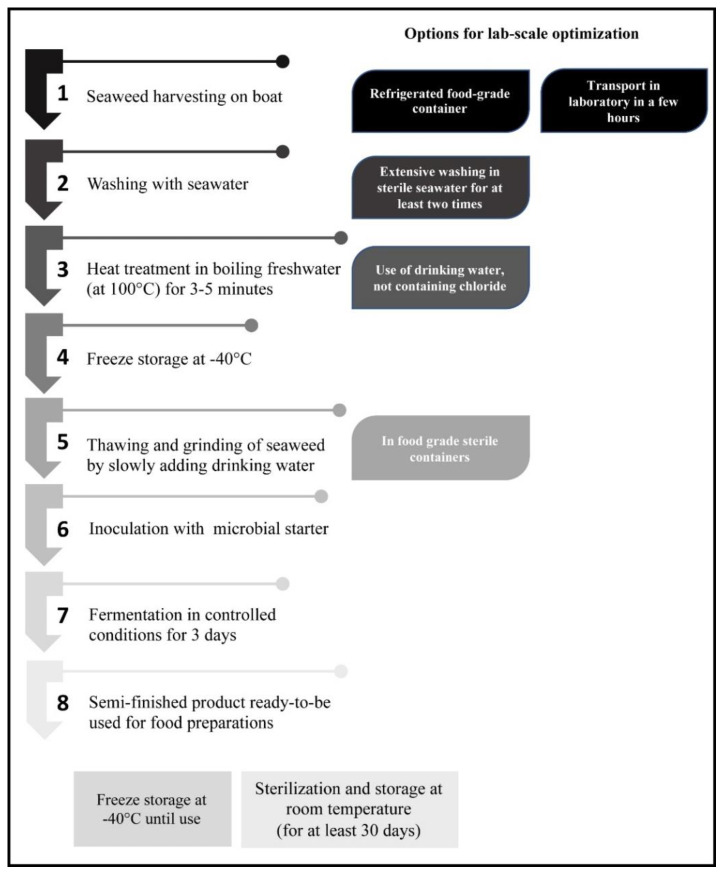
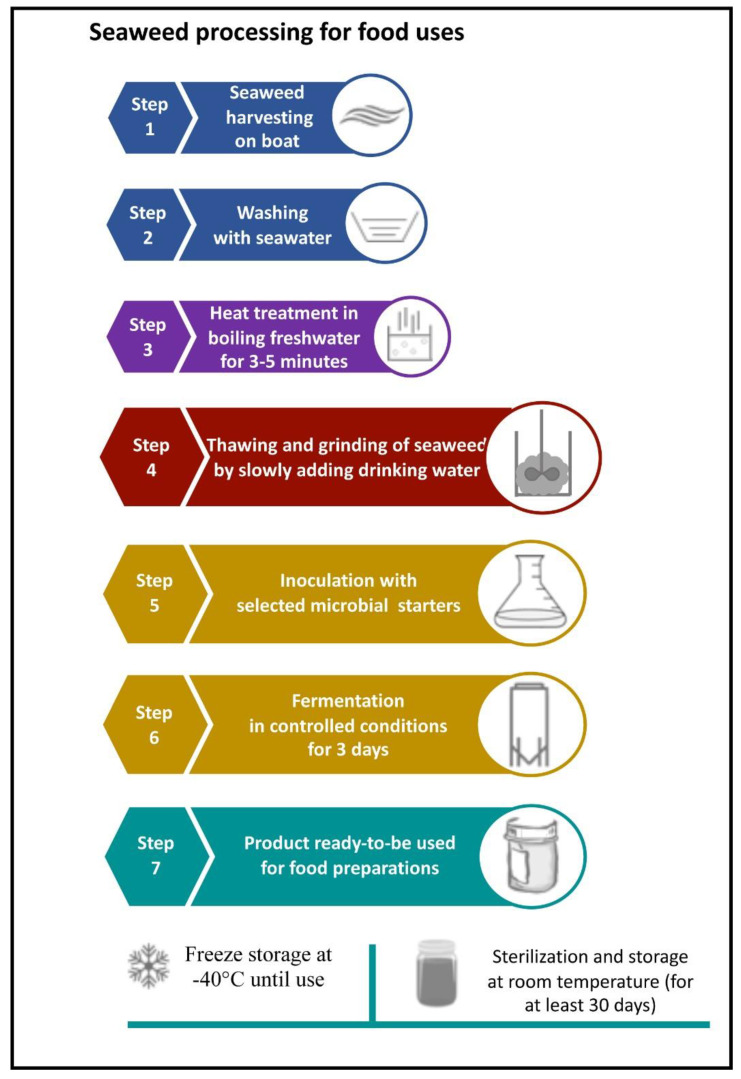
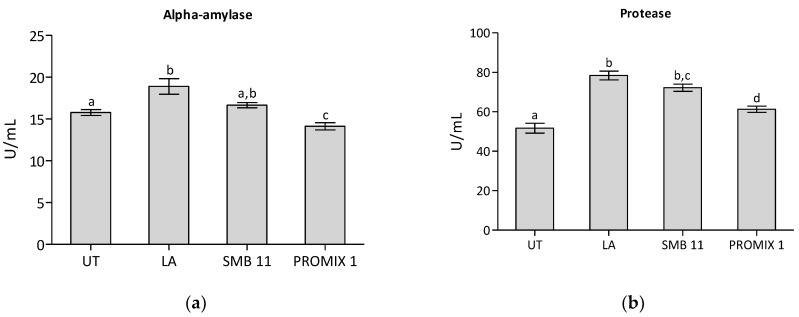
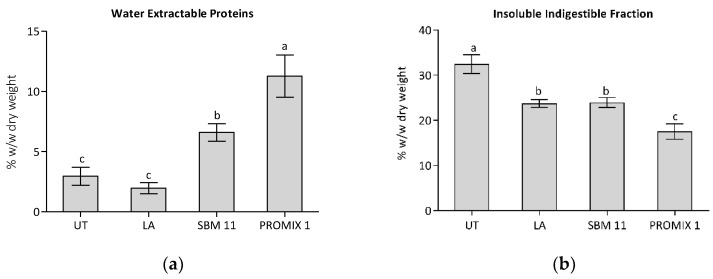
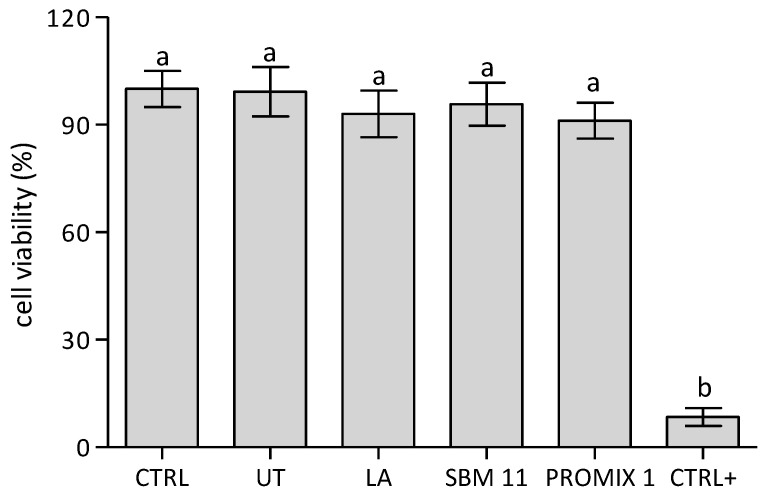
For centuries, macroalgae, or seaweeds, have been a significant part of East Asian diets. In Europe, seaweeds are not considered traditional foods, even though they are increasingly popular in Western diets in human food applications. In this study, a biological processing method based on semi-solid fermentation was optimized for the treatment of the seaweed . For the first time, selected lactic acid bacteria and non-conventional coagulase-negative staphylococci were used as starter preparations for driving a bio-processing and bio-stabilization of raw macroalga material to obtain new seaweed-based food prototypes for human consumption. Definite food safety and process hygiene criteria were identified and successfully applied. The obtained fermented products did not show any presence of pathogenic or spoilage microorganisms, thereby indicating safety and good shelf life. -treated seaweeds revealed higher α-amylase, protease, lipase, endo-cellulase, and endo-xylanase activity than in the untreated sample. This fermented sample showed a balanced n-6/n-3 fatty acid ratio. SBM-11 (, and ) and PROMIX 1 () treated samples showed fatty acid compositions that were considered of good nutritional quality and contained relevant amounts of isoprenoids (vitamin E and A). All the starters improved the nutritional value of the seaweeds by significantly reducing the insoluble indigestible fractions. Preliminary data were obtained on the cytocompatibility of fermented products by in vitro tests. This approach served as a valid strategy for the easy bio-stabilization of this valuable but perishable food resource and could boost its employment for newly designed seaweed-based food products.
几个世纪以来,大型藻类,即海藻,一直是东亚饮食的重要组成部分。在欧洲,海藻不被视为传统食物,尽管它们在西方饮食的人类食品应用中越来越受欢迎。在本研究中,基于半固态发酵的生物处理方法被优化用于处理海藻。首次选用乳酸菌和非传统凝固酶阴性葡萄球菌作为发酵剂,以推动生大型藻类原料的生物加工和生物稳定化,从而获得供人类食用的新型海藻基食品原型。确定并成功应用了明确的食品安全和加工卫生标准。所获得的发酵产品未显示出任何致病或腐败微生物的存在,从而表明其安全性和良好的保质期。经过处理的海藻显示出比未处理样品更高的α-淀粉酶、蛋白酶、脂肪酶、内切纤维素酶和内切木聚糖酶活性。这种发酵样品显示出n-6/n-3脂肪酸比例平衡。SBM-11(、和)和PROMIX 1()处理的样品显示出被认为具有良好营养质量的脂肪酸组成,并且含有相关量的类异戊二烯(维生素E和A)。所有发酵剂通过显著减少不溶性难消化部分提高了海藻的营养价值。通过体外试验获得了关于发酵产品细胞相容性的初步数据。这种方法是一种有效的策略,可轻松实现这种有价值但易腐食品资源的生物稳定化,并可促进其在新设计的海藻基食品中的应用。