UCL Centre for Biomaterials in Surgical Reconstruction and Regeneration, Division of Surgery & Interventional Science, University College London, London NW3 2PF, UK.
Beijing Advanced Innovation Centre for Biomedical Engineering, School of Engineering Medicine, Beihang University, Beijing 100083, China.
Int J Mol Sci. 2022 Sep 7;23(18):10287. doi: 10.3390/ijms231810287.
Hearing loss is the most common irreversible sensory disorder. By delivering regenerative cells into the cochlea, cell-based therapy provides a novel strategy for hearing restoration. Recently, newly-identified phoenix cells have drawn attention due to their nearly unlimited self-renewal and neural differentiation capabilities. They are a promising cell source for cell therapy and a potential substitute for induced pluripotent stem cells (iPSCs) in many in vitro applications. However, the underlying genomic mechanism of their self-renewal capabilities is largely unknown. The aim of this study was to identify hub genes and potential molecular mechanisms between differentiated and undifferentiated phoenix cells and predict transcription factors (TFs) for direct reprogramming.
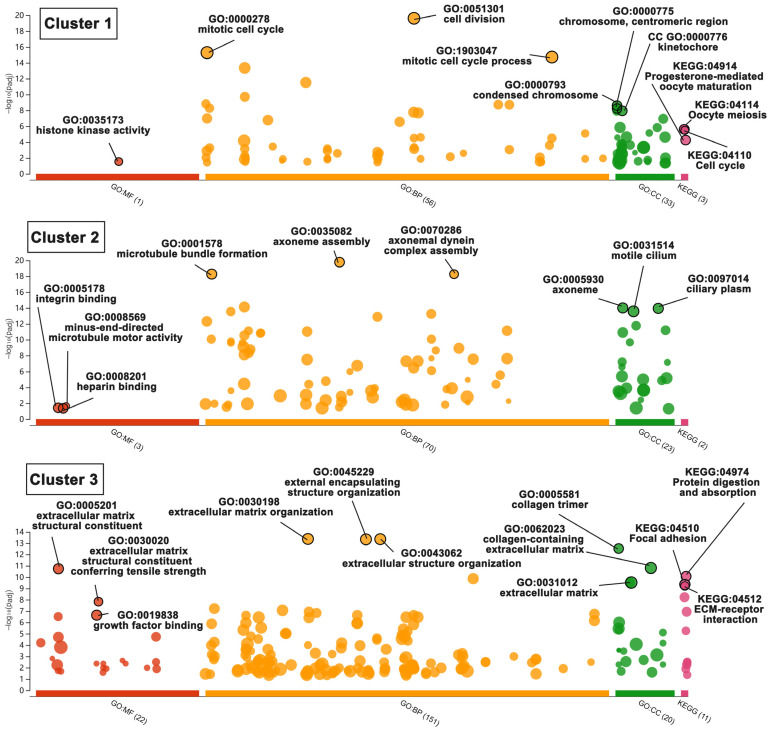
The datasets were downloaded from the ArrayExpress database. Samples of differentiated and undifferentiated phoenix cells with three biological replicates were utilised for bioinformatic analysis. Differentially expressed genes (DEGs) were screened and the Gene Ontology (GO) terms and Kyoto Encyclopedia of Genes and Genomes (KEGG) pathway enrichment were investigated. The gene set enrichment analysis (GSEA) was conducted to verify the enrichment of four self-defined gene set collections, followed by protein-protein interaction (PPI) network construction and subcluster analysis. The prediction of TFs for direct reprogramming was performed based on the TRANSFAC database.
Ten hub genes were identified to be the key candidates for self-renewal. Ten TFs were predicted as the direct reprogramming factors. This study provides a theoretical foundation for understanding phoenix cells and clues for direct reprogramming, which would stimulate further experiments and clinical applications in hearing research and treatment.
听力损失是最常见的不可逆感觉障碍。通过将再生细胞递送到耳蜗内,基于细胞的治疗为听力恢复提供了一种新策略。最近,新鉴定的凤凰细胞由于其几乎无限的自我更新和神经分化能力而引起了关注。它们是细胞治疗的有前途的细胞来源,并且在许多体外应用中是诱导多能干细胞(iPSCs)的潜在替代品。然而,其自我更新能力的潜在基因组机制在很大程度上尚不清楚。本研究的目的是鉴定分化和未分化凤凰细胞之间的枢纽基因和潜在分子机制,并预测用于直接重编程的转录因子(TFs)。
从 ArrayExpress 数据库下载数据集。使用具有三个生物学重复的分化和未分化凤凰细胞样本进行生物信息学分析。筛选差异表达基因(DEGs),并研究基因本体论(GO)术语和京都基因与基因组百科全书(KEGG)途径富集。进行基因集富集分析(GSEA)以验证四个自我定义的基因集集合的富集,然后进行蛋白质-蛋白质相互作用(PPI)网络构建和子群分析。基于 TRANSFAC 数据库预测用于直接重编程的 TFs。
确定了十个枢纽基因作为自我更新的关键候选基因。预测了十个 TFs 作为直接重编程因子。本研究为理解凤凰细胞提供了理论基础,并为直接重编程提供了线索,这将刺激听力研究和治疗中的进一步实验和临床应用。