Martínez-Puente David Hernán, Pérez-Trujillo José Juan, Zavala-Flores Laura Mireya, García-García Aracely, Villanueva-Olivo Arnulfo, Rodríguez-Rocha Humberto, Valdés Jesús, Saucedo-Cárdenas Odila, Montes de Oca-Luna Roberto, Loera-Arias María de Jesús
Histology Department, Faculty of Medicine, Universidad Autonoma de Nuevo Leon (UANL), Monterrey 64460, Mexico.
Department of Molecular Genetics, Northeast Biomedical Research Center (CIBIN) of IMSS, Nuevo Leon Delegation, Monterrey 64720, Mexico.
Pharmaceutics. 2022 Sep 3;14(9):1861. doi: 10.3390/pharmaceutics14091861.
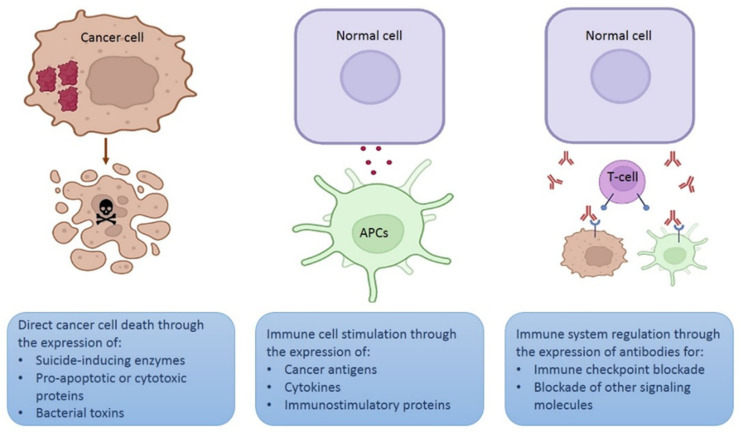
Recently, the interest in using nucleic acids for therapeutic applications has been increasing. DNA molecules can be manipulated to express a gene of interest for gene therapy applications or vaccine development. Plasmid DNA can be developed to treat different diseases, such as infections and cancer. In most cancers, the immune system is limited or suppressed, allowing cancer cells to grow. DNA vaccination has demonstrated its capacity to stimulate the immune system to fight against cancer cells. Furthermore, plasmids for cancer gene therapy can direct the expression of proteins with different functions, such as enzymes, toxins, and cytotoxic or proapoptotic proteins, to directly kill cancer cells. The progress and promising results reported in animal models in recent years have led to interesting clinical results. These DNA strategies are expected to be approved for cancer treatment in the near future. This review discusses the main strategies, challenges, and future perspectives of using plasmid DNA for cancer treatment.
近年来,将核酸用于治疗应用的兴趣日益增加。DNA分子可被操控以表达用于基因治疗应用或疫苗开发的感兴趣基因。质粒DNA可被开发用于治疗不同疾病,如感染和癌症。在大多数癌症中,免疫系统受到限制或抑制,从而使癌细胞得以生长。DNA疫苗已证明其能够刺激免疫系统对抗癌细胞。此外,用于癌症基因治疗的质粒可指导具有不同功能的蛋白质的表达,如酶、毒素以及细胞毒性或促凋亡蛋白,以直接杀死癌细胞。近年来在动物模型中报道的进展和令人鼓舞的结果已带来了有趣的临床成果。这些DNA策略有望在不久的将来被批准用于癌症治疗。本综述讨论了使用质粒DNA进行癌症治疗的主要策略、挑战及未来展望。