Emerg Infect Dis. 2022 Oct;28(10):1955-69. doi: 10.3201/eid2810.220391.
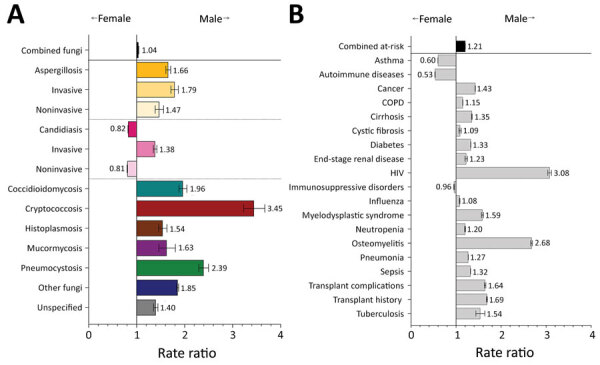
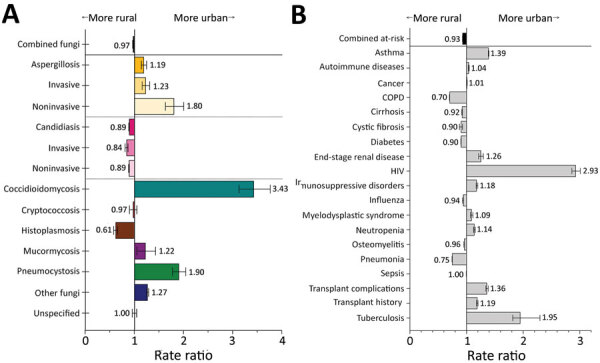
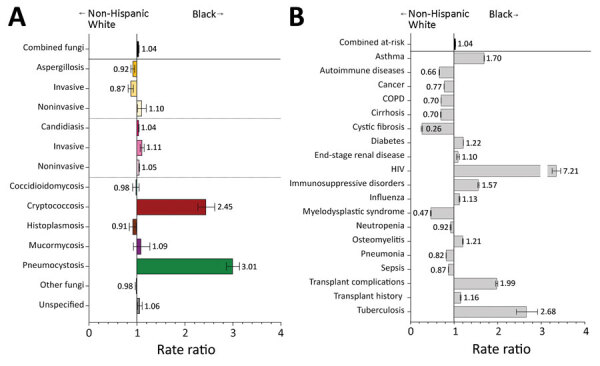
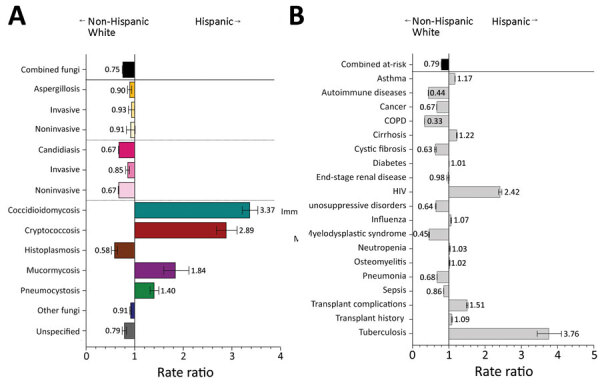
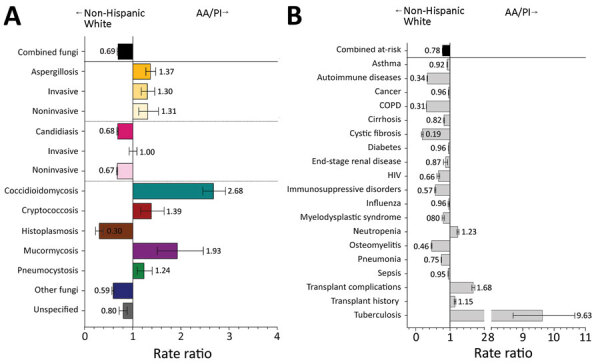
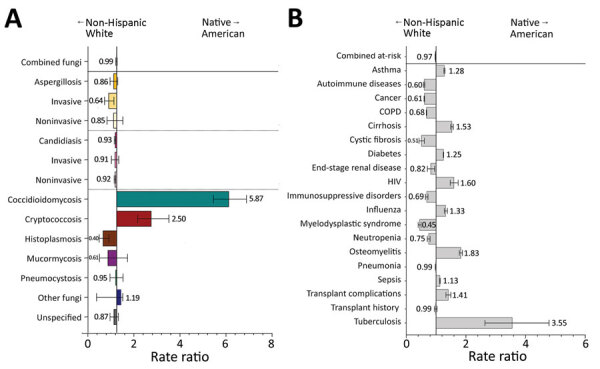
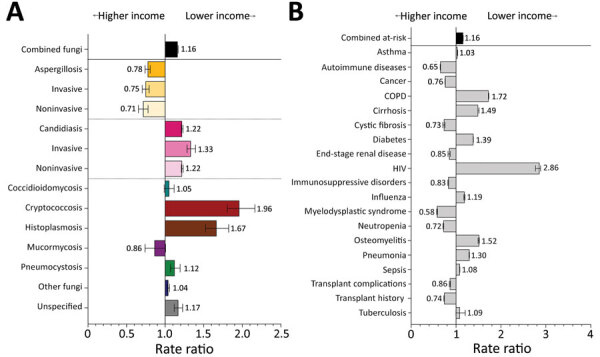
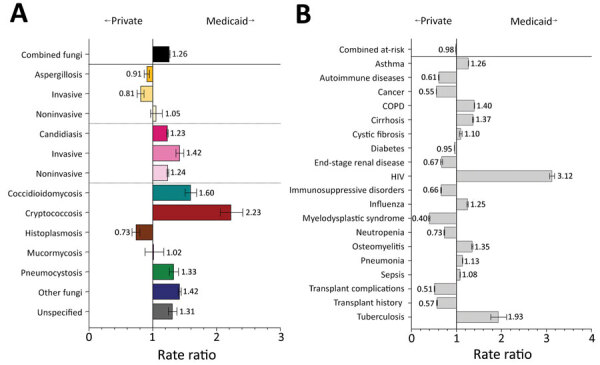
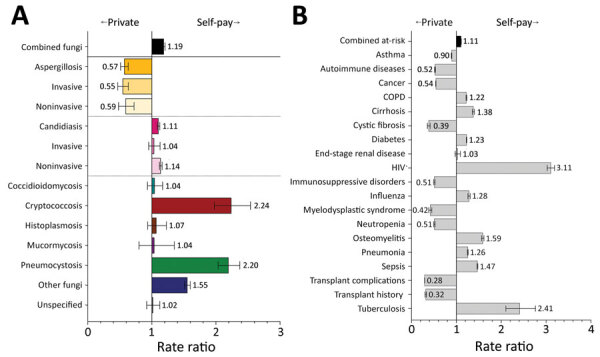
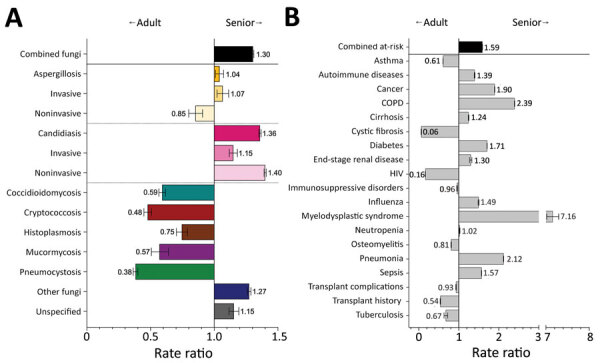
Fungal infections cause substantial rates of illness and death. Interest in the association between demographic factors and fungal infections is increasing. We analyzed 2019 US hospital discharge data to assess factors associated with fungal infection diagnosis, including race and ethnicity and socioeconomic status. We found male patients were 1.5–3.5 times more likely to have invasive fungal infections diagnosed than were female patients. Compared with hospitalizations of non-Hispanic White patients, Black, Hispanic, and Native American patients had 1.4–5.9 times the rates of cryptococcosis, pneumocystosis, and coccidioidomycosis. Hospitalizations associated with lower-income areas had increased rates of all fungal infections, except aspergillosis. Compared with younger patients, fungal infection diagnosis rates, particularly for candidiasis, were elevated among persons 65 years of age. Our findings suggest that differences in fungal infection diagnostic rates are associated with demographic and socioeconomic factors and highlight an ongoing need for increased physician evaluation of risk for fungal infections.
真菌感染导致大量疾病和死亡。人们对人口因素与真菌感染之间的关系越来越感兴趣。我们分析了 2019 年美国医院出院数据,以评估与真菌感染诊断相关的因素,包括种族和民族以及社会经济地位。我们发现男性患者被诊断为侵袭性真菌感染的可能性是女性患者的 1.5-3.5 倍。与非西班牙裔白人患者的住院情况相比,黑种人、西班牙裔和美国原住民患者的隐球菌病、肺孢子菌病和球孢子菌病的发病率是其 1.4-5.9 倍。与低收入地区相关的住院治疗真菌感染的发病率增加,除曲霉病外。与年轻患者相比,真菌感染的诊断率,尤其是念珠菌病,在 65 岁及以上的人群中升高。我们的研究结果表明,真菌感染诊断率的差异与人口统计学和社会经济因素有关,并强调了医生需要加强对真菌感染风险的评估。