Departamento de Patología, Escuela de Medicina Veterinaria, Universidad Nacional, Costa Rica.
Servicio Nacional de Salud Animal, Ministerio de Agricultura y Ganadería, Costa Rica.
PLoS One. 2022 Sep 26;17(9):e0262063. doi: 10.1371/journal.pone.0262063. eCollection 2022.
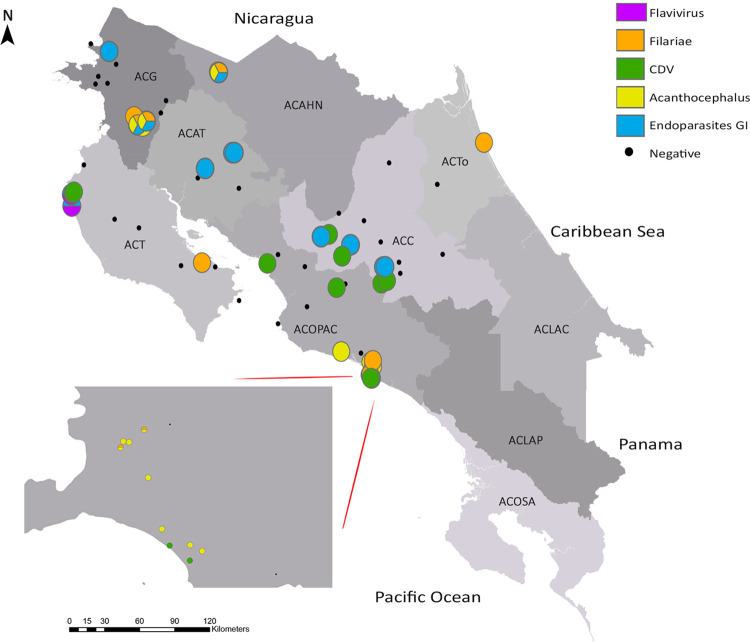
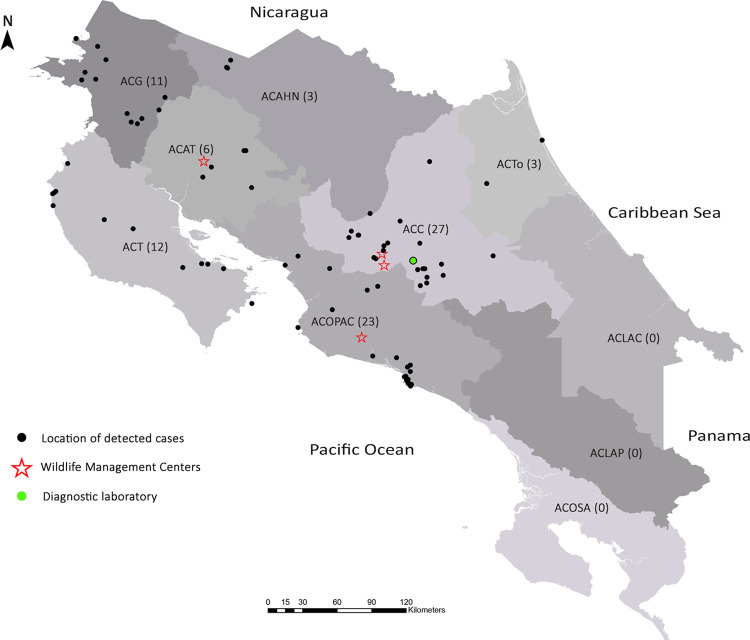
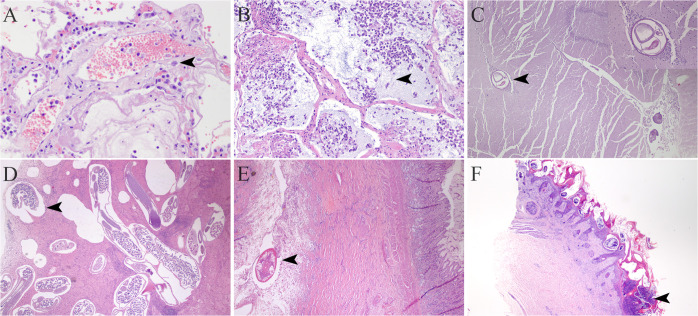
Epidemiological surveillance systems for pathogens in wild species have been proposed as a preventive measure for epidemic events. These systems can minimize the detrimental effects of an outbreak, but most importantly, passive surveillance systems are the best adapted to countries with limited resources. Therefore, this research aimed to evaluate the technical and infrastructural feasibility of establishing this type of scheme in Costa Rica by implementing a pilot program targeting the detection of pathogens of zoonotic and conservation importance in wildlife. Between 2018 and 2020, 85 carcasses of free-ranging vertebrates were admitted for post-mortem and microbiology analysis. However, we encountered obstacles mainly related to the initial identification of cases and limited local logistics capacity. Nevertheless, this epidemiological surveillance scheme allowed us to estimate the general state of health of the country's wildlife by establishing the causes of death according to pathological findings. For instance, 60% (51/85) of the deaths were not directly associated with an infectious agent. Though in 37.6% (32/85) of these cases an infectious agent associated or not with disease was detected. In 27.1% (23/85) of the cases, death was directly related to infectious agents. Furthermore, 12.9% (11/85), the cause of death was not determined. Likewise, this wildlife health monitoring program allowed the detection of relevant pathogens such as Canine Distemper Virus, Klebsiella pneumoniae, Angiostrongylus spp., Baylisascaris spp., among others. Our research demonstrated that this passive surveillance scheme is cost-effective and feasible in countries with limited resources. This passive surveillance can be adapted to the infrastructure dedicated to monitoring diseases in productive animals according to the scope and objectives of monitoring wildlife specific to each region. The information generated from the experience of the initial establishment of a WHMP is critical to meeting the challenges involved in developing this type of scheme in regions with limited resources and established as hotspots for emerging infectious diseases.
已提出在野生动物中对病原体进行流行病学监测,作为预防疫情爆发的一种措施。这些系统可以将疫情爆发的不利影响降到最低,但最重要的是,被动监测系统最适合资源有限的国家。因此,本研究旨在通过实施针对野生动物中具有人畜共患和保护重要性的病原体检测的试点计划,评估在哥斯达黎加建立这种计划的技术和基础设施可行性。在 2018 年至 2020 年期间,共有 85 具自由放养的脊椎动物尸体接受了尸检和微生物学分析。然而,我们遇到了一些主要与病例的初步识别和当地物流能力有限有关的障碍。尽管如此,这种流行病学监测计划还是让我们能够通过根据病理发现确定死亡原因,来评估该国野生动物的一般健康状况。例如,60%(51/85)的死亡与传染病无关。尽管在 37.6%(32/85)的病例中检测到与疾病相关或不相关的传染病。在 27.1%(23/85)的病例中,死亡直接与传染病有关。此外,12.9%(11/85)的病例死因无法确定。同样,这个野生动物健康监测计划还能检测到相关病原体,如犬瘟热病毒、肺炎克雷伯菌、血管圆线虫、旋毛线虫等。我们的研究表明,这种被动监测计划在资源有限的国家具有成本效益和可行性。这种被动监测可以根据每个地区监测野生动物的范围和目标,适应专门用于监测生产动物疾病的基础设施。从建立野生动物健康监测计划的初步经验中获得的信息,对于解决资源有限地区建立这种计划所面临的挑战至关重要,因为这些地区是新发传染病的热点地区。