Koren Yaacov, Feingold Polak Ronit, Levy-Tzedek Shelly
Department of Sociology and Anthropology, Tel-Aviv University, Tel-Aviv, Israel.
Recanati School for Community Health Professions, Department of Physical Therapy, Ben-Gurion University of the Negev, Beer-Sheva, Israel.
Int J Soc Robot. 2022;14(8):1893-1911. doi: 10.1007/s12369-022-00909-7. Epub 2022 Sep 16.
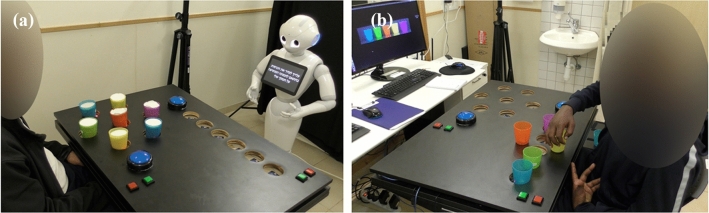
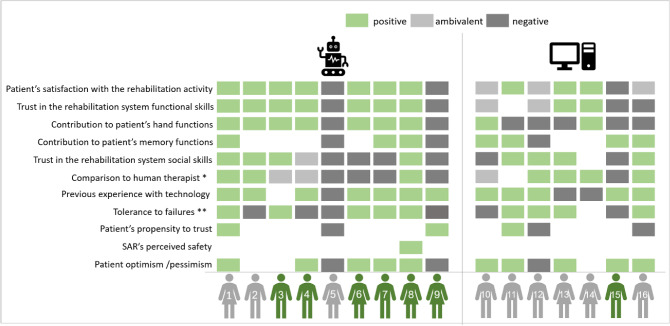
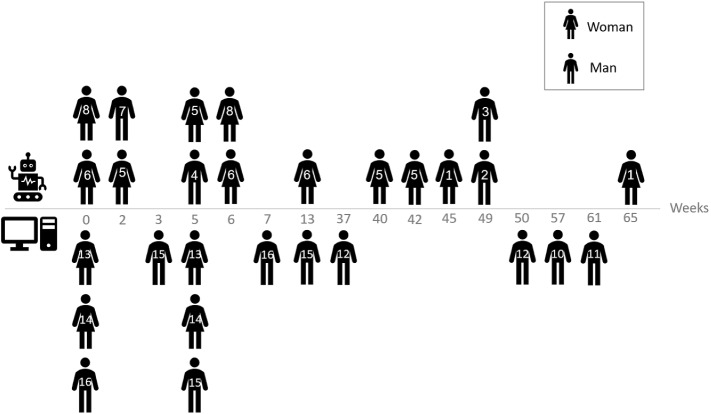
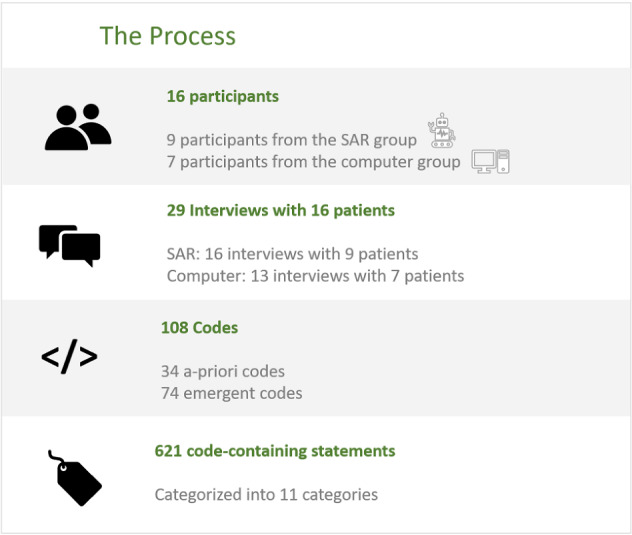
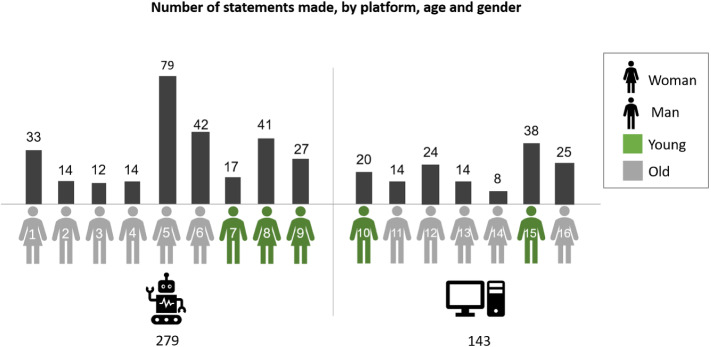
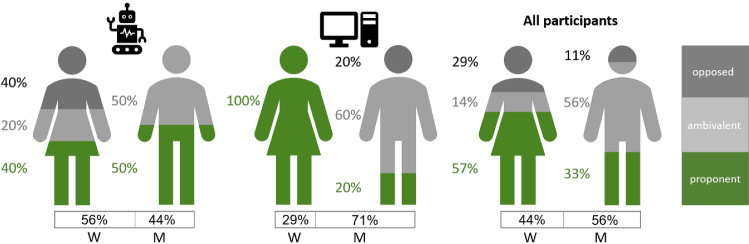
Socially assistive robots (SARs) have been proposed to assist post-stroke patients in performing their exercise during their rehabilitation process, with the trust in the robot identified as an important factor in human-robot interaction. In the current study, we aimed to identify and characterize factors that influence post-stroke patients' trust in a robot-operated and a computer-operated rehabilitation platform during and after a long-term experience with the platform. We conducted 29 interviews with 16 stroke patients who underwent a long-term rehabilitation process, assisted by either a SAR or a computer interface. The intervention lasted 5-7 weeks per patient, for a total of 229 sessions over 18 months. By using a qualitative research method-extended interviews "in the wild" with stroke patients, over a long-term rehabilitation process-our study reveals users' perspectives regarding factors affecting trust in the SAR or in the computer interface during their rehabilitation process. The results support the assertion that SARs have an added value in the rehabilitative care of stroke patients; It appears that personal characteristics, such as age and gender, have an effect on the users' acceptance of a non-human operator as a practice assistant. Our findings support the notion that SARs augment rehabilitative therapies beyond a standard computer; Importantly, patients appreciated different aspects of the non-human operator in the two groups: In the SAR group, users preferred its functional performance over its anthropomorphized social skills; In the Computer group, users highlighted its contribution to the training of their memory skills.
The online version contains supplementary material available at 10.1007/s12369-022-00909-7.
社会辅助机器人(SARs)已被提议用于协助中风后患者在康复过程中进行锻炼,对机器人的信任被认为是人机交互中的一个重要因素。在本研究中,我们旨在识别并描述在长期使用平台的过程中和之后,影响中风后患者对机器人操作和计算机操作的康复平台信任的因素。我们对16名经历长期康复过程的中风患者进行了29次访谈,这些患者由SAR或计算机界面辅助。每位患者的干预持续5 - 7周,在18个月内共进行了229次治疗。通过使用定性研究方法——在长期康复过程中对中风患者进行“实地”扩展访谈,我们的研究揭示了用户在康复过程中对影响其对SAR或计算机界面信任因素的看法。结果支持了SAR在中风患者康复护理中具有附加价值的观点;似乎年龄和性别等个人特征会影响用户对非人类操作者作为练习助手的接受程度。我们的研究结果支持了SAR比标准计算机更能增强康复治疗的观点;重要的是,患者欣赏两组中非人类操作者的不同方面:在SAR组中,用户更喜欢其功能性能而非拟人化的社交技能;在计算机组中,用户强调了其对记忆技能训练的贡献。
在线版本包含可在10.1007/s12369-022-00909-7获取的补充材料。