Dembovski Ayelet, Amitai Yael, Levy-Tzedek Shelly
Department of Cognitive and Brain Sciences, Ben-Gurion University of the Negev, Beer-Sheva, Israel.
Department of Physiology and Cell Biology, Ben-Gurion University of the Negev, Beer-Sheva, Israel.
Front Rehabil Sci. 2022 Jan 25;2:793233. doi: 10.3389/fresc.2021.793233. eCollection 2021.
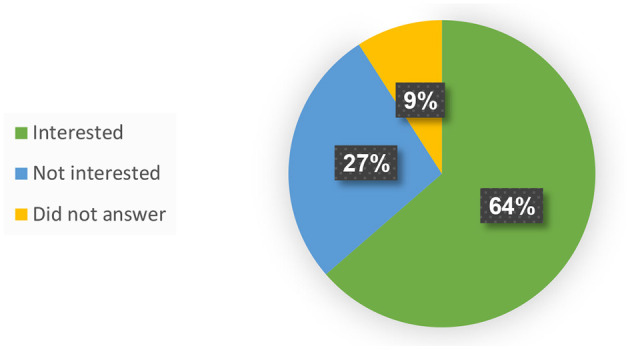
Stroke patients often contend with long-term physical challenges that require treatment and support from both formal and informal caregivers. Socially Assistive Robots (SARs) can assist patients in their physical rehabilitation process and relieve some of the burden on the informal caregivers, such as spouses and family members. We collected and analyzed information from 23 participants (11 stroke patients and 12 informal caregivers) who participated in a total of six focus-group discussions. The participants responded to questions regarding using a SAR to promote physical exercises during the rehabilitation process: (a) the advantages and disadvantages of doing so; (b) specific needs that they wish a SAR would address; (c) patient-specific adaptations they would propose to include; and (d) concerns they had regarding the use of such technology in stroke rehabilitation. We found that the majority of the participants in both groups were interested in experiencing the use of a SAR for rehabilitation, in the clinic and at home. Both groups noted the advantage of having the constant presence of a motivating entity with whom they can practice their rehabilitative exercises. The patients noted how such a device can assist caregivers in managing their workload, while the informal caregivers indicated that such a system could ease workload and sense of burden. The main disadvantages that participants noted related to the robot not possessing human abilities, such as the ability to hold a conversation, to physically guide the patient's movements, and to express or understand emotions. We anticipate that the data collected in this study-input from the patients and their family members, including the similarities and differences between their points of view-will aid in improving the development of SARs for rehabilitation, so that they can better suit people who have had a stroke, and meet their individual needs.
中风患者常常面临长期的身体挑战,这需要来自正式和非正式护理人员的治疗与支持。社交辅助机器人(SARs)可以协助患者进行身体康复,并减轻非正式护理人员(如配偶和家庭成员)的一些负担。我们收集并分析了23名参与者(11名中风患者和12名非正式护理人员)的信息,他们总共参加了六次焦点小组讨论。参与者回答了关于在康复过程中使用SAR促进体育锻炼的问题:(a)这样做的优缺点;(b)他们希望SAR满足的特定需求;(c)他们建议纳入的针对患者的调整;以及(d)他们对在中风康复中使用此类技术的担忧。我们发现,两组中的大多数参与者都有兴趣在诊所和家中体验使用SAR进行康复。两组都指出了有一个能持续存在的激励实体与之一起进行康复锻炼的好处。患者指出了这样一种设备如何能帮助护理人员管理工作量,而非正式护理人员则表示这样一个系统可以减轻工作量和负担感。参与者指出的主要缺点与机器人不具备人类能力有关,比如进行对话、实际指导患者动作以及表达或理解情感的能力。我们预计,本研究收集的数据——来自患者及其家庭成员的输入,包括他们观点的异同——将有助于改进用于康复的SAR的开发,使其能更好地适合中风患者,并满足他们的个人需求。