Zhang Yi, Zhang Meng
Department of Gerontology and Geriatrics, Shengjing Hospital of China Medical University, Shenyang, China.
Front Aging Neurosci. 2022 Sep 8;14:963041. doi: 10.3389/fnagi.2022.963041. eCollection 2022.
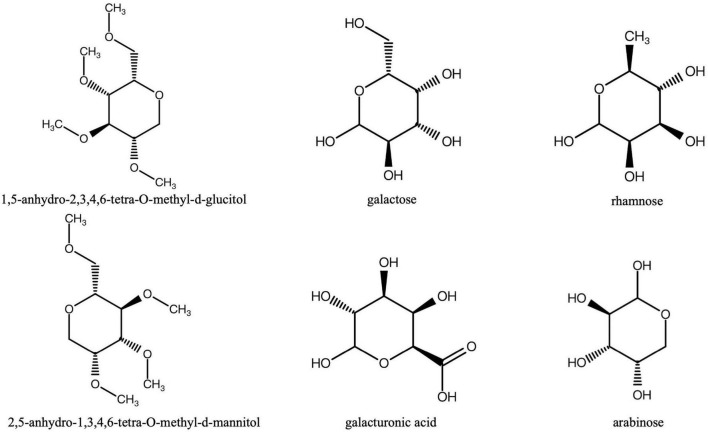
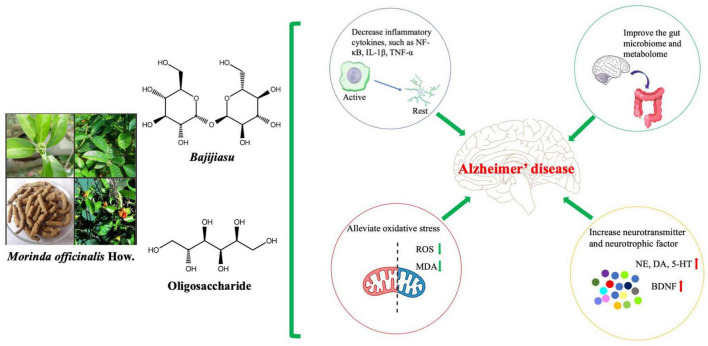
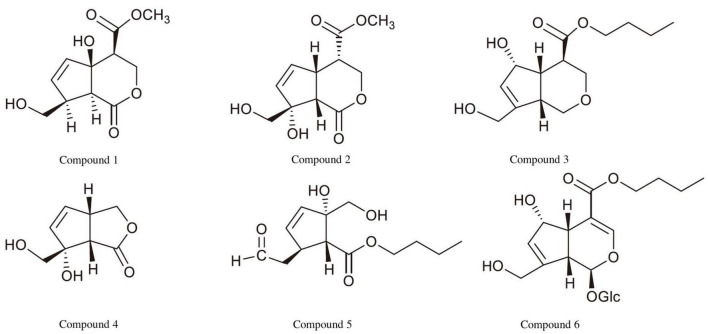
Pharmacological studies have shown that some traditional Chinese medicines (TCMs) have applications in the treatment of Alzheimer's disease (AD). How. (MO) is a TCM with a long history and is widely used to tonify kidney Yang. and experiments have suggested that MO contains various effective pharmaceutical components and chemicals, including oligosaccharides, anthraquinones, iridoids, flavonoids, amino acids, and trace elements, conferring MO with anti-inflammatory and antioxidant properties. Neuroinflammation and oxidative stress are undoubtedly hallmarks of neurodegeneration, contributing to AD progression. In this mini-review, we summarize the molecular mechanisms, structure-activity relationships, and potential synergistic and antagonistic effects of active components in MO. This discussion highlights the roles of these active components, such as oligosaccharides, anthraquinones, and iridoid glycosides, in the treatment of AD anti-inflammatory and antioxidant mechanisms, providing a scientific basis for further utilization of MO.
药理学研究表明,一些传统中药在阿尔茨海默病(AD)的治疗中具有应用价值。何首乌是一种历史悠久的中药,广泛用于补肾阳。实验表明,何首乌含有多种有效药用成分和化学物质,包括寡糖、蒽醌、环烯醚萜、黄酮类、氨基酸和微量元素,赋予了何首乌抗炎和抗氧化特性。神经炎症和氧化应激无疑是神经退行性变的标志,促进了AD的进展。在本综述中,我们总结了何首乌中活性成分的分子机制、构效关系以及潜在的协同和拮抗作用。本讨论突出了这些活性成分,如寡糖、蒽醌和环烯醚萜苷,在AD治疗中的抗炎和抗氧化机制作用,为进一步利用何首乌提供了科学依据。