School of Nursing, Institute of Chronic Disease Risks Assessment, Henan University, Kaifeng, China.
Health Science Center, Institute of Environment and Health, South China Hospital, Shenzhen University, Shenzhen, China.
Front Public Health. 2022 Sep 7;10:941922. doi: 10.3389/fpubh.2022.941922. eCollection 2022.
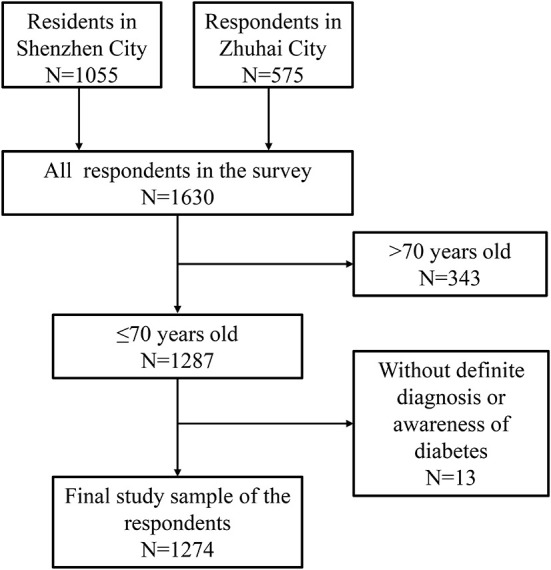
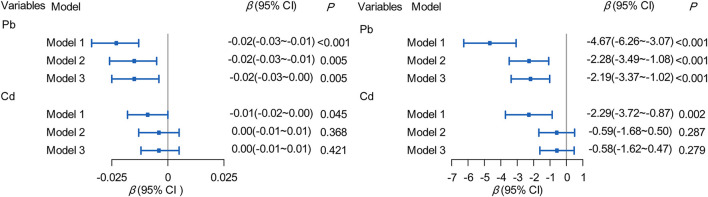
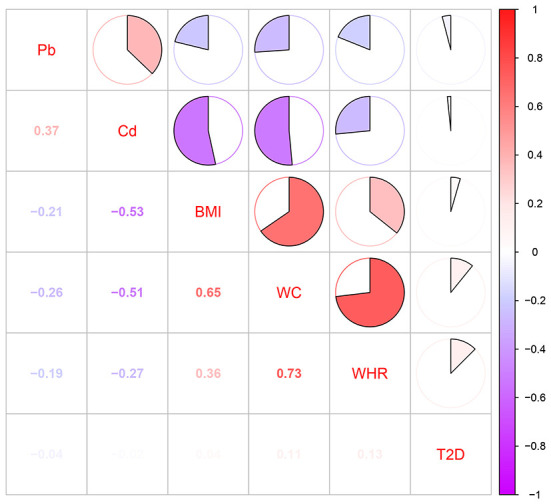
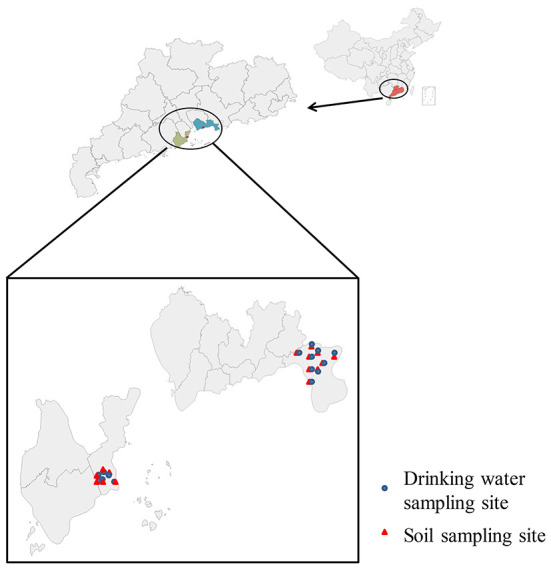
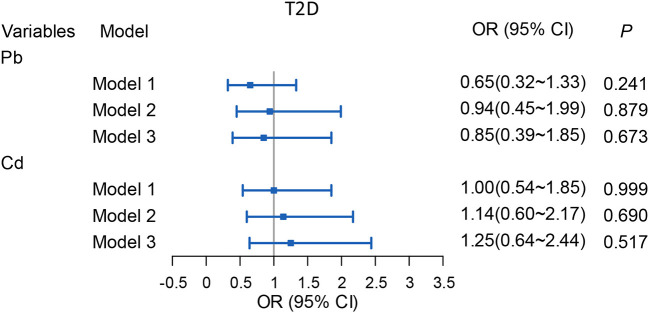
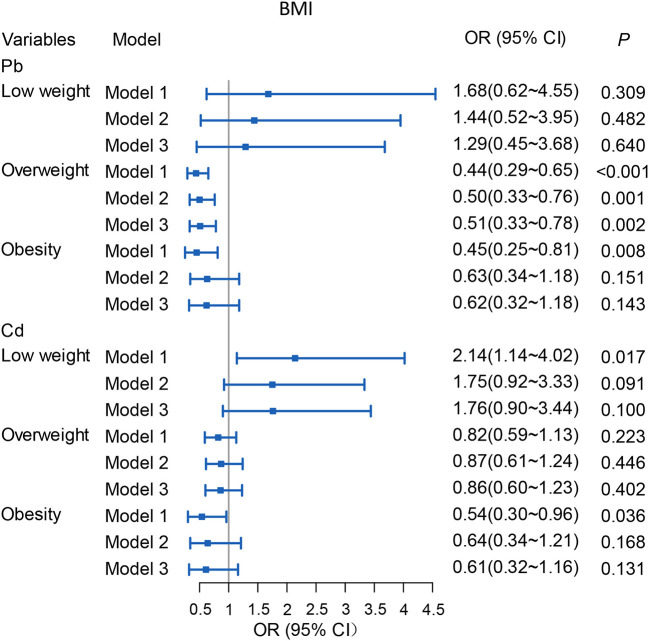
Lead (Pb) and cadmium (Cd) in environment can be directly absorbed by drinking water and soil. However, data on human Pb and Cd exposure by drinking water and soil and its long-term consequence for type 2 diabetes mellitus (T2DM) and obesity are lacking. Our study aims to explore the association of typical heavy metals co-exposure in drinking water and soil to the community residents with T2DM and obesity indices in two cities of southern China. A cross-sectional study enrolling total 1,274 participants was performed and the local water and soil samples were collected in two communities in southern China. The average daily dose (ADD) of heavy metals was calculated to assess the exposure. The obesity indices comprise body mass index (BMI), waist-to-hip ratio (WHR) and waist circumference (WC). Binary, multiple logistic and linear regressions were employed for assessing the associations of Pb and Cd exposure with T2DM and obesity. The results showed that there weren't any significant correlations between ADDs of Pb/Cd and T2DM in community residents (all s>0.05). Compared with those with 18.5 ≤ BMI <24, with 1 μg/kg bw/d ADD of Pb increase in exposure are associated with 49.2-56.1% lower likelihood of overweight. Besides, with ADDs of Pb exposure was increased by 1 μg/kg bw/d and WHR decreasing by 0.01-0.02, and WC decreasing by 2.22-4.67 cm. We speculate that Pb causes weight loss because it damages the absorption function of the gastrointestinal tract as an initial injury. 1μg/kg bw/d ADD of Cd increase is associated with 100.9% upper likelihood of low weight in Model 1. It suggests that Pb/Cd pollution in the local environment was serious and harmful to residents' health. Government should introduce relevant oversight and accountability systems to improve the prevention and management of lifestyle-related chronic diseases in the future.
铅(Pb)和镉(Cd)可通过饮用水和土壤直接被人体吸收。然而,关于人类通过饮用水和土壤暴露于 Pb 和 Cd 及其对 2 型糖尿病(T2DM)和肥胖的长期影响的数据尚缺乏。本研究旨在探讨中国南方两个城市社区居民饮用水和土壤中典型重金属复合暴露与 T2DM 和肥胖相关指标的关系。我们进行了一项横断面研究,共纳入了 1274 名参与者,并采集了中国南方两个社区的当地水和土壤样本。通过计算重金属的平均日剂量(ADD)来评估暴露情况。肥胖相关指标包括体重指数(BMI)、腰臀比(WHR)和腰围(WC)。采用二项、多因素逻辑回归和线性回归来评估 Pb 和 Cd 暴露与 T2DM 和肥胖的相关性。结果表明,社区居民中 Pb/Cd 的 ADD 与 T2DM 之间没有任何显著相关性(所有 s>0.05)。与 BMI 为 18.5≤24 的人群相比,Pb 暴露的 ADD 每增加 1μg/kg bw/d,超重的可能性降低 49.2-56.1%。此外,随着 Pb 暴露的 ADD 增加 1μg/kg bw/d,WHR 降低 0.01-0.02,WC 降低 2.22-4.67cm。我们推测 Pb 导致体重减轻是因为它作为初始损伤破坏了胃肠道的吸收功能。模型 1 中,Pb 暴露的 ADD 每增加 1μg/kg bw/d,体重过轻的可能性增加 100.9%。这表明当地环境中的 Pb/Cd 污染严重,对居民健康有害。政府应引入相关的监督和问责制度,以改善未来与生活方式相关的慢性疾病的预防和管理。