Verleysen Eveline, Waegeneers Nadia, Brassinne Frédéric, De Vos Sandra, Jimenez Isaac Ojea, Mathioudaki Stella, Mast Jan
Trace elements and nanomaterials, Sciensano, Groeselenbergstraat 99, 1180 Uccle, Belgium.
Trace elements and nanomaterials, Sciensano, Leuvensesteenweg 17, 3080 Tervuren, Belgium.
Nanomaterials (Basel). 2020 Mar 24;10(3):592. doi: 10.3390/nano10030592.
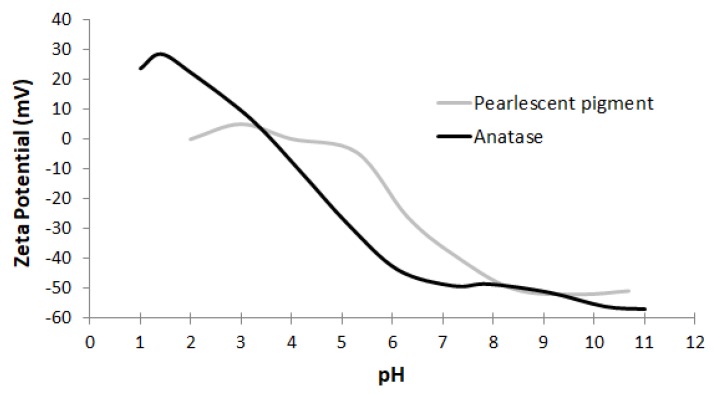
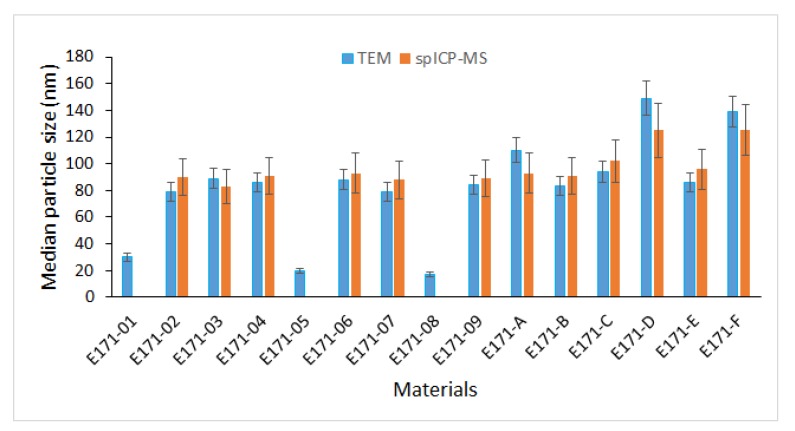
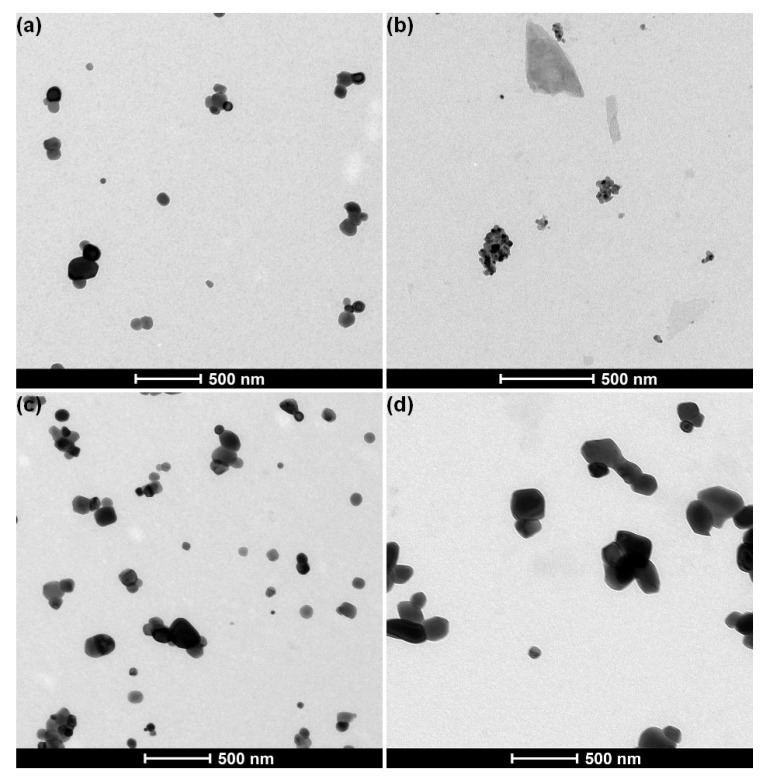
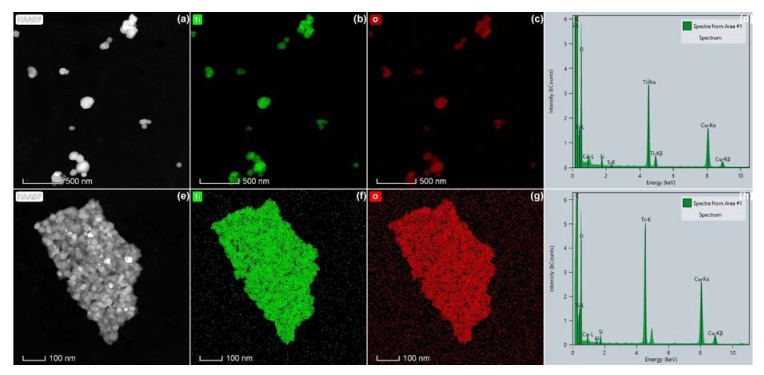
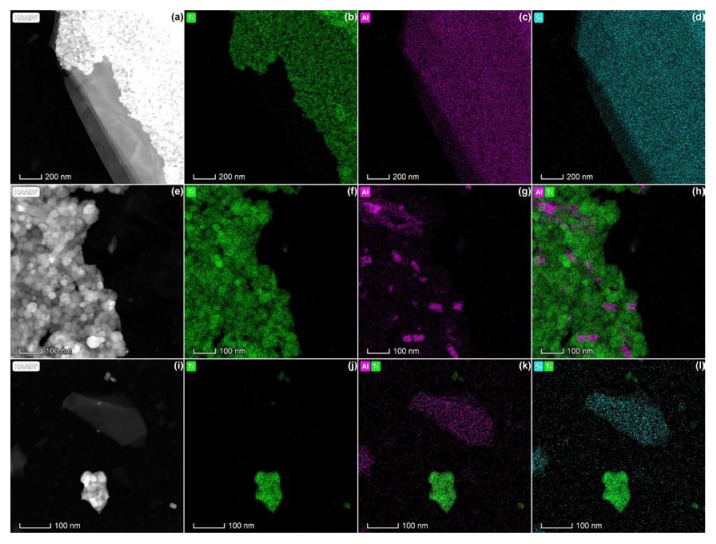
E171 (titanium dioxide) is a food additive that has been authorized for use as a food colorant in the European Union. The application of E171 in food has become an issue of debate, since there are indications that it may alter the intestinal barrier. This work applied standardized and validated methodologies to characterize representative samples of 15 pristine E171 materials based on transmission electron microscopy (TEM) and single-particle inductively coupled plasma mass spectrometry (spICP-MS). The evaluation of selected sample preparation protocols allowed identifying and optimizing the critical factors that determine the measurement of the particle size distribution by TEM. By combining optimized sample preparation with method validation, a significant variation in the particle size and shape distributions, the crystallographic structure (rutile versus anatase), and the physicochemical form (pearlescent pigments versus anatase and rutile E171) was demonstrated among the representative samples. These results are important for risk assessment of the E171 food additive and can contribute to the implementation of the European Food Safety Authority (EFSA) guidance on risk assessment of the application of nanoscience and nanotechnologies in the food and feed chain.
E171(二氧化钛)是一种食品添加剂,已被欧盟批准用作食品着色剂。E171在食品中的应用已成为一个有争议的问题,因为有迹象表明它可能会改变肠道屏障。这项工作应用标准化和经过验证的方法,基于透射电子显微镜(TEM)和单颗粒电感耦合等离子体质谱(spICP-MS)对15种原始E171材料的代表性样品进行表征。对选定样品制备方案的评估有助于识别和优化决定通过TEM测量粒度分布的关键因素。通过将优化的样品制备与方法验证相结合,在代表性样品中证明了粒度和形状分布、晶体结构(金红石型与锐钛矿型)以及物理化学形式(珠光颜料与锐钛矿型和金红石型E171)存在显著差异。这些结果对于E171食品添加剂的风险评估很重要,并且有助于实施欧洲食品安全局(EFSA)关于纳米科学和纳米技术在食品和饲料链中应用的风险评估指南。