Li Xuqing, Wang Li, Ying Xinwang, Zheng Yujun, Tan Qianqian, Yu Xiaolan, Gong Jiahong, Li Ming, Deng Xiaofeng, Yang Guanhu, Li Shengcun, Jiang Songhe
Rehabilitation Medicine Center, The Second Affiliated Hospital and Yuying Children's Hospital of Wenzhou Medical University, Wenzhou, Zhejiang, China.
Integrative and Optimized Medicine Research Center, China-USA Institute for Acupuncture and Rehabilitation, Wenzhou Medical University, Wenzhou, Zhejiang, China.
Front Physiol. 2022 Sep 7;13:961909. doi: 10.3389/fphys.2022.961909. eCollection 2022.
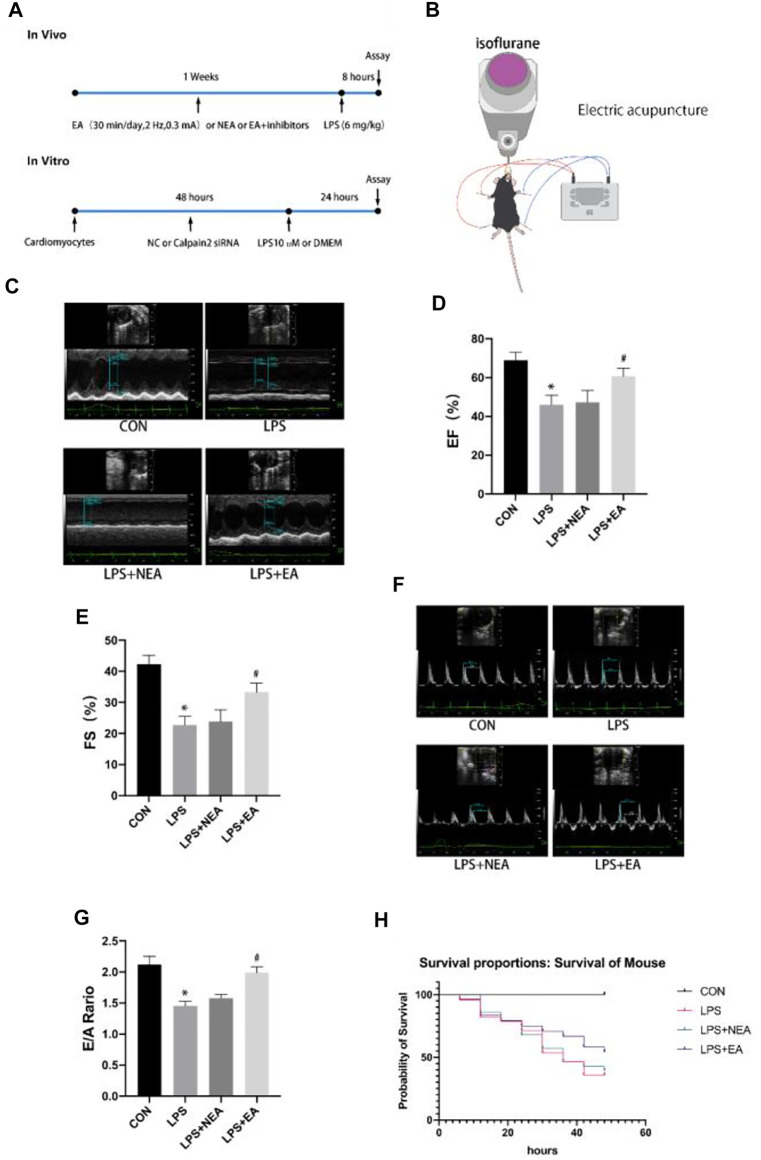
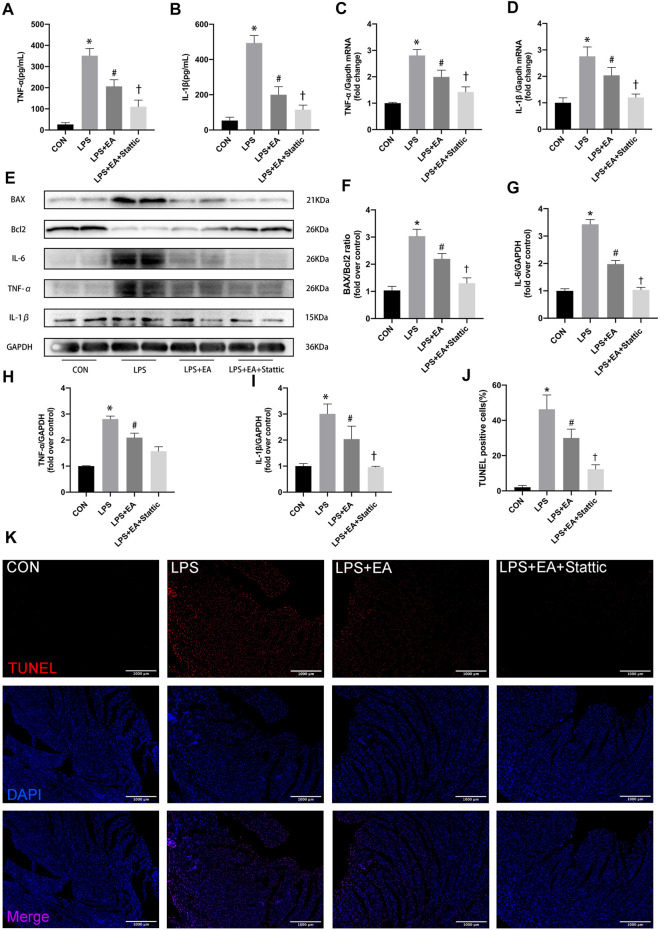
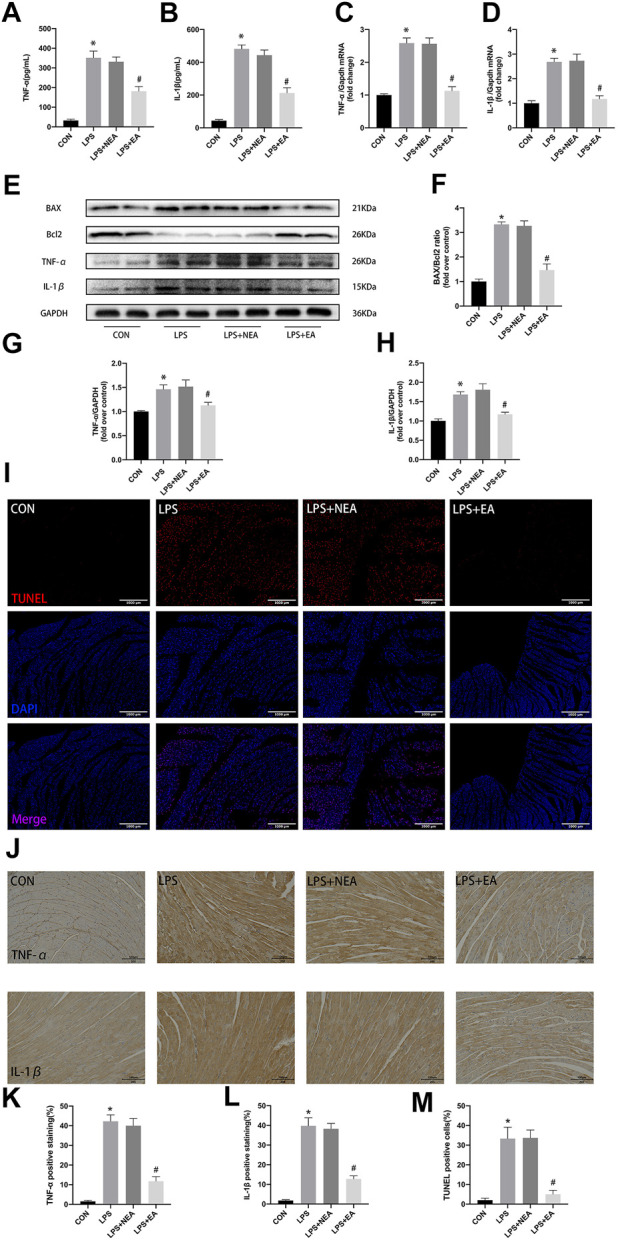
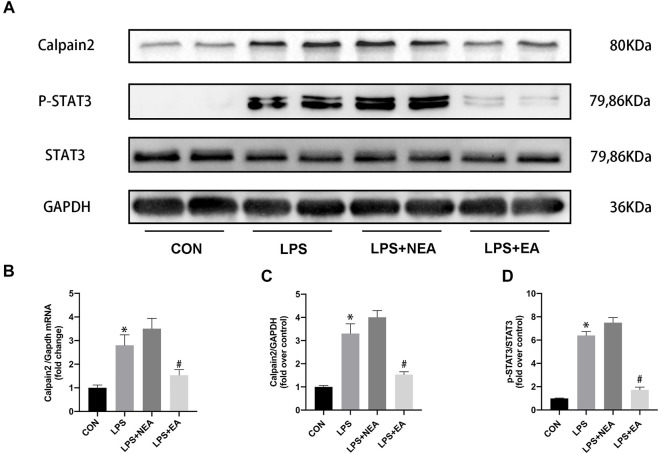
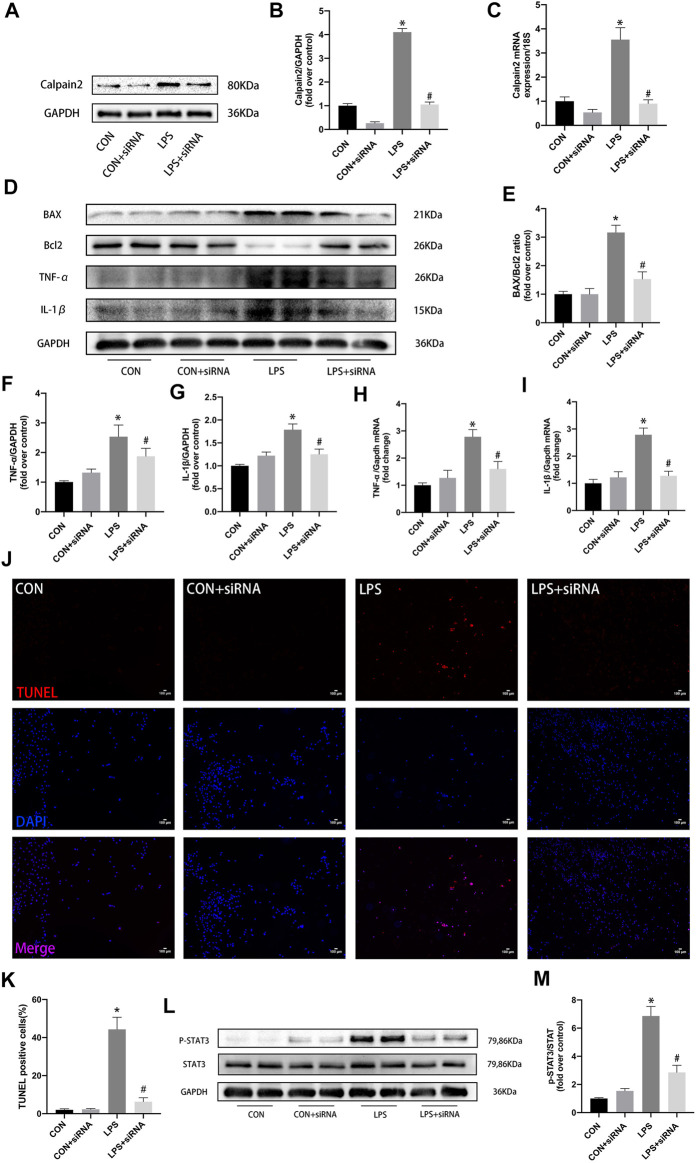
Electroacupuncture (EA) has both anti-inflammatory and cardio-protective effects. Activation of calpain pathway is involved in several myocardiopathy. In sepsis, the role of calpain-2-regulated STAT3 in cardio-protective mechanism of electroacupuncture remains unclear. In this study, we aimed to elucidate the mechanism by which electroacupuncture reduces cardiac inflammation and apoptosis and improves cardiac function during sepsis. Electroacupuncture pretreatment for 7 days was applied in septic cardiomyopathy model induced by lipopolysaccharide (LPS). lipopolysaccharide-induced sepsis was associated with a dramatically systemic inflammation and cardiac dysfunction, which was alleviated by electroacupuncture pre-treatment. Lipopolysaccharide resulted in increases of pro-inflammatory factors (TNF-α,IL1βand IL-6) and apoptosis (TUNEL staining and BAX/Bcl2) via activation of calpain-2/STAT3 pathway.Electroacupuncture pre-treatment inhibited LPS-induced activation of cardiac calpain-2/STAT3 signalling and ameliorated inflammatory and apoptosis. Additionally, inhibition of calpain-2 expression using the corresponding siRNA decreased the Phosphorylation of STAT3,pro-inflammatory factors and apoptosis in lipopolysaccharide- treated cardiomyocytes, confirming that calpain-2 activated p-STAT3 participate in septic cardiomyopathy. Furthermore, suppression of STAT3 by stattic enhanced anti-inflammatory and anti-apoptosis effects of electroacupuncture. These findings reveal mechanisms of electroacupuncture preconditioning protection against cardiac inflammation and apoptosis in sepsis mouse via calpain-2/STAT3 pathway and may provide novel targets for clinical treatments of the sepsis-induced cardiac dysfunction.
电针(EA)具有抗炎和心脏保护作用。钙蛋白酶途径的激活与多种心肌病有关。在脓毒症中,钙蛋白酶-2调节的信号转导和转录激活因子3(STAT3)在电针心脏保护机制中的作用尚不清楚。在本研究中,我们旨在阐明电针减轻脓毒症期间心脏炎症和细胞凋亡并改善心脏功能的机制。对脂多糖(LPS)诱导的脓毒性心肌病模型进行为期7天的电针预处理。脂多糖诱导的脓毒症与显著的全身炎症和心脏功能障碍相关,而电针预处理可减轻这种情况。脂多糖通过激活钙蛋白酶-2/STAT3途径导致促炎因子(肿瘤坏死因子-α、白细胞介素1β和白细胞介素6)增加以及细胞凋亡(TUNEL染色和BAX/Bcl2)增加。电针预处理抑制了脂多糖诱导的心脏钙蛋白酶-2/STAT3信号通路的激活,并改善了炎症和细胞凋亡。此外,使用相应的小干扰RNA(siRNA)抑制钙蛋白酶-2的表达可降低脂多糖处理的心肌细胞中信号转导和转录激活因子3的磷酸化、促炎因子水平及细胞凋亡,证实激活信号转导和转录激活因子3的钙蛋白酶-2参与了脓毒性心肌病。此外,用STATtic抑制信号转导和转录激活因子3可增强电针的抗炎和抗凋亡作用。这些发现揭示了电针预处理通过钙蛋白酶-2/STAT3途径对脓毒症小鼠心脏炎症和细胞凋亡的保护机制,并可能为脓毒症诱导的心脏功能障碍的临床治疗提供新的靶点。